Get Full Government Meeting Transcripts, Videos, & Alerts Forever!
Get email alerts on the Grants And Finance topic
No spam. Unsubscribe anytime.
District finance staff warn of federal funding uncertainty and enrollment pressures that could affect programs
Summary
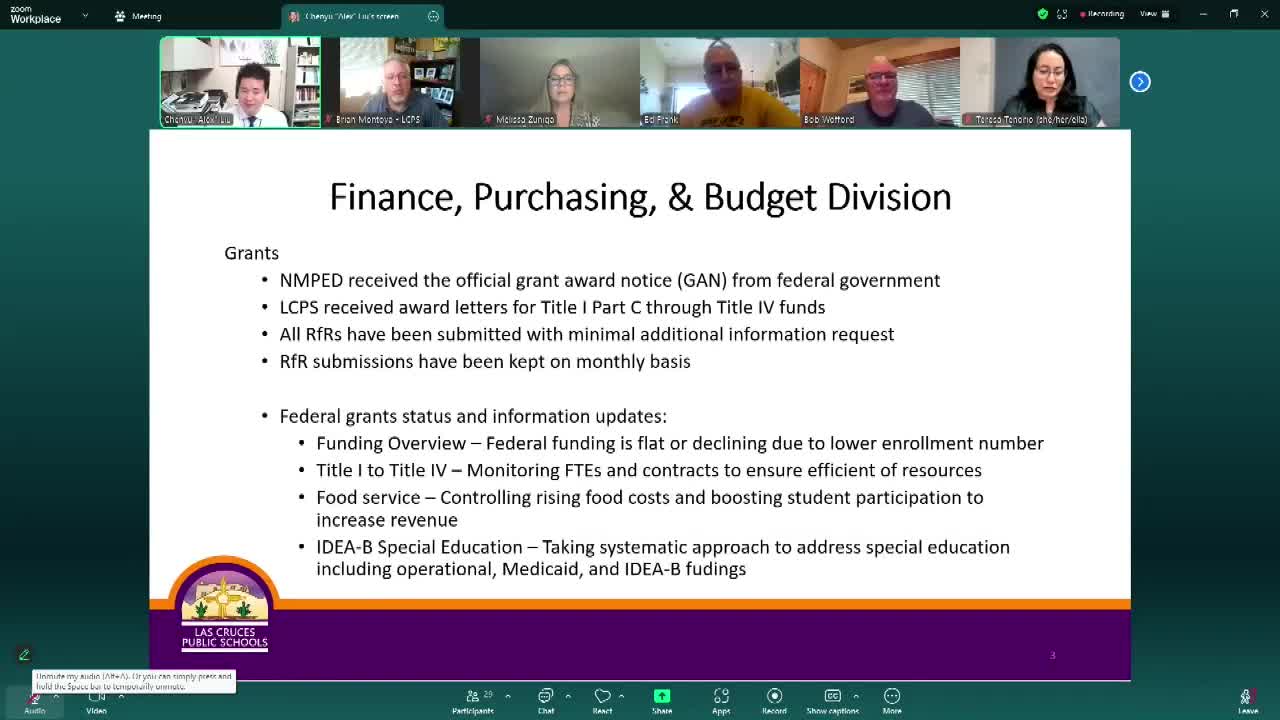
Las Cruces Public Schools finance leaders told the subcommittee they have not seen direct federal cuts yet but are monitoring freezes and enrollment declines that could reduce federal revenue, with special education (IDEA B), Title III, and Title I‑C identified as particular concerns.
Las Cruces Public Schools finance and district leaders told the Finance Subcommittee they have not yet seen direct federal cuts to the district but are tracking several threats that could reduce revenue, including freezes and possible future reductions at the federal level and declining student enrollment.
Superintendent Ruiz said the district has generally received anticipated federal awards so far, but enrollment declines will reduce the federal dollars the district receives and create pressure on budgets tied to staff (FTEs). "The money that we were we are supposed to be getting or that we anticipated or projected to receive, we have received," Ruiz said, adding that continued monitoring is required because "as our enrollment decreases ... the impact ... is our federal dollars will have there'll be an impact." (Superintendent Ruiz)
Why it matters: Federal grants fund Title I, Title III, IDEA B (special education), nutrition services and other programs critical to services and staffing. If those federal streams decline, the district could face hard choices about personnel, contracted services or program scope.
Specific concerns raised - Title I/Title IV: Staff are monitoring FTE counts tied to Title I/Title IV because personnel costs are a major driver of federal-budget impact. The district is exploring alternative ways to meet student needs other than adding FTEs. - Nutrition services: Rising food costs reduce margins; staff are working to boost student participation in school meals to stabilize revenue. - IDEA B (special education): District leaders described ongoing concern that current funding levels are unsustainable and said they are looking at operational changes and Medicaid reimbursements as partial mitigations. Ruiz said, "we're looking at operational, how we can potentially leverage some dollars there." (Superintendent Ruiz) - Title III and Title I‑C (migrant education): Doctor Lozano and a committee member highlighted Title III (emerging bilingual students) and Title I‑C (migrant education) as programs under close watch; one presenter said Title I‑C's outlook "doesn't look very good moving forward after this school year." (Committee member)
Responses and next steps District finance staff said they are improving monthly IFR submissions to speed reimbursements from the state, convening a budget survey committee and working with unions and school leaders. The district also noted ongoing legislative advocacy will be part of planning for special education funding and other priorities.
Ending Finance staff emphasized continued monitoring and preparation; they said they will bring further details and recommendations to the board as the legislative and federal funding situation evolves.