Get Full Government Meeting Transcripts, Videos, & Alerts Forever!
Get email alerts on the Emergency Medical Services topic
No spam. Unsubscribe anytime.
Schertz EMS outlines service area, rising costs and contract increases requested from Guadalupe County
Summary
Schertz EMS Chief Jason Mabot presented staffing, coverage and finance details to Guadalupe County Commissioners Court and described a multi-year contract increase option the service is asking participating jurisdictions to accept to maintain current service levels.
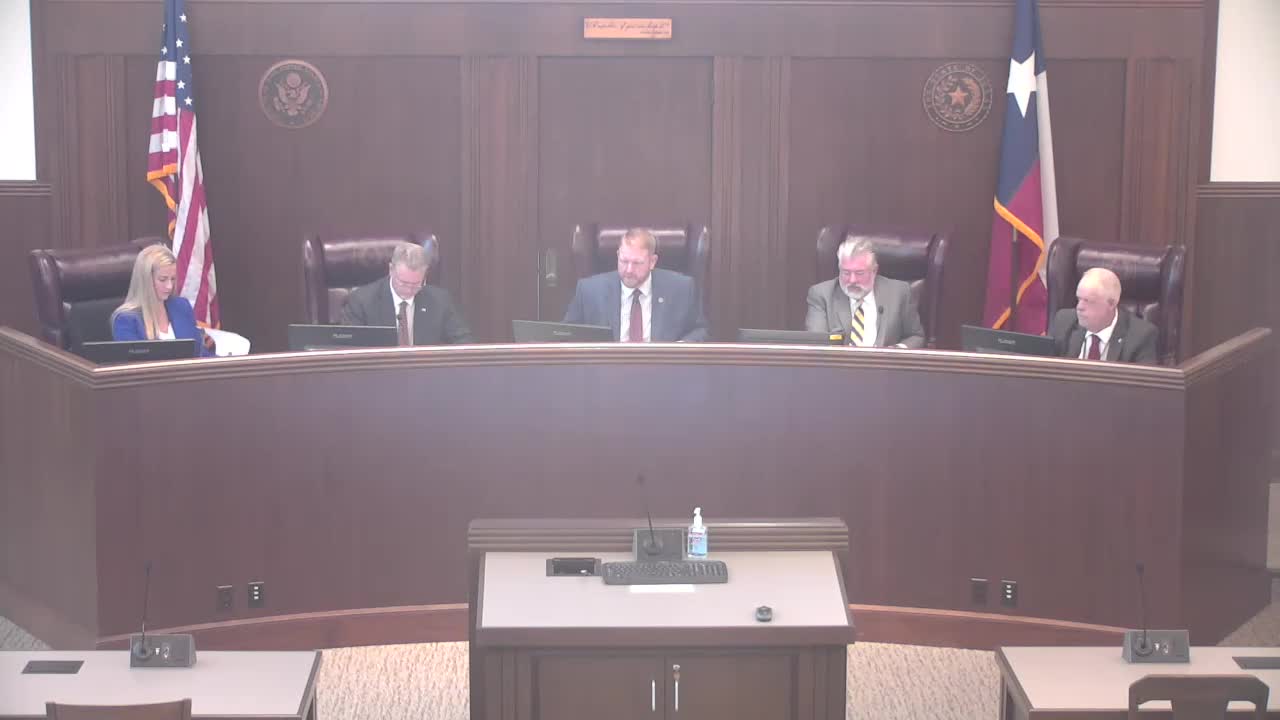
Schertz EMS Chief Jason Mabot told the Guadalupe County Commissioners Court on Sept. 16 that the agency’s service area and costs have grown, and that the agency is asking participating jurisdictions to accept a multi‑year payment increase to preserve current response coverage.
Mabot said Schertz EMS (the city-operated emergency medical service) covers a roughly 235‑square‑mile area and serves an estimated population of about 160,000, including contract coverage for unincorporated parts of Guadalupe County. “My budget is about $10,400,000 for this year,” Mabot said, and he described a revenue mix in which participant contributions and ambulance billing are the principal sources of funding.
Schertz EMS asked partner cities and the county to accept one of two multi‑year contribution options Mabot described. He said some partners selected a larger option and some selected a smaller one; for the county he said staff proposed a 45% increase spread over three years (15% each year) as a way to maintain current service levels.
The request prompted questions from commissioners about what is driving the increases. Mabot said the largest single driver was a recent classification and compensation study that found Schertz EMS was paying well below peer agencies, which required raises to improve retention. He also cited steep equipment cost increases and a Texas law restricting balance billing of insured patients as factors that reduce collections from ambulance billing. “For every dollar we charge … 0.38 of that is what we call contractual allowables,” Mabot said, and he added, “We collect about $0.34 on the dollar.”
Mabot described vehicle and staffing needs: Schertz EMS currently operates eight ambulances for the city’s contracts and expects to add units to reach 10 ambulances within about three years. He said a 24‑hour frontline ambulance staffed and equipped to run continuously would represent a roughly $1,000,000 commitment when personnel and operating costs are included; vehicle purchase quotes ranged from about $340,000 for a chassis to roughly $550,000 to buy and outfit a stocked ambulance, and he said a frontline unit typically serves four years before moving to reserve status.
Mabot and county staff also reviewed call‑volume maps showing higher call density in the northwest Seguin/McQueeney area and explained why wholly county‑run EMS would be costly to implement. “You’ll need four ambulances to cover the unincorporated areas of Guadalupe County,” he said when asked about what county‑only coverage would require, noting that even with four vehicles response times would remain longer than current contracted coverage in many places.
Commissioners and county staff asked about options and acknowledged the county’s current contracting approach. Commissioner comments recognized the cost pressures Mabot described while also thanking Schertz EMS for the partnership. The court did not take an immediate vote on changing the county’s contract at the Sept. 16 meeting; Mabot said the county’s proposed contribution schedule would maintain current service levels and that he was available to answer further questions.
Mabot also noted other coverage changes under negotiation, saying Schertz EMS and partner districts are discussing interim coverage for portions of New Berlin that recently lost ambulance service; he said Wilson County ESD 3 would cover part of that community and Schertz EMS would cover the remainder while negotiations continue.
The county’s budget and contract decisions that would respond to Schertz EMS’s request were not finalized at the meeting. Commissioners asked staff to continue discussions and consider the operational and financial information Mabot presented.