Get Full Government Meeting Transcripts, Videos, & Alerts Forever!
Get email alerts on the Fire Department Merger topic
No spam. Unsubscribe anytime.
Consultants recommend joint Wauwatosa–West Allis fire department to preserve frontline service and cut administrative costs
Summary
McMahon Associates reported to the Wauwatosa Common Council that a consolidated fire department with West Allis could preserve current frontline staffing, improve administrative efficiency and qualify both cities for State Innovation Fund support, while raising immediate questions about dispatch, governance and funding allocation.
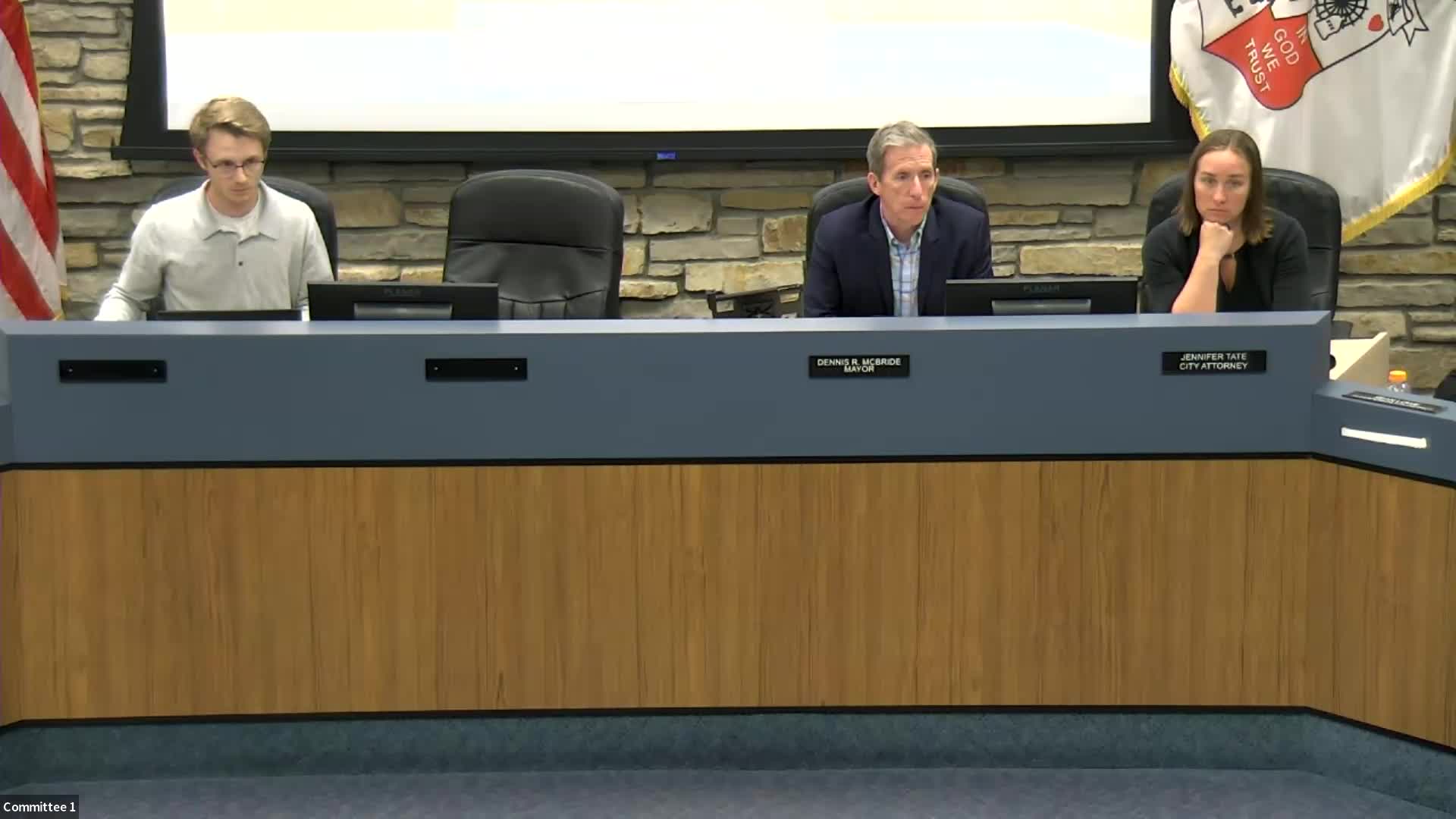
Consultants from McMahon Associates presented findings to the Wauwatosa Common Council on a shared-service review with West Allis, recommending the two cities pursue a consolidated (joint) fire department that would preserve current frontline staffing while reducing administrative duplication.
The recommendation, delivered by Mark Roloff, manager of the public safety and municipal management division for McMahon Associates, said the proposal would not “decrease the level of service that you’re providing to your community today.” Roloff added the consultants had received clear direction from both cities to avoid any reduction in field staffing.
The nut graf: The study concluded a joint department could produce roughly $1.3 million in first‑year administrative savings and about $7 million over five years by eliminating duplicative command and administrative positions (the report lists roughly 11 fewer non‑field staff). The consultants also said consolidation would increase eligibility for the State Innovation Fund created by Act 12 (2023), potentially making each city eligible for up to about $4.25 million annually for up to five years under the draft rules.
Key findings and context
- Operational parity: McMahon noted both departments are similar in population served, square miles covered, call volume and budgets. Both departments hold ISO Class 1 ratings, which McMahon said is rare and important for insurance ratings.
- Financial case: McMahon and consultant Mike Micheli highlighted state levy‑limit rules that treat joint fire agencies differently than separate municipal departments. Micheli said, under the consultants’ analysis, maintaining separate departments could require about $6.3 million in cost reductions by year five across the two cities; a joint department would reduce or eliminate that pressure. The report projects roughly $1.3 million in first‑year savings and about $7 million over five years, primarily from consolidating administrative and command functions.
- Grants and liabilities: The consultants flagged the State Innovation Fund (Act 12, 2023) as an incentive; they described a $300 million statewide fund and urged both cities to move promptly because funds could be allocated to large mergers early. They also warned that unfunded liabilities (pension, health insurance, sick‑leave payouts) will need explicit treatment in any transfer agreement.
Council and staff questions
Council members and staff pressed consultants and chiefs on practical issues the study did not resolve: governance structure, cost‑allocation methods, timelines, union negotiations, dispatch arrangements and facility maintenance.
- Dispatch: Multiple council members, Wauwatosa staff and Wauwatosa Captain Vedder emphasized dispatch as a separate, technically complex issue. Consultants said identifying the correct dispatch center for a joint department must be an early implementation task because routing delays can affect response times. The possibility of county or regional dispatch options (including a new regional public safety facility) was discussed, but no technical dispatch solution was chosen.
- Governance and levy control: City staff and council members discussed how a joint department’s annual bill would be apportioned and the degree of ongoing council control. City staff explained the governing agreement/term sheet would define the governing board, contribution formula and thresholds that require councils’ approval (for example, a cap such as CPI+2% or an explicit percentage above which the governing board must return to the councils).
- Labor and operations: Chiefs and consultants stressed that frontline personnel and daily unit staffing would not be reduced as part of the consolidation recommendation; most projected savings are in administrative roles. Chiefs recommended early, parallel negotiations with unions to align schedules, benefits and employee handbooks.
Council direction, public engagement and next steps
Council members and staff described the immediate next steps as a series of implementation and public‑engagement actions rather than a final decision to merge. Those steps, noted during the meeting, included an open house for residents the following week, committee review (where public comment is allowed) and drafting a term sheet/governing document for council review. Staff indicated a likely multi‑year implementation timeline if both councils approve moving forward.
As Wauwatosa’s finance director and city administrator said, if councils authorize staff to proceed, the work would include negotiating the governance document with West Allis, preparing a grant application for the State Innovation Fund, and scoping consultant support for implementation (the consultants estimated additional implementation costs, including a suggested consulting budget range). The city’s finance director cautioned that the $7 million projected savings assume both departments are currently fully funded and that the council will need to decide whether savings are returned to taxpayers or reinvested in departmental needs.
Concerns and constraints raised
Council members, the Wauwatosa fire chief and others raised several constraints and community concerns that would have to be addressed in implementation: dispatch integration and any technical or interoperability gaps; cultural differences between departments; how cost allocation would be calculated and whether property taxes could rise because joint fire departments may have different levy limits; and the need to address deferred facility maintenance and capital requirements. Several alderpersons asked for more detail on those items before making final decisions.
What was not decided
No formal council action to create a joint department was taken at the meeting. Consultants and staff framed the presentation as the start of a process. Multiple speakers said the councils would retain final authority to approve any governing agreement, budgets and grant submissions.
Ending
Council members and staff agreed to continue public outreach and committee review; if councils direct staff to proceed, the next formal step would be to present a negotiated term sheet and a recommended governance structure for council consideration. Consultants and chiefs reiterated that the stated goal is to maintain or enhance current response levels while addressing long‑term financial sustainability.