Get Full Government Meeting Transcripts, Videos, & Alerts Forever!
Get email alerts on the Parks And Rec Aquatics topic
No spam. Unsubscribe anytime.
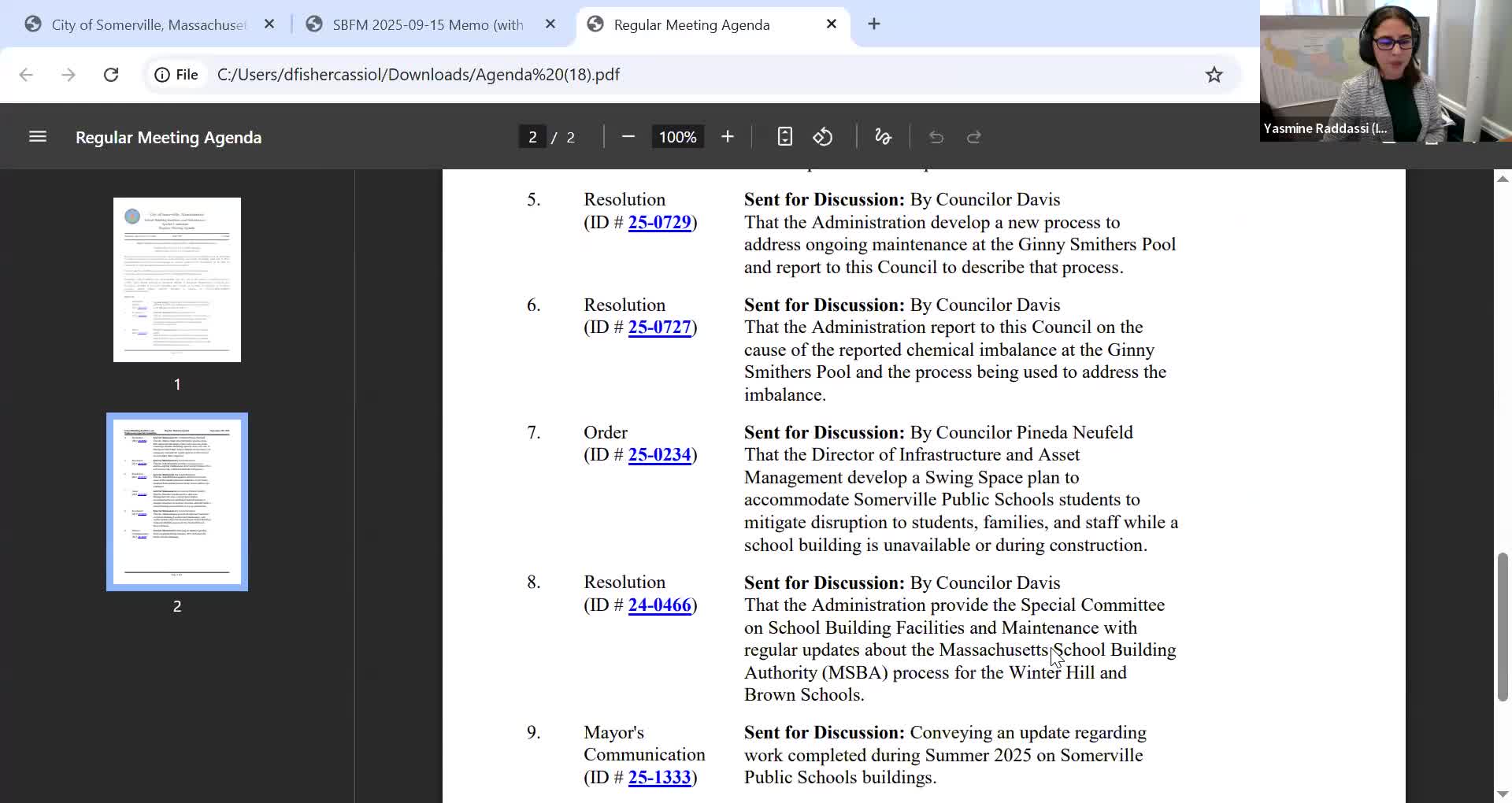
Somerville officials cite human error after chemical spill at Jenny Smithers Pool; one‑day weekly closure planned
Summary
City and school officials said a June chemical incident at the Jenny Smithers Pool was caused by an overfilled muriatic acid tank and identified staff‑level fixes, new procedures and a temporary schedule change that will close the pool one weekday and expand weekend hours while longer‑term options are evaluated.
City and school officials said a chemical incident at the Jenny Smithers Pool in June was caused by human error and described immediate safety fixes, updated procedures and short‑term operational changes intended to reduce the chance of a repeat.
In remarks to the School Buildings, Facilities and Maintenance Special Committee on Sept. 15, Nikki Spencer, chief of staff in the mayor’s office, said an investigation found “human error via overfilling of a tank of muriatic acid in the storage closet.” Spencer told the committee that the city had not detected toxic fumes in the pool or school buildings and that departments took steps to secure the site and clarify procedures.
Why it matters: The pool serves students, seniors and community users; repeated closures this year prompted public concern. The city said it has adopted immediate safeguards and a short‑term operating plan intended to preserve access while improving maintenance and communications.
Officials’ actions and new procedures
City staff described a package of fixes and operational changes implemented this summer and planned for the fall: - A shutoff valve was installed on the water hose in the storage closet to reduce the risk of accidental flooding. Parks and Recreation staff now wet‑vacuum any standing water after incidents. - Parks and Recreation and the Department of Public Works (DPW) clarified chemical storage limits and reviewed procedures for secure storage of chlorine and acids. - The lifeguard manual and testing/reporting procedures were revised and re‑vetted by the school district and DPW; staff described the manual as a “living document.” - Parks and Recreation conducts pool chemical testing four times per day and DPW staff also test and confer on results as needed, officials said. - An after‑action exercise convened by the director of emergency management, Bill Fisher, will train departments and school staff on incident response and communications.
Short‑term schedule change
City staff recommended a short‑term schedule change for the Jenny Smithers Pool: closing one weekday to allow a full day for maintenance and expanding weekend hours. Yanni Tsaragaddis, director of operations for Parks and Recreation, said staff are “bringing together the final details in the coming weeks” and expect to implement the change before a new Parks and Recreation director begins work. Tsaragaddis added the day closed will be chosen to avoid conflicts with school swimming lessons and to minimize user disruption.
Officials emphasized the change is not solely because there is no permanent director; Tsaragaddis said, “It is not because we don't have a director. It is a practice that we've seen other pools implement…as an opportunity to pause during the week, make the myriad little adjustments, and making sure that all of our maintenance is being coordinated appropriately between Parks and Rec and DPW.”
Community concerns and follow‑up
Councilors pressed staff on outreach to users whose lessons were canceled earlier in the year. Parks and Recreation said staff had worked to improve notification channels and that users who missed classes should contact the department for makeups or refunds. Officials acknowledged some families did not receive timely notices during prior closures and said communication protocols are being strengthened.
Emergency response and safety
Bill Fisher, director of emergency management, said emergency responders treated the June event with an abundance of caution. Fisher said responders evacuated the site and issued alerts while air monitoring showed no toxic vapors: “There was never any toxic vapors, chemicals detected anywhere in the school. It was a very safe environment.”
What remains unresolved
Staff described longer‑term options to improve management and reduce recurring chemical‑balance problems, but said many carry significant cost and varying levels of expected benefit. The city is continuing a study of options and will return with details on the selected one‑day closure weekday and expanded weekend hours.
Bottom line
City and school officials said the June spill was caused by human error and outlined concrete, immediate fixes, revised lifeguard procedures, improved communications and a short‑term schedule change intended to reduce the risk of another closure while longer‑term solutions are evaluated.