Get Full Government Meeting Transcripts, Videos, & Alerts Forever!
Get email alerts on the Youth Mentoring topic
No spam. Unsubscribe anytime.
Big Brothers Big Sisters of Oklahoma presents local results, seeks volunteers in Tulsa
Summary
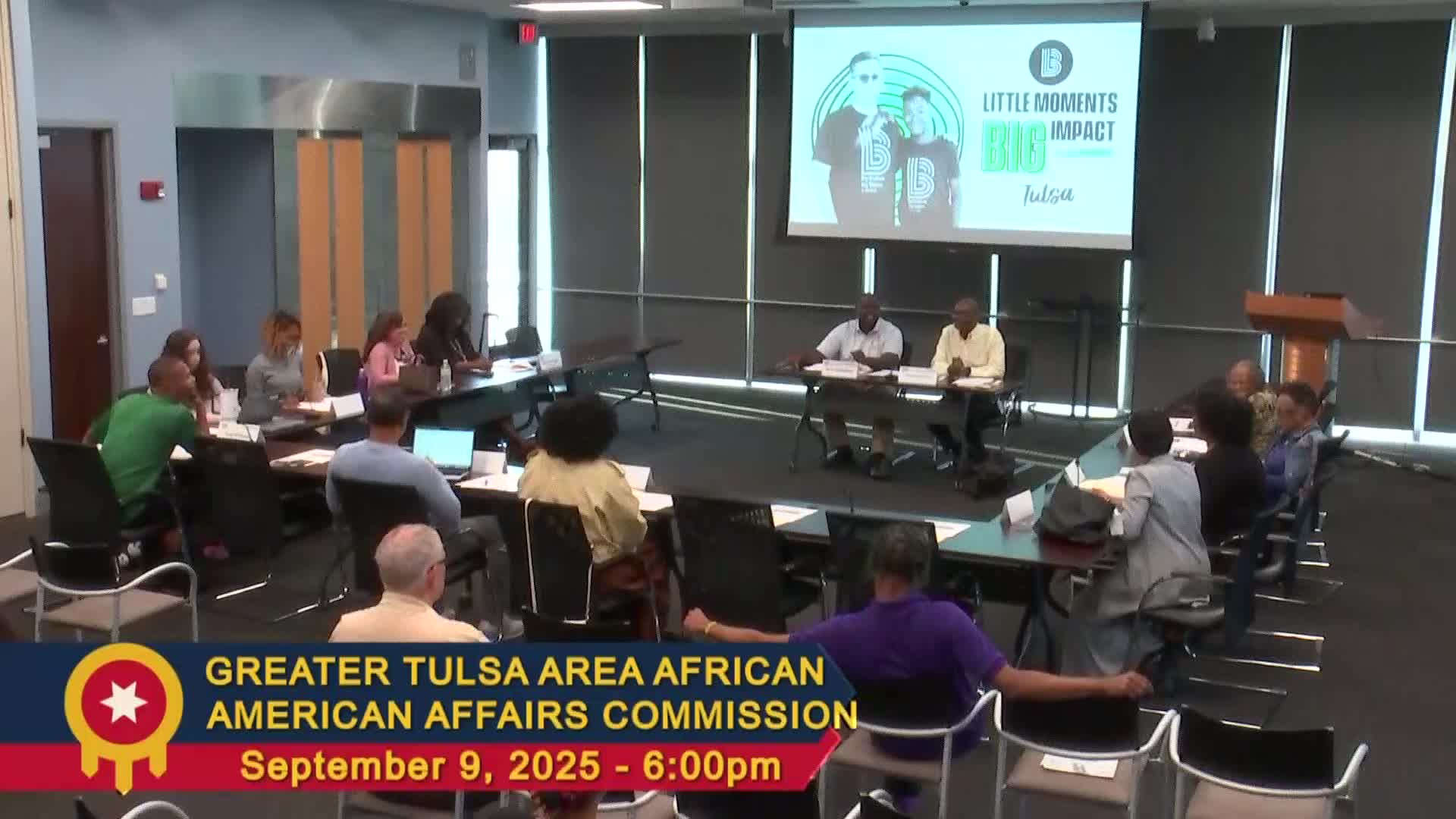
Cindy, a "big ambassador" for Big Brothers Big Sisters of Oklahoma, presented the mentoring program’s Tulsa operations and outcomes to the Greater Tulsa African American Affairs Commission and asked commissioners to promote volunteer recruitment.
Cindy, a "big ambassador" for Big Brothers Big Sisters of Oklahoma, told the Greater Tulsa African American Affairs Commission about the organization’s mentoring programs in Tulsa and asked commissioners to share volunteer information and outreach opportunities.
Cindy said the agency matches adults ("bigs") over age 18 with youth ages 6 to 16 in school-based and community-based programs. She said Tulsa currently has five service locations and that the local office provides staff program specialists to support matches. "You do not have to have a huge degree plan going. But a big is consistent, friendly, supportive, someone that listens, someone that shows up," she told commissioners.
Cindy said the Tulsa office had served about 421 children (her slide initially showed 390) and emphasized program flexibility: a school-based match typically requires about one hour a week, or roughly four hours a month. She described partnerships that reduce participation cost (for example, aquarium and climbing-venue partnerships) and illustrated how matches can expose children to civic and cultural events such as the Martin Luther King Jr. parade.
To highlight program outcomes, Cindy cited findings from the organization’s longer-term research: she said mentees reported improved family relationships and self-identity; 84 percent learned to regulate emotions; 79 percent improved academic performance; 95 percent reported higher education expectations; 91 percent avoided or reduced substance abuse; 90 percent avoided disciplinary action at school; and 99 percent avoided negative interactions with police. She said the Centers for Disease Control recommends mentoring programs as a preventive strategy for adverse childhood experiences (ACEs).
Cindy encouraged commissioners to volunteer or promote the program, noted she had presented to the mayor about the program two weeks earlier, and invited commissioners to the organization’s tabling at an upcoming 918 event. Commissioners asked whether the program serves youth returning from incarceration; Cindy said the organization could work with other providers and referred the questioner to program staff and partner groups.
Ending: The commission accepted the presentation. Cindy left brochures and contact information and asked commissioners to share the recruitment message and consider volunteering for matches or events.