Get Full Government Meeting Transcripts, Videos, & Alerts Forever!
Get email alerts on the Civil Service Classification topic
No spam. Unsubscribe anytime.
Civil Service Board proposes clearer rules for Tacoma employee classifications
Summary
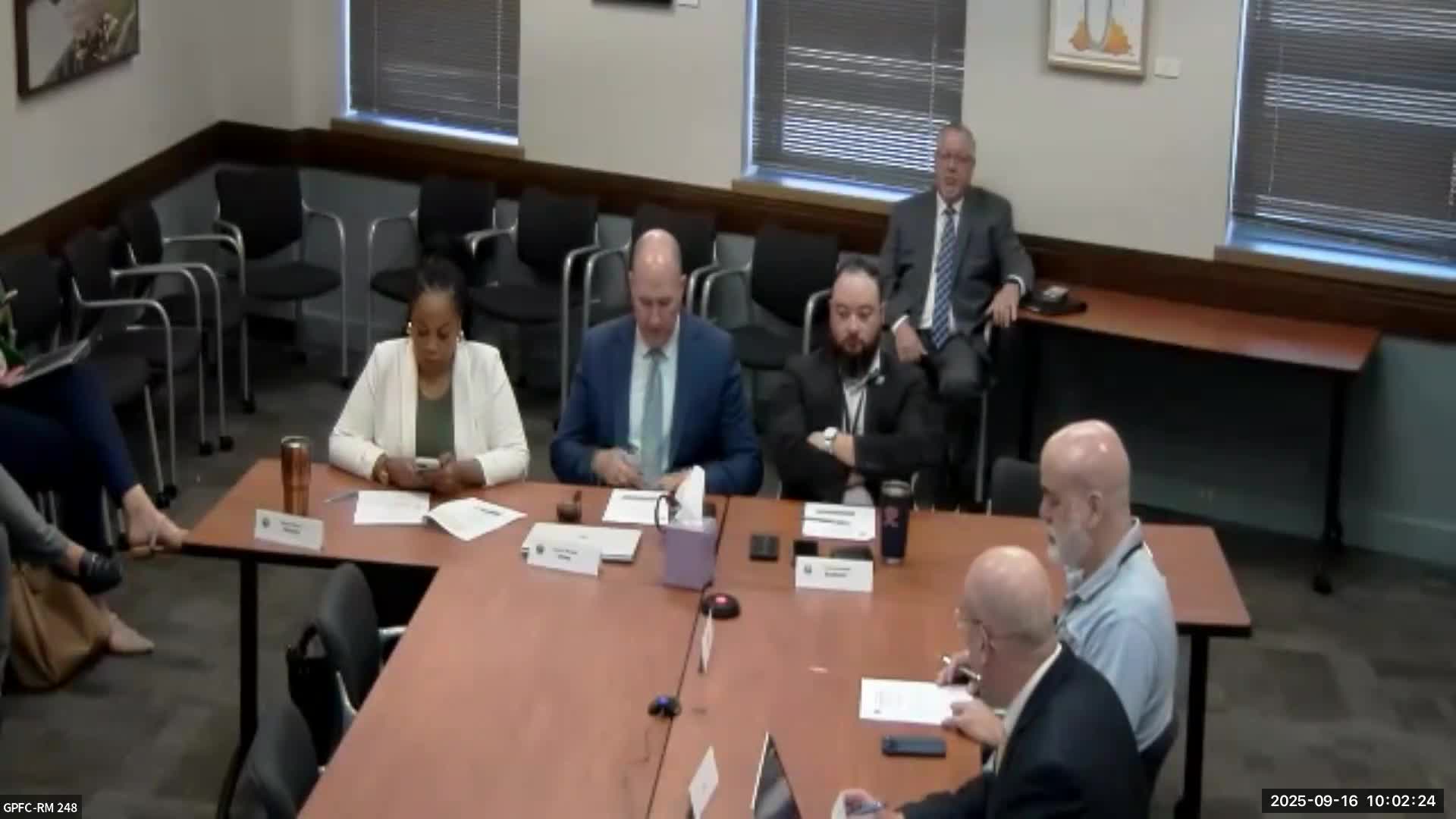
Eric Hansen, chair of the Technical Civil Service Board, told the City of Tacoma Government Performance & Finance Committee on Sept. 16 that his board is proposing amendments to Tacoma Municipal Code sections 1.24.290 and 1.24.295 to clarify which positions belong in the classified and unclassified services and to give the board oversight over classification decisions.
Eric Hansen, chair of the Technical Civil Service Board, told the City of Tacoma Government Performance & Finance Committee on Sept. 16 that his board is proposing amendments to Tacoma Municipal Code sections 1.24.290 and 1.24.295 to clarify which positions belong in the classified service and which belong in the unclassified service.
Hansen said the board’s months-long investigation found “an excessive number of of employees who are out who are allocated to the unclassified category.” He described the proposed rule changes as aimed at defining “principal officer” (which he says should track department head and higher), limiting which assistants may be unclassified, and narrowing the charter exception for employees “employed in a professional or scientific capacity to conduct a special inquiry, investigation, or examination.”
The proposed changes would also give the civil service board authority to approve classification decisions and to reclassify positions. Hansen told the committee those changes are intended to ensure classifications conform with the charter, preserve “just cause” protections for classified employees and reduce the risk of costly lawsuits.
Why it matters: classified employees under Tacoma’s charter are entitled to merit-based hiring procedures and to a neutral hearing before the civil service board if they face termination or discipline. Hansen warned that improperly designating positions as unclassified can remove those procedural protections and create legal exposure under the U.S. Constitution’s due-process principles and civil-rights litigation (commonly invoked as “1983” claims).
Committee members asked how broadly the proposal would apply. When asked whether Tacoma Public Utilities (TPU) would be affected, Hansen replied, “the TPU is also covered by the civil service.” Committee members asked follow-up questions about the counts and details of the designations; Hansen said the last figures he had from human resources showed roughly 1,051 unclassified employees and about 1,009 classified employees but that those numbers could have changed.
Hansen said the board attempted to obtain human resources’ criteria for current classifications but was told those discussions were protected by attorney–client privilege. He described that lack of disclosure as an impediment to the board’s investigation and said the proposed rule language would give employees clearer notice of the criteria used to decide whether a position is classified or unclassified.
Hansen also noted the board can adopt personnel rules under charter section 6.14; those rules are subject to council review (the council may adopt, amend or reject board rules by a two-thirds vote). He said the civil service board has not yet voted to transmit a final rule to the clerk; if and when the board submits proposed rule language, the city clerk will forward it to council for consideration under the charter process.
Questions from committee members focused on three practical points: whether the rules cover TPU, whether some unclassified positions are funded by grants or limited-duration projects (which can be excluded under the charter), and how the civil service hiring/testing process can be modernized for high-demand positions such as IT. Hansen said the board has discussed streamlining testing (for example, interview-based determinations or apprenticeship completion in lieu of written tests) and has, in the past, approved a blanket waiver of the residency requirement to help recruit hard-to-fill roles.
Hansen characterized the current mix of classifications as “ad hoc” and said that, in his view, some job titles that appear similar have been placed in different categories without clear criteria. He warned the status quo creates morale and productivity pressures and potential litigation exposure for the city. He invited the committee and council members to meet with the board, and committee staff indicated the next procedural step would be for the board to submit any proposed rule changes to the city clerk, after which the council would have a short timeline to act.
The committee did not take a formal vote on the board’s draft rule language during the Sept. 16 meeting. Hansen and committee members agreed further discussion with human resources and the city attorney would be appropriate before the board sends final language to the clerk.