Get Full Government Meeting Transcripts, Videos, & Alerts Forever!
Get email alerts on the Immigration Enforcement topic
No spam. Unsubscribe anytime.
Residents contest Riverton's 287(g)-style cooperation with federal immigration agents; mayor and chief defend public-safety aims
Summary
Multiple residents urged the council to reject the city's memorandum of agreement that enables local cooperation with federal immigration authorities; the mayor and police chief said the agreement improves public safety, clarifies when federal involvement occurs and does not impose costs on the city.
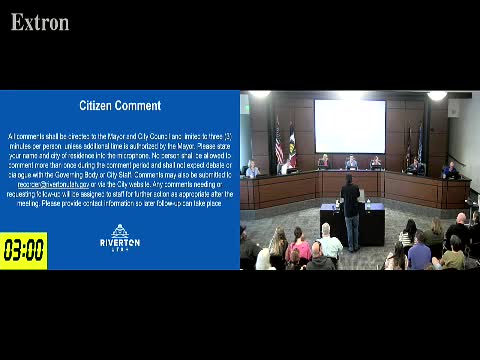
A significant portion of the Sept. 16 public comment period centered on the city's memorandum of agreement that authorizes local cooperation with federal immigration enforcement (commonly discussed by commenters as an "287(g)"-style partnership). Several residents urged the council to oppose or rescind the arrangement, saying it damages trust between immigrant communities and local law enforcement, risks racial profiling and harms community cohesion.
Speakers and concerns: Mara Zenger (speaker) urged the council to reject the program, citing research that programs like 287(g) reduce cooperation with police, increase civil-rights risks and disproportionately affect Latinx residents. Preston Fetzer told the council the partnership with ICE appeared politically driven and not focused on city needs. Braxton Whitlock, a youth leader who serves on the city youth council, said city resources and officer time should not be directed to immigration enforcement and urged council members to oppose the program.
City response: Mayor Staggs said the agreement was intended to enhance public safety, that the city faces cross-border criminal activity associated with drug arrests and weapons seizures, and that the memorandum helps the city coordinate with federal partners while keeping city officers informed when federal agents operate locally. The mayor said the agreement cost the city no training funds and argued the partnership would help the city address violent criminals and serious offenses. The police chief confirmed the memorandum was vetted by the department and legal counsel and said it would not mean routinely asking about immigration status during traffic stops; he said immigration status would be discussed only when arrests or serious criminal investigations were involved.
Why it matters: opponents said such cooperation undermines trust and would discourage immigrant victims and witnesses from reporting crimes; proponents and city leaders said cooperation with federal authorities can assist the city in apprehending violent fugitives and high-threat offenders. The council did not vote on a policy change at the meeting; the mayor and chief offered to meet with concerned residents and to provide more detail about how the memorandum will operate in practice.
Ending: The issue is likely to remain a subject of local debate; the mayor encouraged residents to discuss concerns with him and the police chief and said public safety remains the city's top priority.