Get Full Government Meeting Transcripts, Videos, & Alerts Forever!
Get email alerts on the Water Treatment Pfas topic
No spam. Unsubscribe anytime.
North Lauderdale outlines two-site plan, $7 million engineering grant to rebuild water plant for new PFAS limits
Summary
City officials described two site-layout options, lengthy construction impacts and a 2031 compliance deadline after the city secured a $7 million state revolving loan grant to fund engineering for a new water treatment plant to meet tightened PFAS limits.
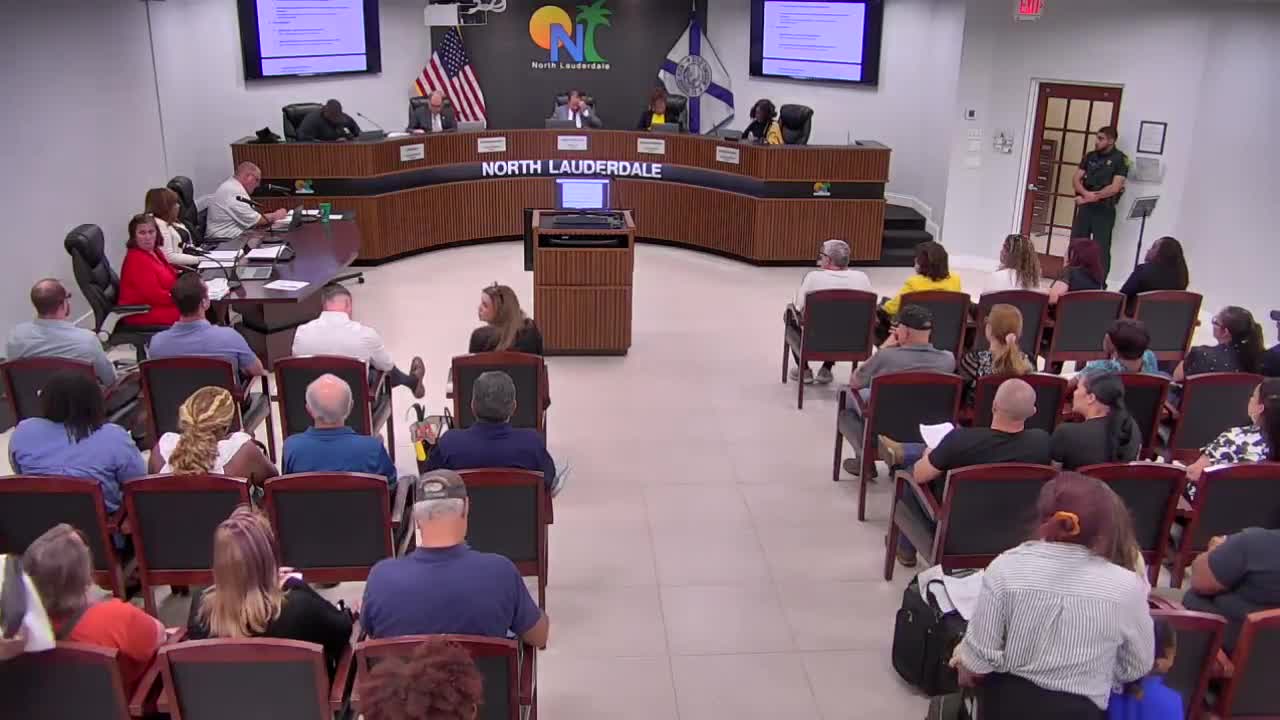
City of North Lauderdale officials on Sept. 9 told the City Commission that they have secured a $7,000,000 state revolving loan/grant to pay engineering costs for a new water treatment plant and must choose between two construction-site plans by October.
The decision matters because the U.S. Environmental Protection Agency and related guidance have driven federal and state PFAS drinking-water limits down sharply, city staff said. City Manager Neil Wilson told the commission, "At one point, the requirement was that PFAS needed to be like 70 parts per billion, and they've lowered that all the way down to 3, and almost no one meets that 3 number." Wilson said the full replacement is expected to cost on the order of $80 million for North Lauderdale.
City engineers presented two site layout options that place treatment facilities, a new deep injection well for concentrate disposal, monitoring wells and large construction staging areas on or adjacent to the City Hall/public works site. Assistant Public Works Director Hong (presenting as the project engineer) said construction will be extensive and take about three years, with drilling for the deep injection well and monitoring well taking 18–24 months. "By 2031, we need to be in compliance," Hong said, summarizing the regulatory timetable the commission must meet.
Why it matters The new PFAS limits and the scale of work mean long, disruptive construction on a site that now houses parks operations and public-works functions. City staff said the city must pick a site plan in October to allow time for geotechnical work, permitting and drilling so the plant can be fully operating well before the federal/state compliance deadline.
Details of the two options and impacts - Funding and schedule: Wilson said the city obtained a $7,000,000 state revolving loan/grant specifically for engineering; the total plant rebuild is currently estimated at about $80,000,000. He also said there is congressional activity that could add federal dollars but characterized the proposals as only a start. - Disposal: Hong and staff said the proposed treatment technology will create a concentrate stream that cannot be discharged to drinking-water supplies; it must be disposed via a deep injection well. The engineer said staff explored alternative disposal options, including sending concentrate to neighboring utilities or to the county wastewater system, but judged pipelines and permitting to be infeasible or prohibitively expensive. - Construction footprint and staging: One option would place the new plant footprint largely on the existing public-works/parks site and displace a ball field for the length of the project; the other option would aim to minimize permanent loss of the ball field but require off-site staging across the street and greater traffic impacts on Rock Island Road. Hong said construction will generate "20, 30 heavy truck loads" for drilling spoil, piping deliveries and other materials during peak activity. - Post-construction replacement: Staff said the ball field and public-works areas would be rebuilt and improved after plant construction is complete.
Next steps and community outreach City staff said they will present a fuller engineering workshop at the commission’s next meeting and plan a formal decision in October to pick one option so drilling and permitting can begin. Wilson also said the city’s federal lobbyists would ask Representative McCormick to back larger federal funding for PFAS remediation nationwide and that staff will work with federal and state officials to maximize available grants and loans.
Commissioners and residents pressed staff on staging, traffic, noise, and impacts to parks and public-works operations; staff repeatedly emphasized the statutory compliance deadline and permitting lead times as the reason for the compressed decision schedule.
Ending City staff will return with a detailed engineering presentation next month and asked the commission to provide direction in October so geotechnical work and permitting can proceed in time to meet the 2031 compliance deadline.