Get Full Government Meeting Transcripts, Videos, & Alerts Forever!
Get email alerts on the Zoning Code Adoption topic
No spam. Unsubscribe anytime.
Northbrook board adopts new zoning code, removes cottage-court and duplex permissions after months of debate
Summary
After more than two years of drafting and public outreach, the Village of Northbrook adopted a comprehensive zoning code update but stripped provisions that would have allowed cottage courts and duplexes in R4 and R5 residential districts following months of public comment and a unanimous vote.
The Village of Northbrook Village Board on Sept. 9 adopted a comprehensive rewrite of the village zoning code but removed provisions that would have explicitly allowed cottage courts and duplexes in the village's R4 and R5 residential districts.
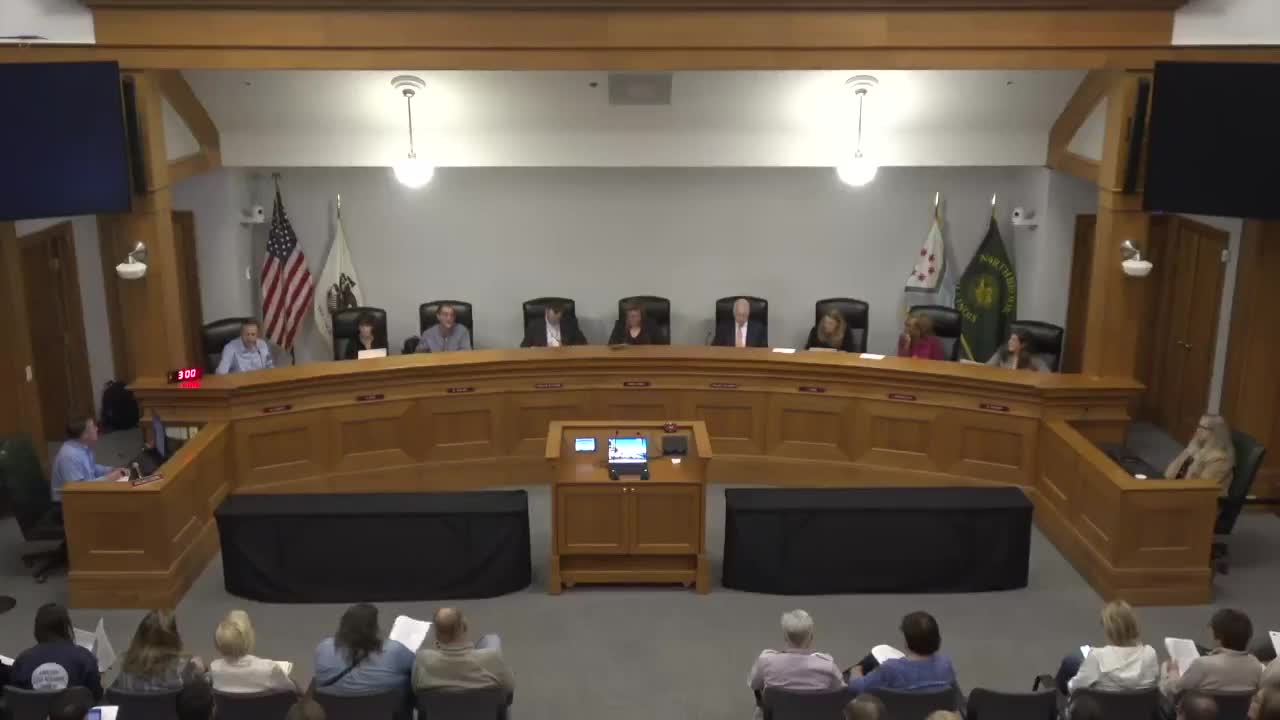
The measure, presented by the Department of Planning and Development Services as the final adoption step in a process that began in 2023, was approved after attorney and staff clarifications and extended public comment. Trustee Israel moved for adoption with amendments; Trustee Cassidy seconded the motion. A roll-call vote recorded all trustees in favor and the motion carried unanimously.
The new code replaces a version first adopted in 1988 and reorganizes use tables and district standards, with staff saying the rewrite aims to “preserve community identity, prioritize user experience, and promote sustainability initiatives.” Director McEwen told the board the effort included town halls, open houses and hundreds of public participants over more than two years. “I first want to start off by saying how excited I am to be here tonight to review this new zoning code,” Director McEwen said.
Why it matters: The rewrite is the most extensive zoning update the village has considered in decades. It changes lot-area thresholds, decision‑making tables, parking standards and use categories intended to reduce friction for routine permitting and to offer new housing choices in some locations. Supporters said it modernizes an outdated code and creates predictable procedures for small projects and redevelopment; opponents said neighborhood character and infrastructure need more study before new residential types are allowed by rule.
What the board changed: The board accepted the staff proposal for the new code but explicitly removed two items from the R4 and R5 rules: cottage courts in R4 and R5, and duplexes from the R5 district. That change followed repeated public comment that the measures risked altering established single‑family neighborhoods. The motion adopted language that applies plan‑commission signage edits and attorney revisions, and then removes the cottage‑court and duplex allowances as described.
Public comments and board debate: More than two dozen residents spoke during two public‑comment periods about the change. Many speakers urged removing cottage courts and duplex allowances, saying those uses would increase traffic, squeeze parking, and change neighborhood character. Resident John Handler said the planning process had not reached most residents and urged more community engagement: “I really urge the board to restart the process of garnering input, sharing what is actually being proposed and educating the community and actively seeking results,” he told trustees.
Other speakers urged modest steps to expand housing options so younger families and older residents can remain in Northbrook. Trustee Hebel, who had been involved in regional housing discussions, said the code was intended to add small options and preserve neighborhood character and also praised staff: “I also want to take an opportunity to congratulate the Department of Planning and Development Services for all of the time they put in,” Hebel said.
Legal and timing notes: Village attorney Elrod advised the board on the ordinance's effective date, noting a consultant had proposed a delayed effective date of Jan. 1, 2026. Elrod recommended a more immediate effective date, explaining that under Illinois law an ordinance with enforcement provisions published in pamphlet form triggers a 10‑day waiting period; if published Sept. 10 the code could take effect Sept. 22, 2025. That timing guidance was discussed before the final vote.
Next steps and related items: With adoption the new code will be published in pamphlet form and enforced according to the statutory waiting period and the changes approved by the board. Items the board referenced for follow up include more property‑by‑property parking analyses and continued outreach on how the code will be administered.
Votes at a glance
- Zoning code adoption (ordinance adopting new zoning code): Motion by Trustee Israel; second by Trustee Cassidy. Outcome: approved unanimously (Trustees Israel, Ross, Hebel, Abel Miele, Koehler, Cassidy and President Ciesla — all recorded “yes”). The board adopted the code but removed cottage courts from R4/R5 and duplexes from R5 as part of the approving motion.
- Warrant list: Approved by roll call earlier in the meeting. The warrant motion included escrow deposit performance bond refunds dated Aug. 16–Aug. 31, 2025, and invoices processed for the same period as listed in the warrant documents. Outcome: approved by roll call.
- Resolution with Community Partners for Affordable Housing (CPAH): The board approved an agreement to use the village’s affordable‑housing fund (derived from fees such as demolition in‑lieu payments) to support permanent affordable units managed by CPAH. Outcome: approved by roll call.
- Rezoning, 2890 and 2990 Dundee Road (ordinance): Motion to approve carried by roll call; the board rezoned those parcels consistent with the new code map amendments.
- Preliminary review: Brownie’s/Mariano’s request to amend a planned development for 784 Skokie Boulevard to allow a gas station canopy and kiosk was sent to the Plan Commission for a public hearing and formal review.
Details and clarifications from the staff record
- Nonconforming lots: Staff explained the code reduces minimum lot area and width thresholds in some districts to reduce the number of nonconforming parcels. For example, the R4 minimum lot area was proposed to move from 12,000 square feet down to 10,000 square feet with a 65‑foot minimum width; the R5 minimum was proposed to drop to 7,000 square feet and 50 feet in width. Staff said those changes would lower nonconforming parcels to roughly 6–11% in the R4 example and to about 10% in R5.
- R5 inventory: Staff said the village has about 2,286 parcels in the R5 district, with roughly 350 already redeveloped; R5 represents an estimated 15–16% of the village’s residential parcels.
- Cottage courts and duplexes: Staff said both housing types had been discussed throughout the two‑year engagement process and that 14 of 22 neighboring communities allow duplexes in at least some form. The board removed the explicit allowance after public comment and trustee deliberation.
Who spoke on the record (abridged)
- Director McEwen, Department of Planning and Development Services (staff presenter) - Attorney Elrod, Village attorney - President Ciesla, Village Board president (presiding) - Trustee Israel; Trustee Ross; Trustee Hebel; Trustee Abel Miele; Trustee Koehler; Trustee Cassidy (Village Board members) - John Handler (resident/public commenter) - John Simonelli (resident/public commenter) - Colette Hedine (public commenter) - Mary Hansen, Carolyn Ferber, Ari Hakaronan, Bridal Mahoney, Diane Chauner, Mark Polisian, Brian Zats, Helen Larson, Federico Maish, Meg O'Keefe, Sherry White, Susan Elfont, Tammy Olsen, Amy Goldberg and others who spoke during the public comment period.
Ending: The board’s adoption completes a multiyear code rewrite but leaves room for future amendments and further neighborhood outreach. The village attorney and planning staff said they expect subsequent clarifying amendments and continued engagement as the code is implemented.