Get Full Government Meeting Transcripts, Videos, & Alerts Forever!
Get email alerts on the Conservation Programs topic
No spam. Unsubscribe anytime.
Fayette County Conservation District reports increased participation, ag investments and plans for agroforestry
Summary
The Fayette County Conservation District reported growth in participation, $237,000 in Kentucky Ag Development Board funds administered for the CAPE program and plans to pursue agroforestry funding through EQIP; staff and supervisors requested continued outreach and program expansion.
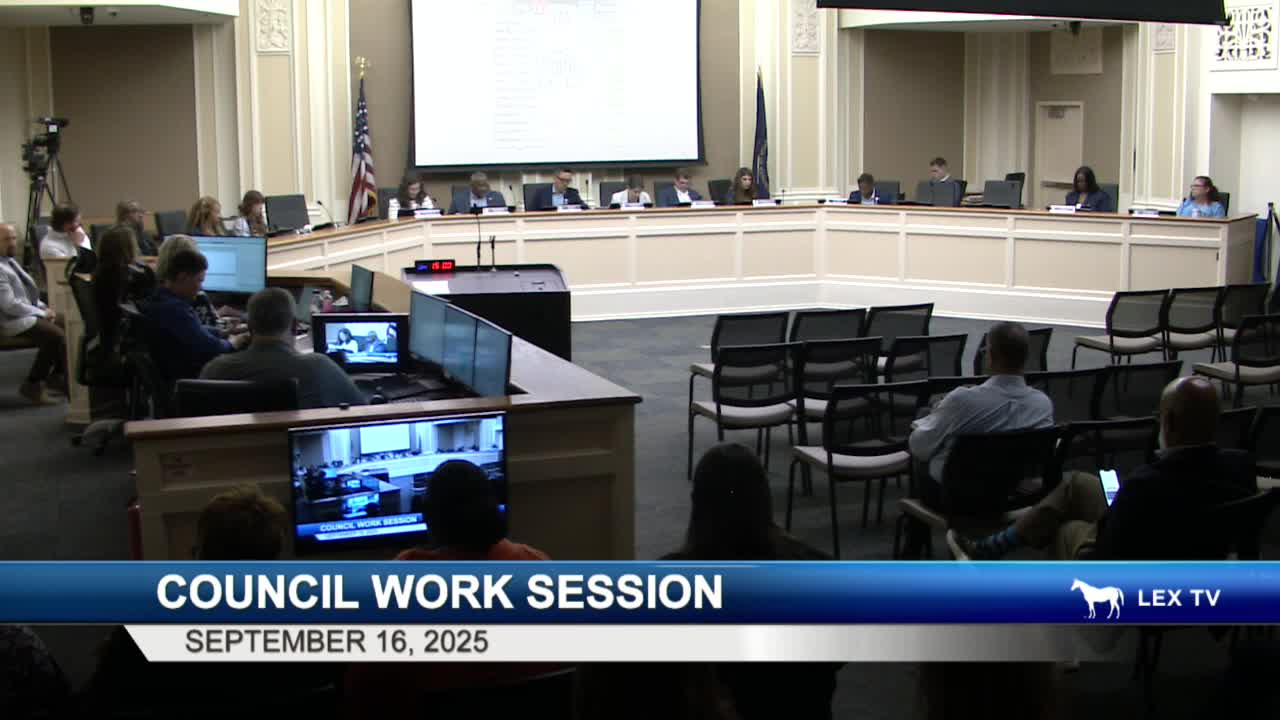
Aaron Clark, chair of the Fayette County Conservation District, presented the district’s annual report to the council on Sept. 16, highlighting increased program participation across the county, expanded backyard conservation activity within the urban service boundary and plans to pursue agroforestry funding.
Clark said the district returned roughly 69% of its revenue to taxpayers through cost-share programs and described $237,000 received via the Kentucky Agricultural Development Board to administer the CAPE (County Agricultural Investment Program). He reported that 63 agricultural producers spent $934,797.89 in projects that received $227,894 in matching assistance under the Kentucky Ag Development Fund.
Clark emphasized growth in urban-program participation, noting 889 conservation projects inside the urban service boundary ranging from rain-barrel installs to backyard raised beds and backyard-conservation chicken projects. He said first-time applicants increased significantly and that the district used millage revenue (0.001% of Fayette County property taxes at valuation, per Clark’s presentation) plus fees from equipment rentals (seed drills, lime spreader) and donations to support programs.
Director Heather Silvanic (recorded in the transcript as Heather Silvanic) said the district plans to request federal program funds to support agroforestry practices through the Environmental Quality Incentives Program (EQIP) administered by the NRCS, and that community partners are participating in those efforts.
Councilmember LaGrise praised the district’s outreach and asked for more detail on the agroforestry initiative; Clark deferred to Silvanic and community partners for the technical particulars and said they will continue developing program details.
Ending: Clark closed by noting the district reached over 6,000 individuals through outreach and continues to expand conservation education, grants and scholarships across age groups.