Fayette County Conservation District outlines backyard conservation program after millage-fueled expansion

5778147 · September 5, 2025

Loading...

AI-Generated Content: All content on this page was generated by AI to highlight key points from the meeting. For complete details and context, we recommend watching the full video. so we can fix them.

Summary

The Fayette County Conservation District described a growing Backyard Conservation Program that offers a $200 reimbursement for eligible projects, prioritizes native tree and shrub plantings this fall, and has assisted more than 1,000 residents since 2019 after a millage increase expanded staff capacity.

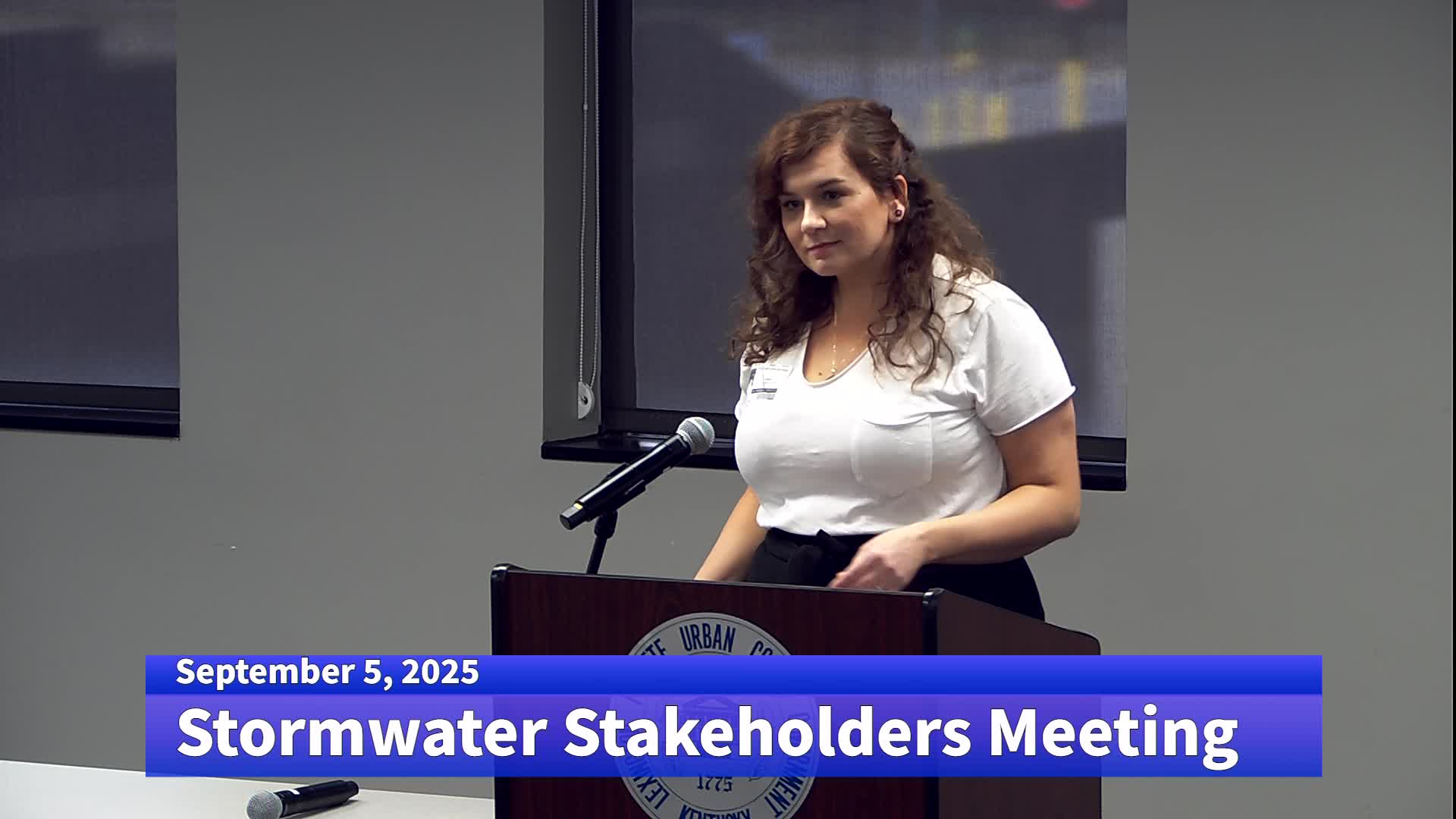
Heather Silvanek, director of the Fayette County Conservation District, briefed the Stormwater Stakeholder Advisory Committee on the district’s Backyard Conservation Program and related services, reporting rapid demand and program growth since the program’s 2019 launch.

Silvanek said the district offers a $200 reimbursement (described as 50% of overall eligible expenses) for approved backyard conservation projects across roughly a dozen eligible categories, including food production, wildlife habitat, rain gardens, low-impact development practices, riparian buffers and soil amendments. Applications are processed by a two-person staff; Silvanek said the program filled up within days when the spring sign-up opened and that most applicants are approved within days of applying.

Why it matters: Silvanek told the group that the district has assisted over 1,000 individuals inside the Lexington urban service area and has paid out about $188,000 in reimbursements, representing an economic investment the district estimated at more than $400,000. She said roughly 82% of approved applicants complete their projects, and the district this year is prioritizing applicants who pledge to plant native trees and shrubs.

Program details and partners: Silvanek said the Backyard Conservation Program is a USDA-recognized service and that the district partners with the Natural Resources Conservation Service (NRCS), the Kentucky Division of Conservation, and the University of Kentucky Cooperative Extension Service for technical support. The district also runs a soil-sample voucher program and several cost-share programs; some programs require farm registration with the Farm Service Agency.

Funding and staffing: A council member noted the millage change in 2023; Silvanek said that doubling the district’s operating budget allowed hiring a second full-time staff member (Sarah Ward) who now administers applications. The district plans a presentation to city council on Sept. 16 to report how the additional budget has been used.

Events and outreach: Silvanek listed upcoming events and said nutrient-management information sessions and a soil-sample program are available; she also named John Mata of Cosmic Asada as the program graphic designer. She closed by inviting questions and individual follow-up with the district.