Get Full Government Meeting Transcripts, Videos, & Alerts Forever!
Get email alerts on the Land Use Procedures Master Plan Conformance topic
No spam. Unsubscribe anytime.
Committee advances CB 42 after removing mandatory council-conference language and affidavit; bill tightened on pre-application transparency
Summary
CB 42 was forwarded with a favorable recommendation after committee amendments removed mandatory language requiring applicants to attend council-hosted public meetings and deleted an affidavit requirement; the committee also directed staff to draft filing language so applicants can submit pre-application materials without being held up by the new
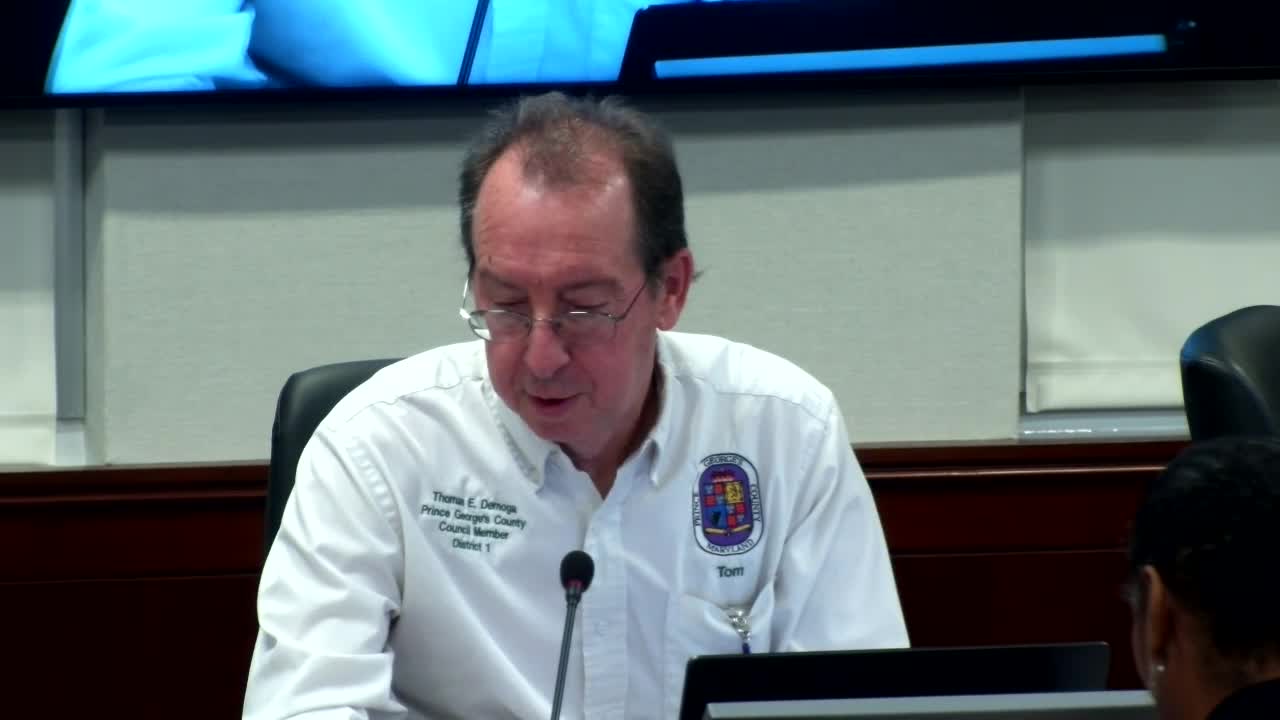
The Planning, Housing and Family Development Committee voted 3-0 Thursday to forward CB 42 (draft 2c) with amendments that remove certain mandatory pre-application provisions and an affidavit requirement, and that direct staff to craft language to preserve applicants’ ability to submit pre-application materials while incorporating new transparency measures.
CB 42 would amend decision standards for detailed site plans and special exceptions to require consideration of conformance with applicable master plans and sector plans; the draft in committee removed references to the county general plan following executive-branch concerns about the general plan’s vagueness. The bill also consolidates multiple pre-application procedures and adds provisions intended to increase transparency: a searchable database of neighborhood meeting notices, ADA-accessible mailing materials for that database, and a change that would make persons who provide contact information at neighborhood meetings persons of record.
During floor discussion the sponsor said the goal is to consolidate pre-application rules and improve transparency after earlier drafts and separate LDR proposals were combined. Eric Irving and other staff summarized two major themes: removal of general-plan references and changes to the pre-application period, shifting some previously mandatory council interactions to informational consultations. The committee agreed to delete a sentence that had required applicants to attend county council-hosted public meetings if requested in writing, and to delete the affidavit requirement tied to consultations. The committee also instructed staff to draft language so that applicants will not be precluded from filing pre-application submissions while the consultation and public-engagement documentation proceed.
Developers and land-use attorneys who testified raised timing and process concerns. Edward Gibbs, a land-use attorney, told the committee that the draft, as written, could delay submission and acceptance of applications because it appeared to require multiple consultation steps before an application could even be filed. Park and Planning counsel and staff highlighted practical concerns about how distance measurements and membership of planning reviews are handled. Industry representatives said master-plan conformance at the detailed site plan stage could introduce legal uncertainty; environmental and civic groups favored stronger links between site plans and master-plan policy implementation.
The committee adopted an amendment to remove the most mandatory consultation language and the affidavit language and directed staff to provide introductory drafting that preserves applicants’ ability to file for pre-acceptance review while documenting outreach and consultations. A motion to recommend favorable on draft 2c as amended passed 3-0.
What happens next: staff will reword filing requirements and affidavit language before introduction, and the revised draft will be posted in the council packet for the next legislative step.