Get Full Government Meeting Transcripts, Videos, & Alerts Forever!
Get email alerts on the Affordable Housing Rural topic
No spam. Unsubscribe anytime.
Florida Nonprofit Housing urges county to prepare for possible SHIP increase, outlines rural housing tools
Summary
Florida Nonprofit Housing and partners presented an overview of rural housing programs and suggested steps Highlands County can take if state SHIP minimums rise; the presenters announced a local workshop Oct. 9 in Lake Placid.
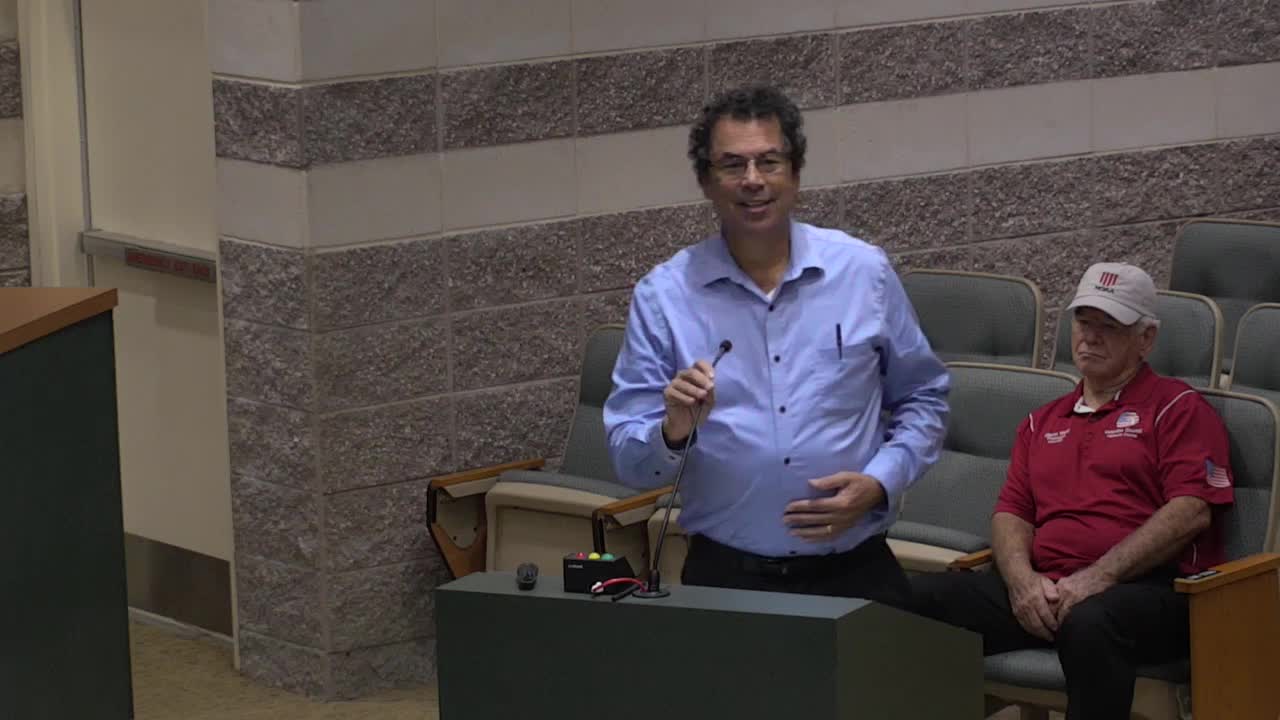
Steve Brown, executive director of Florida Nonprofit Housing, and Kirk Cron summarized federal and state programs that rural counties use to support affordable housing and recommended preparations if state funding increases.
Brown said, "Florida Nonprofit Housing is a 47 year old nonprofit. We're based here in Sebring," and described the organization's long-term work on farmworker and self-help housing. Brown and Cron presented data showing rural counties often have lower incomes, higher homeownership and higher percentages of elderly residents, and explained why that profile changes how counties use housing funds.
The presentation reviewed major federal tools commonly used in rural development: USDA programs (Section 502 low-interest mortgages, Section 504 rehabilitation, Section 523 self-help technical assistance, Section 515 rental properties) and Section 521 rental assistance. Brown said one pending Senate proposal would "decouple" 521 rental assistance from maturing 515 mortgages, which would let projects keep rental subsidies even after USDA mortgages reach maturity. Cron explained that extending Section 502 loan terms from 33 to 40 years was another change being discussed to increase affordability.
State-level developments the presenters covered included a rural renaissance bill that did not pass and a separate law, described in the presentation as "Yes in God's Backyard," which allows certain housing projects on land owned by religious institutions if a portion (not less than 10%) is designated affordable. Brown noted Highlands County receives about $700,000 in SHIP funds this year and that a proposed change discussed in Tallahassee would raise the SHIP minimum to $1 million; that change did not pass in the last session.
Cron encouraged county officials and nonprofits to plan for several scenarios: raising maximum awards, expanding SHIP strategies, contracting for SHIP administration, conducting meet-and-greets to find local contractors, and tightening eligibility procedures for grant recipients. Both presenters emphasized data gaps and infrastructure costs as persistent rural barriers.
Florida Nonprofit Housing and the Florida Housing Coalition are hosting a workshop for rural communities Oct. 9 in Lake Placid; Brown and Cron invited local leaders to attend. Commissioners and staff asked several detailed questions about SHIP administration, contractor availability, and coordination with local program staff. The presenters offered to share a written breakdown of recent state allocations affecting Highlands County.