Get Full Government Meeting Transcripts, Videos, & Alerts Forever!
Get email alerts on the Health Care Providers topic
No spam. Unsubscribe anytime.
SSM Health tells Dane County committee primary care access improving; virtual care and new clinics highlighted
Summary
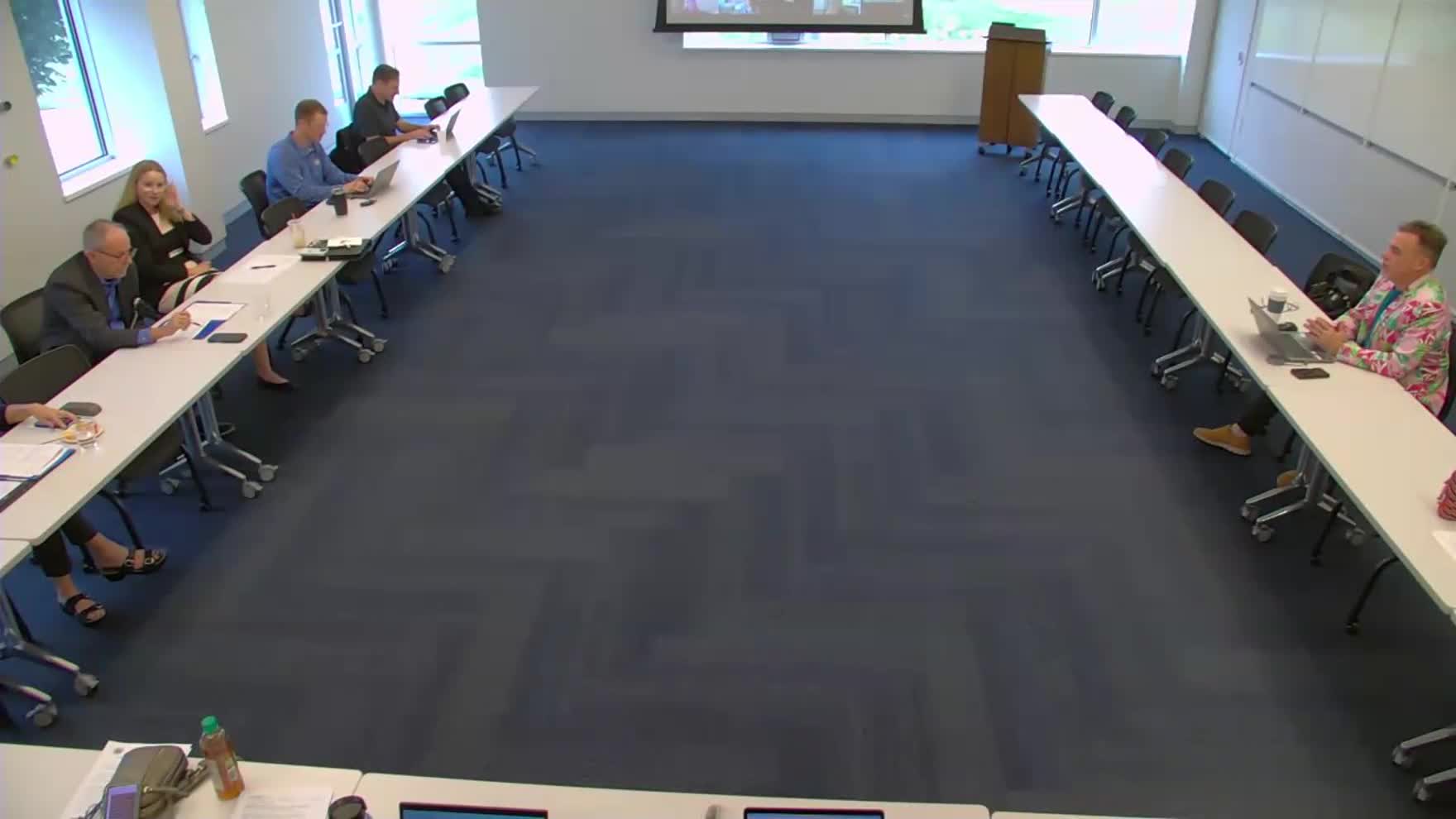
SSM Health representatives told the Dane County Insurance Advisory Committee on Sept. 10 that primary care access in Dane County has improved due to new hires, expanded virtual care, urgent care throughput gains and planned new clinic space in Verona and Sun Prairie.
SSM Health executives told the Dane County Insurance Advisory Committee on Sept. 10 that primary care access in the Madison metro area and Dane County has materially improved since the health system last briefed the committee.
SSM officials said recruiting and capacity expansions are the main drivers of better access across the county. "We started 44 new primary care providers in '24, and we've already started another 25 this year and another 18 signed," said Kate Porter, vice president of medical group operations at SSM Health. Porter said the hires are a mix of physicians and advanced practice providers and that virtual and urgent care offerings have also reduced wait times.
Committee members said they welcomed the news but pressed SSM on several continuing problems—limited access outside Dane County, difficulty finding contracted network providers in search tools, and continuity of care for patients with complex needs.
SSM executives and physician leaders described specific changes and initiatives
- Recruiting and staffing: Kate Porter and Dave Otemaker, described as a physician executive at SSM Health, said recruiting has reduced primary care shortages in Dane County. Porter said roughly half of new primary care hires are physicians and half are advanced practice providers. The speakers said pockets of need remain outside the Madison metro area, including Baraboo.
- Virtual and urgent care: Porter said SSM’s “express virtual care” operates 6 a.m. to 10 p.m., seven days a week, with patient satisfaction scores near the high 90s and typical waits of roughly five minutes (sometimes up to 20). SSM has also worked to reduce urgent care wait times by increasing throughput and capacity.
- New facilities and services: SSM said it broke ground on a Verona clinic planned to open about a year from now (the presenters estimated roughly 2026) with an initial plan for a five‑provider primary care team and additional specialty services including dermatology, OB‑GYN, orthopedics and larger physical/occupational therapy space. SSM also said a Sun Prairie outpatient center will open imminently, hosting an eye center and increased orthopedic same‑day surgery capacity.
- Behavioral health: Otemaker said SSM added three behavioral health providers this year and expects several more; he said access for Dane County has "significantly improved" and that SSM uses virtual psychiatry consults and asynchronous consult tools for primary care providers.
Committee questions and concerns
Committee members raised multiple operational details and patient‑facing issues. Marissa Burack described trouble locating contracted network providers via online search and asked whether contracted clinicians can be educated or encouraged to “opt in” so members can find them. Porter said she would take that as a follow‑up for SSM’s network team.
Members also discussed nurse triage and after‑hours routing. Porter and SSM staff said after‑hours nurse triage is now routed through the health plan’s national nurse line for many patients and that those nurses follow standardized triage algorithms; the triage nurses do not have direct access to patients’ electronic medical records. Committee members described examples where triage advice prompted urgent care or ER visits and requested that SSM confirm whether triage staff are prompting patients toward virtual visits when appropriate.
Several members, including Misha Dancing Waters and others, said continuity of care remains a concern—particularly for patients with complex or chronic conditions who rely on consistent relationships with a single clinician. SSM officials acknowledged the national challenges of retaining continuity‑oriented providers and described multiple retention and efficiency initiatives, including onboarding improvements, changes to electronic health record workflows and early adoption of in‑room documentation assistance to reduce after‑hours charting for clinicians.
What this means locally
SSM officials said improvements are measurable in hiring and throughput but acknowledged uneven results across the health system’s service area. Committee members asked for more granular reporting—local wait‑time and vacancy metrics by clinic and by market—so the group can evaluate whether the systemwide hiring numbers translate into improved access for county plan members across Dane County’s geography.
The presenters committed to follow up on specific items the committee raised, including provider search behavior for contracted clinicians, clarity on nurse triage workflows and more detailed locality‑level access data.
SSM representatives who spoke at the meeting were Kate Porter, vice president, medical group operations at SSM Health, and Dave Otemaker, physician executive at SSM Health. Committee members asking questions included Laura Bridal and others from the Dane County Insurance Advisory Committee.
The committee heard SSM’s presentation before resuming discussion on health insurance plan design later in the meeting.