Get Full Government Meeting Transcripts, Videos, & Alerts Forever!
Get email alerts on the Zoning Ordinance topic
No spam. Unsubscribe anytime.
County proposes zoning ordinance updates to align advertising and appeal timing with state law
Summary
Staff recommended amending the zoning ordinance to reference state law for advertising periods and to clarify when a board decision becomes final relative to appeal windows; the board discussed preserving a 30-day local advertising practice and tying finality to the applicable appeal period.
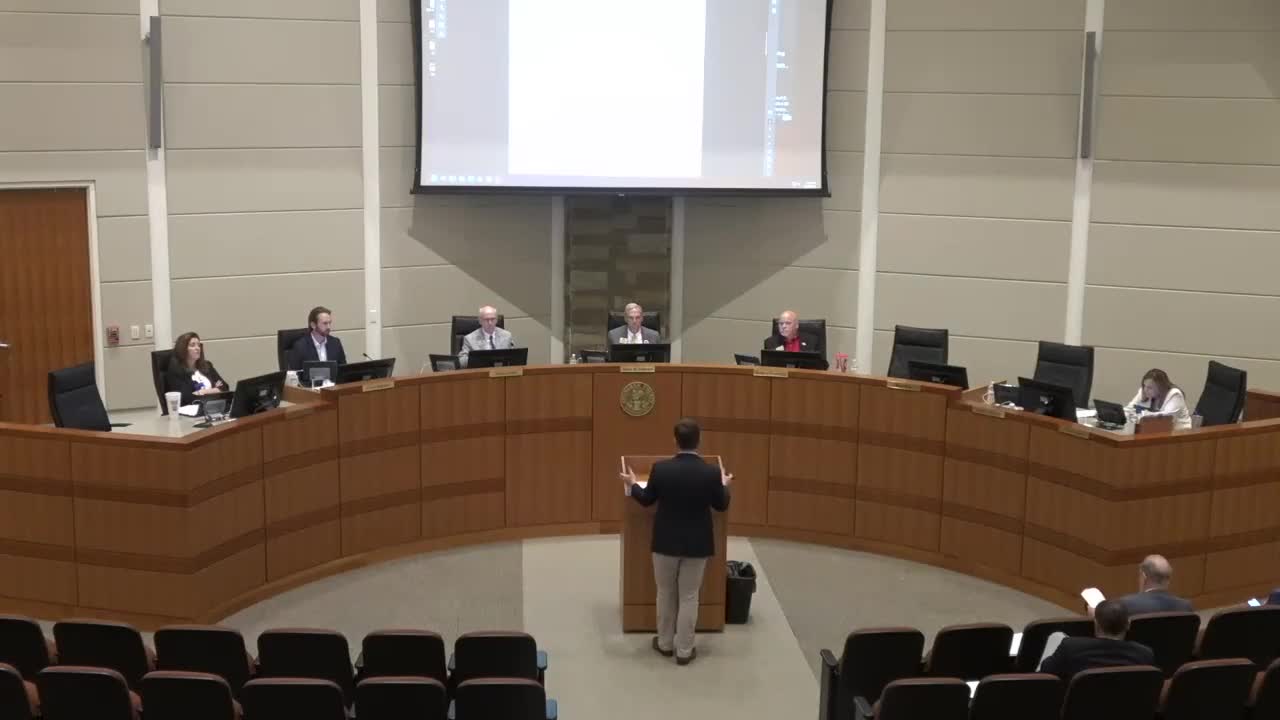
Cherokee County planning staff recommended revisions to the county zoning ordinance on Sept. 16 to align local timing requirements for quasi‑judicial proceedings with recent changes in state law and to clarify how long a board decision remains pending for appeals.
What staff proposed
Staff said House Bill 155 (adopted by the state legislature in May 2025) reverted earlier changes and restored a 15‑ to 45‑day advertising window for quasi‑judicial matters (which had been changed to a 30‑day uniform period in 2022). Planning staff proposed replacing specific day counts in the county ordinance with a short phrase: "in accordance with state law," allowing the county to follow the state window while keeping flexibility for cases that require additional advertising.
Staff also proposed removing language that made a board decision "not final until the minutes are duly adopted and approved by the board," because that practice sometimes delayed applicants' ability to proceed even when the board voted. Staff proposed clarifying finality by tying it to the applicable appeal period; commissioners suggested a 10‑day appeal window language in some places to align the procedural rules and to avoid permitting activity that could be rendered void by a timely appeal.
Enforcement and compliance timing
The staff presentation also covered compliance when an application is filed to remedy an existing zoning violation. Current ordinance language required correction within 10 days following denial, with an option for the board to extend up to 90 days. Staff said 10 days was often too short when the remedy requires significant work; conversely, a 90‑day default could be excessive when an issue was urgent. Staff recommended allowing the board to set a specific compliance deadline or to work with field inspectors to set a reasonable timeline case-by-case.
Board discussion and next steps
Commissioners asked clarifying questions about when appeals run, whether the county could pick a 30‑day internal standard for advertising even while deferring to state law, and whether the county's public-notice workflow (sign posting, legal ads and mailings) can reliably meet shorter advertising windows. Staff said they would continue to use a 30‑day internal notice schedule for stability, but the ordinance language would default to state law if the legislature changes notice requirements again. Commissioners asked staff to add language tying finality of decisions to the relevant appeal period and to make compliance timelines for violation remediation more flexible and workable with code inspectors.
Ending
Staff will bring a draft text amendment for public hearing and adoption following the board's direction to reference state law for advertisement windows, to clarify finality relative to appeal periods and to allow staff and the board to set case‑specific compliance timelines.