Get Full Government Meeting Transcripts, Videos, & Alerts Forever!
Get email alerts on the Employee Benefits topic
No spam. Unsubscribe anytime.
DeKalb staff present employee benefits peer study; zero‑cost police premiums highlighted, cost work ordered for fire and public safety
Summary
County staff presented a peer comparison of DeKalb employee health plans, highlighting that sworn police who elect the HSA have a $0 premium (including family coverage). The committee directed staff to cost options for extending similar coverage to fire and broader public safety and to identify funding sources.
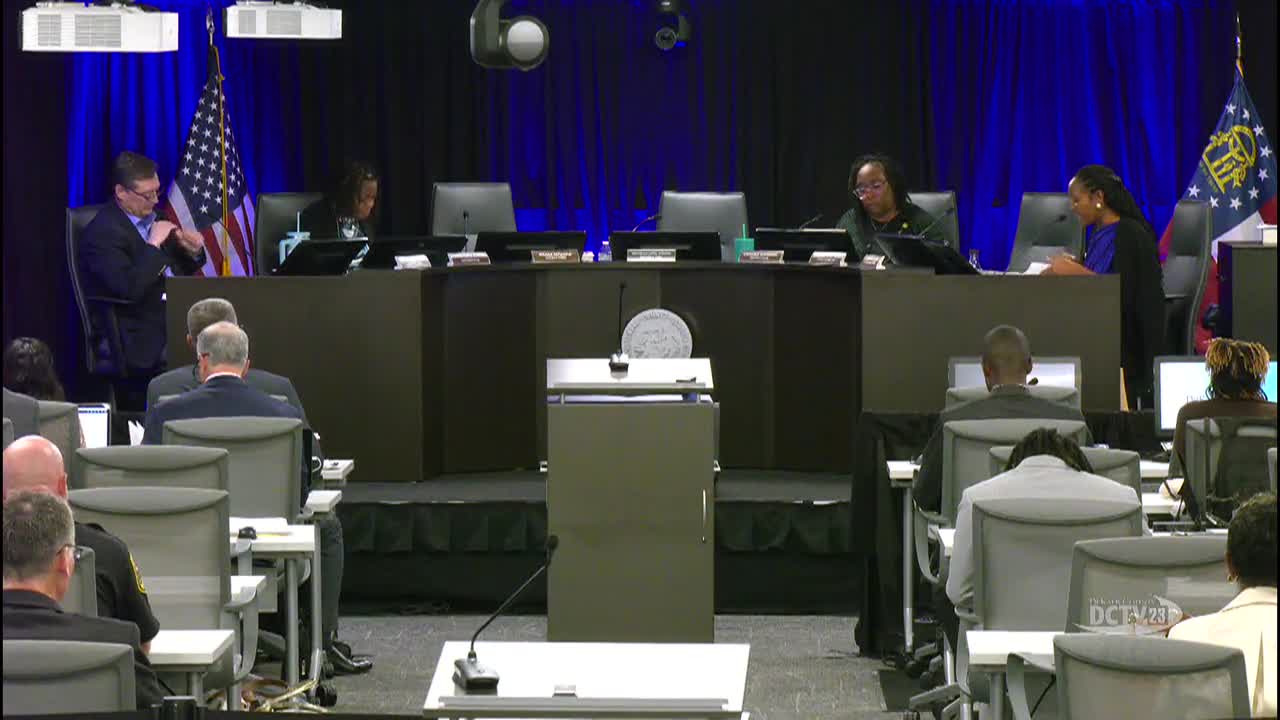
DeKalb County staff presented a peer study to the IRPS Committee comparing DeKalb’s employee health and wellness plans with peer counties and the city of Atlanta. Presenters said the comparison emphasized plan design rather than posted premiums because many jurisdictions do not publish premium detail.
Presenters said DeKalb offers five plans (three self‑funded, two fully insured) and that the county has largely held employee premium contributions steady: “For sworn police officers, if they elect the health savings account, their premiums are 0,” the consultant said, adding that family coverage is included for sworn officers who elect the HSA.
Staff framed prior years’ strategy: the county used to pass rate increases to employees, then shifted to managing plan design and vendor relationships beginning around 2013–2014. Presenters said the county kept plan designs stable in recent years—changing plan design once in the last nine years—and that, on a gross basis, DeKalb pays about $125,000,000 a year for employee health care.
Staff described a county policy change several years ago to provide basic life insurance automatically to all employees equal to 2.25 times salary to avoid gaps when younger employees fail to elect coverage. Presenters said that, given an average employee annual salary of about $50,000, the automatic life insurance yields more than $100,000 in coverage for an average employee.
Committee direction: commissioners asked staff to prepare separate cost estimates and funding scenarios for extending zero‑premium HSA coverage to (1) fire personnel, (2) public safety broadly including the sheriff’s office and 911, and (3) a separate public‑safety‑only estimate that includes or excludes constitutional offices as applicable. Staff agreed to “crunch those numbers” and to track funding sources for the options.
Why it matters: commissioners framed the benefit changes as recruitment and retention tools, especially for sworn personnel. Several commissioners requested clear, itemized cost and funding scenarios before expanding the zero‑premium option beyond police.
Ending: staff said they will return with the requested cost breakdowns and funding options after further analysis. No formal vote or budget appropriation was taken at the committee meeting.