Get Full Government Meeting Transcripts, Videos, & Alerts Forever!
Get email alerts on the Education Literacy topic
No spam. Unsubscribe anytime.
United Way presents results of Experience Corps literacy program; county funding helped reach 300 students, program has sunset
Summary
United Way Greater Atlanta told DeKalb County commissioners its Experience Corps tutoring program served about 300 K–3 students with help from 177 volunteers and county funding but has concluded for the 2024–25 school year. Commissioners discussed continuing supports and possible use of state scholarship funds to extend services.
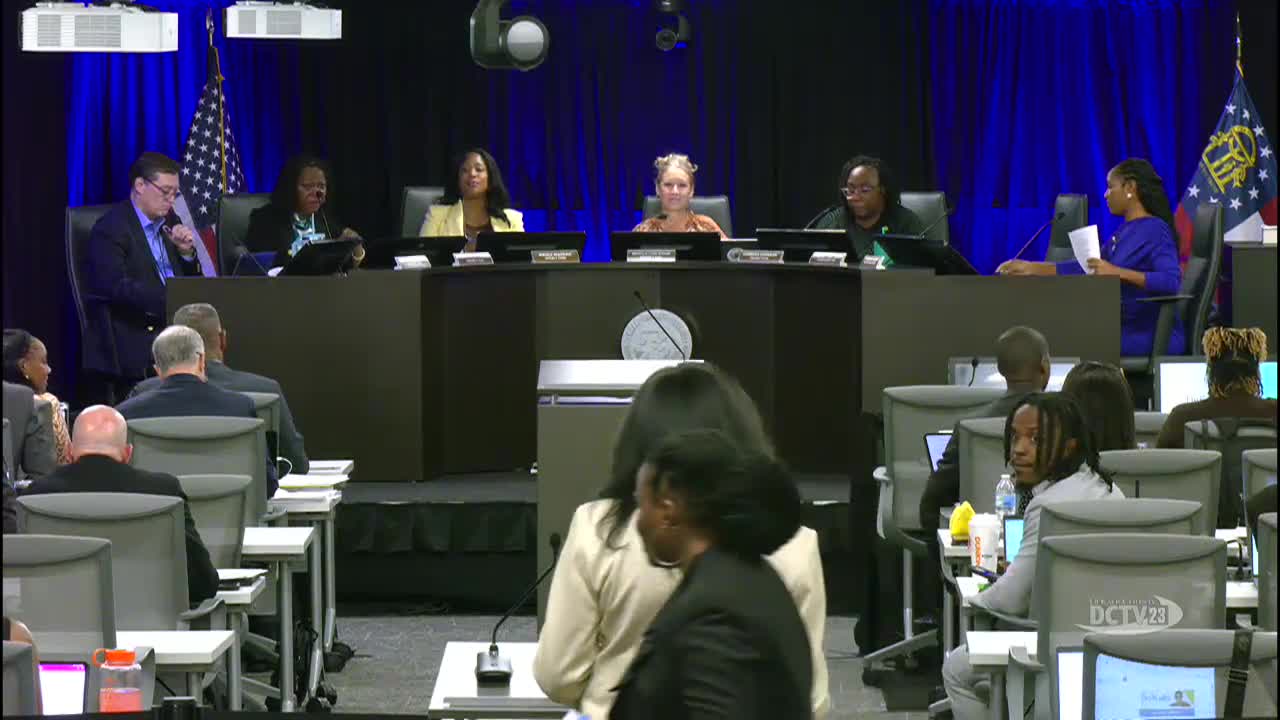
United Way Greater Atlanta presented results of its Experience Corps literacy program to the DeKalb County Board of Commissioners at the Committee of the Whole meeting on Sept. 16, saying the program served roughly 300 students and used volunteers aged 50 and over to deliver one-on-one reading instruction.
The presentation, led by Laura Miller, senior director of family engagement, and Renee Wilson, director of the Experience Corps program, summarized outcomes, funding and next steps. United Way officials said the county commission invested $218,000 in the program and that DeKalb Human Services and other partners leveraged roughly $332,000 in additional support. The presenters said the program has ‘‘sunset’’ and will not operate as a county-funded program for the 2024–25 school year, but United Way will support partners and help close out finances.
United Way officials highlighted program metrics: they reported volunteer participation from about 177 older-adult tutors; more than 3,500 hours of training for tutors; nearly 7,500 hours of tutoring delivered; partnerships with nine schools and nine site coordinators; and local proficiency gains they described as about 1.5 grade levels on average for participating students. Site coordinator Jiquita Rinder said that ‘‘all the third grade participants in the program passed the reading section of the Georgia Milestone Assessment on their first try,’’ a claim United Way presented as a site-level outcome.
Volunteer Linda Williams provided a personal account in the presentation, describing a first grader who progressed from struggling to read to completing a page aloud: "The joy in her eyes the first time she read an entire page aloud without hesitation was unforgettable," Williams said.
United Way staff described operational supports used during the program: AmeriCorps VISTA members supported volunteer recruitment, data collection and digital-skills training for older volunteers; a turnkey curriculum aligned to the science of reading; flexible scheduling models (in-school or after-school); and printed handbooks and training materials for school partners. Presenters also cited lower absenteeism among participating students and said tutors often provided informal wraparound supports to children in need.
Presenters acknowledged challenges. COVID-era disruptions required device distribution to sustain virtual tutoring. United Way said volunteer retention fluctuated because volunteers sometimes left for personal reasons. Presenters also cited uneven district-level funding and school capacity constraints that limited where the program could be placed during the pilot.
Commissioner Ladina Bolton, citing a state program she described as the Georgia Promise scholarship for students at low-performing schools, asked whether scholarship funds could be used to extend or pilot Experience Corps in schools on the state list. Miller said United Way would consider that approach and work with districts and commissioners that want to pursue it.
Commissioner Marita Davis Johnson and others thanked United Way for the six years of work and for connecting older volunteers with students.
United Way said next steps include assisting partners who want to scale similar programs, offering professional learning aligned to the science of reading, helping with the financial closeout of the program, and connecting volunteers with other local literacy efforts. The organization did not present a formal request for new county funding during the Sept. 16 meeting.
Ending: United Way requested follow-up conversations with commissioners about schools and districts that may want to sustain or relaunch a similar tutoring model. No formal county action or vote on funding was recorded during the Sept. 16 Committee of the Whole meeting.