Get Full Government Meeting Transcripts, Videos, & Alerts Forever!
Get email alerts on the City Budget Millage topic
No spam. Unsubscribe anytime.
St. Augustine sets tentative millage at 7.5 mills; commission approves FY2025–26 budget on first reading
Summary
City commissioners on Sept. 2025 adopted a tentative millage rate of 7.5 mills—2.02% above the rollback rate—and passed the FY2025–26 budget on first reading amid public objection from residents citing rising property-tax burdens.
The City Commission of the City of Saint Augustine on Sept. 2025 adopted a tentative millage rate of 7.5 mills and approved the city's FY2025'026 budget on first reading.
The tentative rate of 7.5 mills was adopted by roll call after a public hearing; city staff said that figure is 2.02% above the rollback rate of 7.3513 mills as required by Florida Statutes 200.065. The commission then approved the budget's first reading, which includes capital projects and operating allocations for the fiscal year beginning Oct. 1, 2025 and ending Sept. 30, 2026.
Why it matters: The commission's decision preserves revenue that staff and commissioners said is needed for roads, resilience and other capital projects; residents at the hearing said the decision will worsen affordability for people on fixed incomes and urged the commission to roll back the millage or seek alternative revenue-sharing with St. John's County.
City action and immediate effect
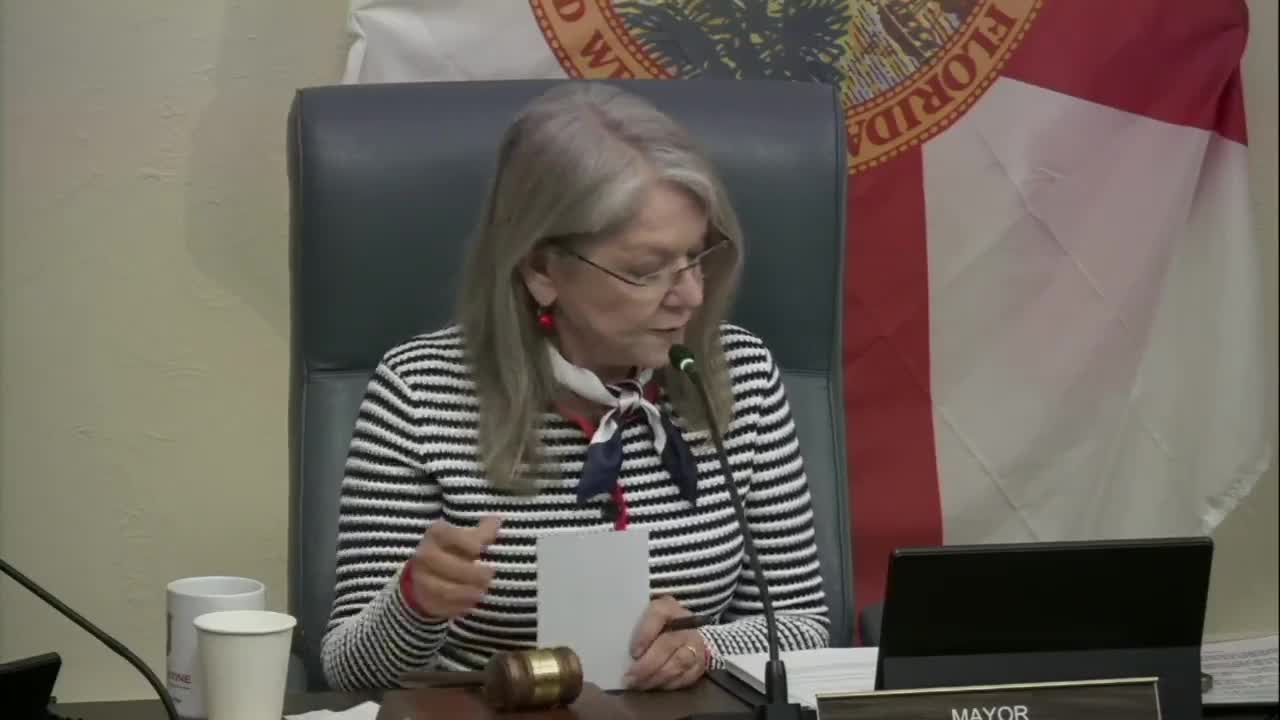
At a special meeting that commenced at 5:05 p.m., the commission voted to adopt Resolution 2025-32 setting the tentative millage rate at 7.5 mills. The resolution text read that the tentative millage rate is 7.5 mills and noted the required rollback calculation under Florida Statutes 200.065. The roll call showed unanimous "yes" votes from Mayor Nancy Sykes Klein and commissioners John de Prater, Cynthia Garris and Barbara Blonder. The resolution record lists the tentative millage as an increase of 2.02% over the rollback rate.
The commission also approved on first reading Ordinance 2025-29, the proposed annual budget for FY2025'026, which the ordinance text says will become effective upon final passage. The ordinance passed first reading by unanimous roll call; the ordinance text as read in the meeting sets forth the budget estimates for revenues and expenditures and notes the budget will be spread in full on the commission minutes.
What city staff and commissioners said
City staff (Miss Burns) told the commission the 7.5-mill rate "remains at 7.5 mills" and that the rate "represents an increase over the rollback rate of 7.3513 mills by 2.02%." Staff said the incremental revenue from maintaining the millage at 7.5 mills would be used for items discussed at earlier budget workshops, including continued road resurfacing, the South Dixie Highway sidewalk project and continued implementation of the public improvement plan.
When Commissioner Cynthia Garris asked for projection information about lowering the rate to 7.0 mills, staff answered that "each tenth of a mill will cost $352,353," and that a half-mill reduction would therefore be on the order of $1.5 million in forgone revenue.
Commissioners who spoke in favor of retaining the tentative rate cited infrastructure and resilience needs. Commissioner John de Prater noted the city is pursuing resiliency projects, has obtained grant funding that yields flood-insurance discounts, and that much of the city's recent resiliency spending requires local matches. "We have infrastructure needs ... for resiliency, for flooding," he said, and described grant-writing and staff work that brought federal and other grants to the city.
Public comment: residents urge rollback or county sharing
Multiple residents urged the commission to roll back the millage or find alternative county funding.
Devonna Bell (38 Fullerwood Drive) told the commission that property taxes have risen sharply and said, "When taxes are raised by dollar, that is a raise in taxes," and urged the commissioners to "roll back the millage rate" so taxes do not increase further for residents, particularly people on fixed incomes.
Jeffrey Pepper (60 Osceola Street) said he canvassed town blocks and that "17 of the people expressed a strong interest in leaving the town" because of taxes, and recommended asking the county to assume a portion of the school-related millage to reduce the city's burden.
Susan Gregory (23 Locust Street) urged the commission to find ways to capture revenue from nonresident users and tourists, including possible impact fees or a per-visitor surcharge, arguing the city's small residential base bears a disproportionate share of costs for services used by many visitors.
Budget highlights and process notes
City staff told the commission the proposed budget includes: - Continuation of roads resurfacing, with staff noting an additional $900,000 for paving in the FY2026 plan; - The South Dixie Highway sidewalk project and other capital improvement plan items, including culverts and ditch maintenance, Middleton House construction and a historic preservation sinking fund (items added to strategic action pages); - A general wage increase of about 2.5% and an approximate $0.55/hour average increase noted in the meeting; and - No net new permanent staff positions in this budget cycle, per staff's response to commissioners.
Commissioners and staff also described broader revenue pressures: utility and stormwater rate increases, bed-tax and tourist development revenues administered by the county, and matching requirements for resilience grants. One commissioner referenced roughly $20 million in resilience spending the city has pursued in recent years and noted much of that funding required local matching dollars.
Formal votes and next steps
Resolution 2025-32 was adopted by roll call vote; ordinance 2025-29 passed first reading by roll call and, per the ordinance text read into the record, will be scheduled for final adoption on 09/25/2025 (the ordinance text states the ordinance "shall become effective upon passage"). The commission indicated further budget discussions and outreach can occur during next year's budget process, and staff noted the budget book and updated capital improvement plan are available online for public review.
Ending
Commissioners said they understand resident concern about high taxes and signaled openness to exploring county collaboration and other revenue options outside the formal millage-setting process, but said cutting the tentative rate at this late stage would reduce funds for projects the city has prioritized in the capital improvement plan. The tentative millage and the first-reading budget now move forward in the city's statutorily prescribed process toward final adoption.