Get Full Government Meeting Transcripts, Videos, & Alerts Forever!
Get email alerts on the Truck Parking And Routes topic
No spam. Unsubscribe anytime.
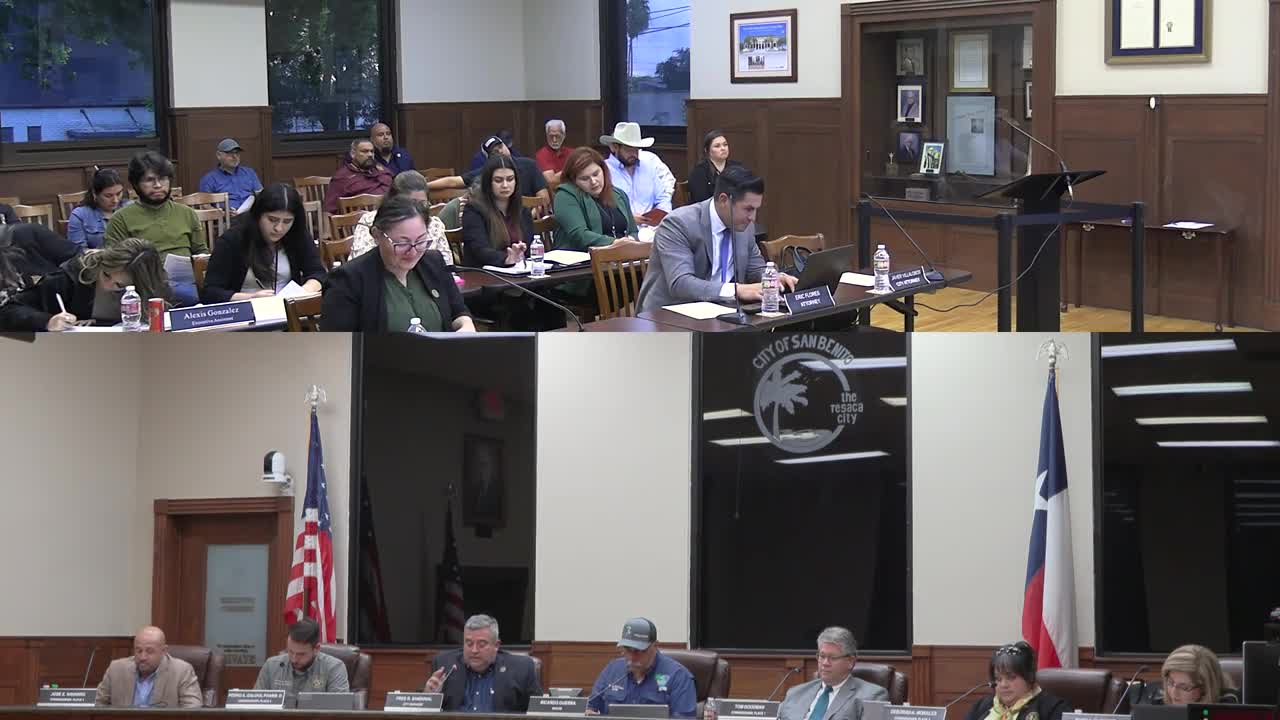
Commission gives first reading to truck-route and trailer-parking ordinances; staff plans grace period and compliance outreach
Summary
The commission held first readings on two ordinances aimed at regulating hazardous-material truck routes and parking of trailers, tractors and RVs. Staff proposed a compliance rollout with education and a typical 90-day grace period before enforcement.
The San Benito City Commission held first readings of two ordinances intended to limit damage to neighborhood streets and reduce public nuisance from parked trailers, tractor-trailers and recreational vehicles.
City staff described recurring complaints from residents about trailers and drop-lifted freight containers parked in residential and peripheral industrial areas. ‘‘They drop them off in different areas that they think are somewhat secured,’’ a staff member said, adding those parked trailers can damage pavement because concentrated axle loads concentrate pressure in small areas.
The first ordinance (Ordinance No. 2330-02) would establish regulations for hazardous-material truck routes within city limits; the second (Ordinance No. 2572-01) would regulate the parking of trucks, truck tractors and trailers. Staff said enforcement tools will include municipal citations and that municipal court will set fines. The proposed code requires off-street surfaces (asphalt, concrete or compacted gravel) for commercial parking operations and creates a permitting path for commercial truck parking lots.
Staff told commissioners they will roll out a compliance and public-education program (commonly a 90-day notification and grace period) and coordinate with police and code enforcement before active ticketing. Commissioners discussed the possibility of working with private operators or using underused city property to create regulated parking areas, but staff advised caution about competing with private industry and noted capital costs for preparing city lots.
Because both items were introduced as first readings, no final adoption occurred. Staff said the next meeting will include a final ordinance for adoption after any edits and a public-notice period. In the interim, staff will draft a compliance plan including signage, social media notices and a timeline for enforcement.