Get Full Government Meeting Transcripts, Videos, & Alerts Forever!
Get email alerts on the Staffing Classification topic
No spam. Unsubscribe anytime.
Firefighters press to reclassify field lieutenants as captains; subcommittee to study station captain model
Summary
Association representatives proposed reclassifying operational lieutenants to captains to ease burden on the department’s small number of captains and to create station-level captains; parties agreed to form a committee to develop a detailed staffing and command proposal.
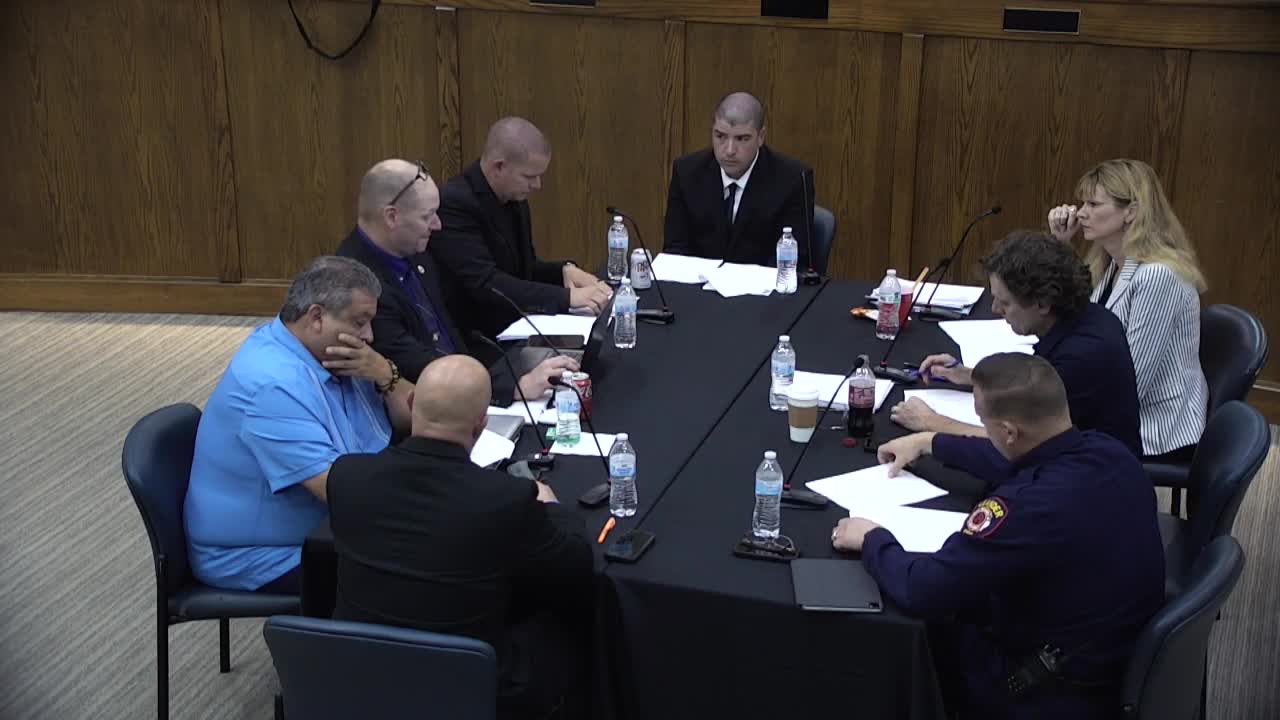
Leander firefighters proposed reclassifying operational lieutenants to the rank of captain and asked the city to form a small committee to design how station captains and command structure would work.
Why it matters: union negotiators said the current distribution of captains — three total in the department, with two assigned to administrative roles — puts operational staffing under strain and concentrates higher-class duties on a few people. “We would ask to reclassify all operational lieutenants to the rank of captain,” Dan (Association representative) said, describing the union’s draft proposal.
Committee and scope: City and union agreed to a subcommittee to quantify staffing needs and propose an implementable structure. The union proposed a model that would add station captains (one per single-company station and multiple at multi-company stations), suggesting a potential addition of up to seven field captains to provide a consistent on-shift command presence. Participants said the committee will compare Leander to neighboring agencies (Cedar Park, Round Rock) and examine options for station captains versus ladder-based captains.
Points of discussion: negotiators debated alternatives to an across-the-board reclassification, such as allowing lieutenants to “ride higher class” (serve temporarily in captain duties) or adjusting policy to permit specific temporary assignments without automatic promotion. City legal counsel and staff noted civil-service and classification rules could constrain cross-assignments between administrative and operations classifications and asked for a legal review before any final classification changes. The fire chief and union also discussed phased approaches and “now vs. future” paths tied to department growth (for example, adding second ladder companies or new stations).
Next steps: the parties agreed to form the working group and begin meeting the week after the bargaining session; the committee’s charge will include: (1) a review of comparable departments’ command structures; (2) costing and step-plan impacts; (3) policy language for temporary higher-class assignments; and (4) transition options for currently assigned administrative personnel.
Ending: negotiators referred the reclassification request to the subcommittee and tentatively scheduled follow-up within days to draft recommended language for bargaining.