Get Full Government Meeting Transcripts, Videos, & Alerts Forever!
Get email alerts on the Emergency Management topic
No spam. Unsubscribe anytime.
Houston to test wireless emergency alert to cell phones Friday; city urges residents to check settings
Summary
City officials will send a Wireless Emergency Alert test to cell phones within Houston at 11 a.m. Friday, Sept. 5; the message will be clearly labeled as a test and residents are urged to make sure emergency alerts are enabled on their phones.
The City of Houston Office of Emergency Management (OEM) announced a citywide Wireless Emergency Alert (WEA) test scheduled for 11 a.m. Friday, Sept. 5. The message will be sent to cell phones inside the city's geographic boundaries and will be clearly labeled as a test; no action will be required of residents.
OEM staff said the test message will use the Wireless Emergency Alerts (WEA) channel — the same delivery mechanism used for AMBER alerts — but it will be categorized as a public safety alert rather than an AMBER alert. City staff said they have coordinated with major carriers, including AT&T and Verizon, to ensure the message is delivered and to test options such as language preference so residents who select Spanish should receive the message in Spanish.
The OEM presentation emphasized that the WEA differs from AlertHouston, the city's opt-in alert system. OEM said AlertHouston messages are opt-in and sent more frequently; WEA is reserved for “true life-safety imminent threats” that require immediate public action. The test will last about 15 minutes; OEM said once someone receives the test message they should not get additional duplicates.
OEM also noted the test helps confirm how international cell phones roaming in the city will receive message routing ahead of large events such as the World Cup, and it will exercise translation options for residents whose phones indicate Spanish as a preferred language. OEM urged residents to verify that Wireless Emergency Alerts are enabled in their phone settings and posted step-by-step instructions on the city website. Officials also encouraged council members and media partners to spread the word to constituents ahead of the test.
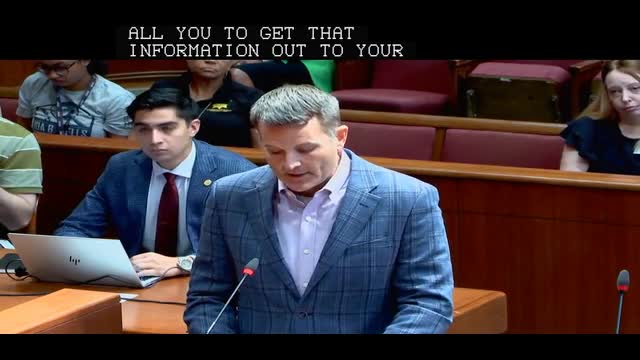
Council members asked follow-up questions about how the city would communicate if cell towers are down during a storm; OEM officials acknowledged the limitation and said they would continue to review backup communications strategies as part of overall emergency planning.