Get Full Government Meeting Transcripts, Videos, & Alerts Forever!
Get email alerts on the Transportation Connectivity topic
No spam. Unsubscribe anytime.
Hundreds of residents urge city council to keep Polk Street open amid GRB expansion plans
Summary
Residents, civic groups and transit advocates urged the Houston City Council to block a planned closure of Polk Street tied to the George R. Brown Convention Center expansion, arguing the change would sever East–West connectivity, harm transit riders and create safety and equity risks.
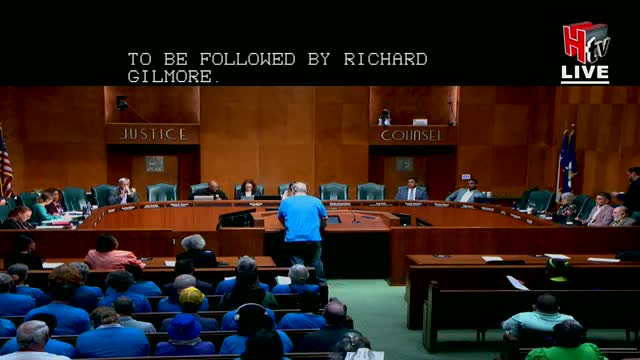
Hundreds of Houston residents told the City Council on Sept. 17 they oppose a planned abandonment of Polk Street tied to expansion of the George R. Brown (GRB) Convention Center, saying the closure would sever a decades-long East–West connection and disproportionately harm East End neighborhoods.
Speakers at an evening public-comment session presented maps, alternative proposals and personal testimony, and repeatedly used the council chamber’s refrain: “Keep Polk open.”
Why it matters: Polk is a protected bike and transit corridor that residents, workers and community groups say provides direct access to downtown, Discovery Green and transit lines. Speakers said the closure—announced publicly by Houston First in 2025 as part of the GRB expansion—would lengthen commutes for low-wage workers, reduce transit access for bicycle riders, degrade emergency access and undo mitigation commitments tied to TxDOT’s North Houston Highway Improvement Project (NHHIP).
Residents and civic groups discussed technical and equity concerns. Richard Gilmore and Sarah Hirsch reviewed historic changes to cross-town connectivity and emphasized that the NHHIP environmental review and mitigation commitments were premised on Polk remaining open. “TxDOT’s promised U-turn and a bike–ped bridge previously proposed by the city depend on Polk staying open,” Hirsch said. “This isn’t just a missed opportunity. It’s a reversal of hard-won progress.”
Multiple speakers described limited notice and coordination. Bruce Farrar said residents first learned of the abandonment on small roadside signs and at an Eastwood Civic Association meeting, and accused Houston First of poor outreach. Camden Kirkland and others described volunteer-driven data and mapping efforts intended to fill gaps in the public process. “When Houston First failed to provide transparency, we built it ourselves,” Kirkland said.
Transit and worker impacts were highlighted. Kyle Rogers, speaking for Unite Here 23 members, said thousands of hospitality workers who live east of I-59 would face longer, costlier commutes if Polk closed. Cyclists also testified: Alexander Carranza said he rides Polk daily and would lose a “safe” bike lane into downtown if the closure proceeds.
Emergency access and flooding vulnerability were central safety themes. Thomas Theis noted that Polk provides a reliable cross-downtown route and warned that when TxDOT’s HHIP lowers or buries sections of the freeway those below-grade corridors could flood—making surface links like Polk critical evacuation routes.
Alternatives and mitigation: Speakers proposed alternatives including keeping Polk open while designing the GRB expansion around it; reopening or improving other cross-streets; and negotiating a community benefits agreement that would protect neighborhood access, local hiring, and mobility mitigation. Several speakers warned that converting Leland to two-way traffic—Houston First’s suggested mitigation—could be a costly “band-aid” (one speaker estimated $20 million) and might fail because of frequent freight-train blockages at Leland’s rail crossing.
Council and staff response: Vice Mayor Pro Tem Amy Peck presided over the session and reminded speakers of chamber rules; several council members later thanked speakers and asked staff to follow up. No formal council vote or direction to approve the Polk abandonment appears on the September 17 consent or ordinance votes recorded that night.
What residents said in brief: “Put Houstonians first,” “Keep Polk open,” and “don’t trade connectivity for convention expansion” were recurring refrains from speakers representing Eastwood, the East End, Super Neighborhoods and Latino civic groups (including a letter read from LULAC District 18).
Next steps: Residents asked for transparent timelines, a publicly posted traffic and emergency-access study and written commitments about any proposed conversion of alternate streets. They asked council to delay formal abandonment until TxDOT, Houston First and the city provide coordinated mitigation plans and a public, multiagency review.
Ending: The public comment period closed after dozens of speakers. Council members acknowledged receipt of the materials residents provided; no formal council action on the Polk abandonment was taken on Sept. 17.