Get Full Government Meeting Transcripts, Videos, & Alerts Forever!
Get email alerts on the Vacant Commercial Buildings topic
No spam. Unsubscribe anytime.
Houston council committee hears proposal to require fences around vacant commercial buildings; no action taken
Summary
Council Member Jackson introduced an ordinance that would require owners to fence vacant commercial properties. Houston Public Works staff outlined enforcement challenges — staffing, vendor sourcing, costs, and legal process — and the committee took no vote because a quorum was not present.
Council Member Jackson introduced a proposed ordinance to the Prop A committee that would require property owners to “fence the perimeter of the property within 10 days of the commercial property becoming vacant,” a provision described by Christopher Shanahan, interim deputy assistant director for community code enforcement at Houston Public Works.
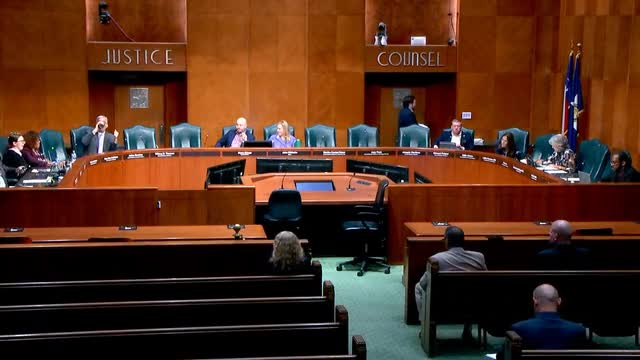
The proposal was discussed at length by public works staff and council members on Oct. 25, but the committee took no formal action because a quorum was not present. Rudy Moreno, deputy director of Houston Public Works, and Shanahan laid out operational and legal challenges the department would face if the ordinance is adopted.
Why it matters: Jackson said vacant commercial properties in his district have become sites for illegal dumping, graffiti, squatting and other nuisance activity, and that fencing could reduce those problems. "We haven't talked with HPD, but again, it's common sense," Jackson said when asked whether police had endorsed the measure.
Public Works officials said the ordinance as drafted would create several practical burdens. The draft defines a vacant commercial structure as one that has been unoccupied and “not used for any legal business activity for seven nonconsecutive days in a 30-day period.” Staff told the committee that using nonconsecutive days to establish vacancy would require repeated site visits — a significant demand on inspectors’ time.
Shanahan told the committee that the ordinance, as written, would require fencing of the entire property parcel, which can create access problems when multiple buildings on a single parcel remain occupied. He recommended clarifying whether the requirement should apply to an individual building or to a full parcel.
Staff also flagged vendor and funding questions. Public Works does not currently maintain a vendor list for installing perimeter fencing; the city would need to identify contractors, fund initial installations when owners fail to comply, and then maintain those fences. Shanahan said fence maintenance after installation (repairs due to storm damage or vandalism) would place additional recurring costs on the department.
Staffing and cost-recovery details: Public Works presented staffing figures for its community code enforcement and dangerous buildings teams. The nuisance-abatement unit showed 35 filled positions, 13 vacant and 4 unfunded; staff said a model to be more proactive would require about 51 additional positions citywide. The dangerous buildings team was reported as 14 of 18 funded positions filled, with staff estimating a need for 10 more inspectors to handle the additional workload.
On cost recovery, Shanahan said the draft would allow daily citations of $500 for noncompliance. Those citation revenues are processed through municipal court and, as drafted, would not automatically return to Public Works. If the city installs a fence and later seeks to recoup costs, Public Works could record a lien on the property and pursue collection through standard lien procedures, but staff said the department does not track lien-collection effectiveness since it inherited the process from a prior unit.
Enforcement process and alternatives: Committee members asked about existing authorities. City Attorney Norris explained there is an existing dangerous-buildings requirement that properties be secured (by boarding, fencing or other means) but that dangerous-building provisions currently do not specifically require a fence. Norris also warned that state law may require a hearing before certain enforcement actions and advised attention to due-process design in the ordinance. Several council members suggested exploring whether existing health-related or dangerous-building authorities could be amended rather than creating an entirely new ordinance.
Several council members proposed narrowing the ordinance’s scope as a pragmatic step: targeting repeat offenders, properties with recurring nuisance complaints, or those with documented dumping rather than a citywide automatic requirement. Council members also raised the idea of coordinating with Harris County, tax records or title searches to identify accountable owners and improve lien collection.
Other operational details discussed: Public Works said its current compliance timeline for nuisance removal is typically 15 days for owners to remedy violations after notice; if owners do not comply, the department can abate the nuisance, pay contractors to clean the site, and place a lien for recovery. Committee members questioned whether a 10-day fence-install requirement is feasible for owners and for the city when a property needs city-installed fencing; some council members suggested a longer owner-compliance deadline such as 30 or 60 days.
Exemptions and approvals: The draft contains an exemption path that would allow the mayor and city council to waive fencing requirements for specific properties by unanimous written resolution; staff and council members noted that requiring unanimity may be impractical and discussed alternatives such as director-level or departmental approvals.
Next steps: Staff from council members’ offices, Public Works and the city attorney said they would continue to refine the language, examine whether existing health or dangerous-building code could be amended, clarify vacancy definitions (consecutive vs. nonconsecutive days), and identify funding and vendor options. The committee did not vote on the ordinance during the meeting and will only meet again on this item if a revised proposal is submitted for consideration.
Ending: With no public speakers signed up, the committee adjourned; council members indicated support for further interdepartmental work before pursuing formal action.