Get Full Government Meeting Transcripts, Videos, & Alerts Forever!
Get email alerts on the Community Survey topic
No spam. Unsubscribe anytime.
York County residents rate quality of life highly; transportation and housing affordability flagged as priorities
Summary
A National Community Survey of 3,000 randomly selected York County households returned 440 responses (15% response rate). Results show strong satisfaction with safety, education and overall quality of life, while housing affordability and alternative-transportation options scored below benchmarks.
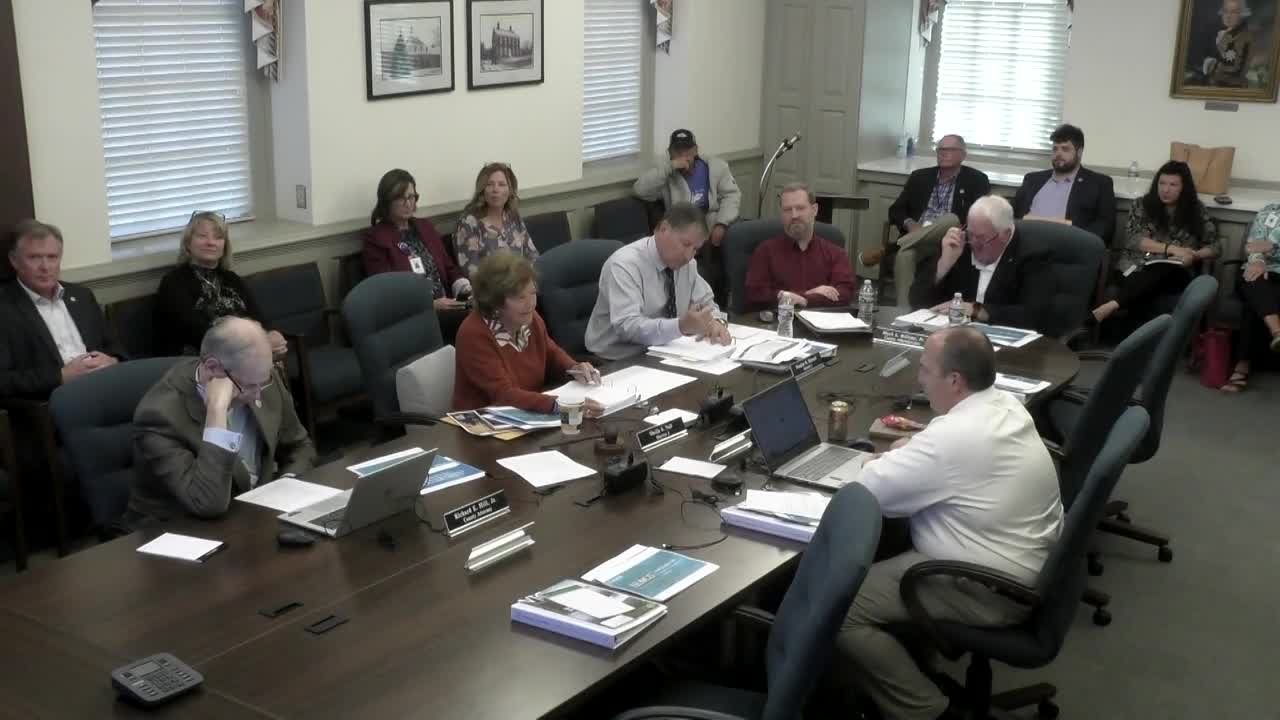
York County supervisors heard results of a community engagement survey during their Sept. 2 work session, with presenters telling the board residents give York County high marks for quality of life but flagged transportation and housing affordability as areas for future focus.
The county contracted with Polco (operating the National Community Survey, or NCS) and used a probability-based sample of 3,000 mail-selected addresses. Polco said the county received 440 completed surveys (a 15% response rate, margin of error ±4%) from the random-sample effort; an open online instrument produced an additional 140 responses and is reported separately.
Polco representative Jason said the NCS is a standardized national instrument that lets jurisdictions compare local ratings against a broad benchmark. "The National Community Survey or the NCS is a standardized 5‑page comprehensive survey," he told the board, adding that the data are commonly used to monitor trends and inform budgeting.
Why it matters: the NCS provides a baseline for the county’s comprehensive plan and capital and programmatic priorities. Supervisors and staff noted the results can guide retreat and budget decisions.
Key findings presented by Polco and county staff included: - High overall satisfaction: about 9 in 10 respondents rated York County positively as a place to live, raise children and retire; most respondents said they plan to remain in the county for the next five years and would recommend it to others. Those governance and quality‑of‑life ratings were similar to or higher than state and national benchmarks. - Public safety and services: roughly 9 in 10 residents rated fire and EMS services positively; police/sheriff services and crime‑prevention ratings were above national benchmarks. - Economy but concerns about affordability: business and tourism scored well, but fewer than half of respondents rated cost of living, availability of affordable childcare, affordable mental‑health services, and availability of affordable housing as excellent or good. - Transportation and multimodal travel lag: satisfaction with walking, bicycling and public transit was well below benchmarks (13% positive for public transit; about 20% for bicycling). Supervisors flagged that transportation results "jump out" as an area needing attention. "Transportation is probably the one that jumps out of the page at me and says we may have to do more," one supervisor said during discussion. - Education and libraries rated strongly: K‑12 education and library services received high marks, with K‑12 education scoring above the Virginia comparison group.
Methodology and scope: Polco used an address list purchased from the U.S. Postal Service and refined by county GIS boundaries to select a probability sample. Responses were weighted to match the county’s adult population using American Community Survey and U.S. Census benchmarks. The presentation and primary report focus on the 440 probability‑sample responses; the 140 open‑link responses were produced separately and included in the full report.
Board members asked follow‑up questions about question wording and definition of custom items (for example, "traditional neighborhood development" was not defined on the questionnaire and thus was left to respondents' interpretation). County staff noted the survey contains roughly 150 questions and is designed to be broad enough to generate cross‑cutting benchmarks and department‑level detail.
Board members and staff said the county will use the results to inform retreats, the comprehensive plan and future budget priorities. Polco staff recommended re‑running the survey periodically to track trends; board members signaled a preference for a two‑year cycle.
Ending: County staff said the full report and dashboards — including demographic and geographic breakouts and the separate open‑link results — will be available for departments and the board to use in planning and budgeting.