Get Full Government Meeting Transcripts, Videos, & Alerts Forever!
Get email alerts on the Transportation Nepa topic
No spam. Unsubscribe anytime.
WYDOT, Jacobs outline NEPA alternatives for Highway 22 corridor; county raises pathway funding and wildlife concerns
Summary
WYDOT and consultant Jacobs told Teton County commissioners on Sept. 15 that they have narrowed options for Highway 22, prioritized several wildlife crossing locations, and are coordinating with the county on the Tribal Trails Connector and pathway encroachment issues as the project moves from pre‑NEPA into formal NEPA review.
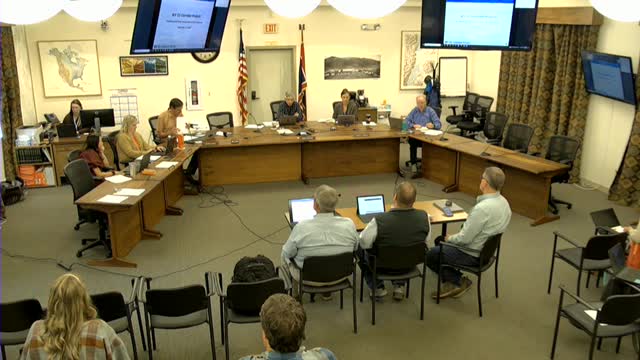
The Wyoming Department of Transportation (WYDOT) and Jacobs presented a pre‑NEPA update on the Highway 22 corridor and the Tribal Trails Connector at a Sept. 15 workshop with the Teton County Board of County Commissioners. The presentation summarized the project’s purpose and need, alternative screening, public outreach and next steps toward a NEPA document.
WYDOT and Jacobs said they began pre‑NEPA scoping in 2023, solicited public input through multiple meetings and an online interactive map, and received roughly 500 public comments. The project team described a multi‑stage alternatives screening process that evaluated “core concepts” (lane configurations for each segment) and supplemental elements (wildlife crossings, intersection treatments, and multimodal facilities). The team said it had screened out two‑ and three‑lane “low‑build” options for Segment 1 because they did not meet the project’s mobility and safety purpose and need. Four‑ and five‑lane core alternatives remained under consideration for the corridor’s highest‑needs segments, while two‑ and three‑lane options were retained for the lower‑demand segments through Wilson.
Wildlife crossings: WYDOT and partners prioritized three wildlife‑crossing locations for further study — Spring Gulch (an underpass candidate), a location west of Indian Springs/Cody Canyon for an underpass, and a potential overpass near the Y intersection — based on collision data, field visits and prior crossing studies. The team said wildlife‑permeability was part of the alternatives‑screening criteria.
Tribal Trails Connector and Indian Springs/Teton Science School: The team affirmed the Tribal Trails Connector as a recommended component; the connector would tie Indian Springs and Teton Science School access into the north side of Highway 22. Workshop discussion focused on near‑term fixes that could be done outside the federal NEPA schedule, including the possibility of building a standalone underpass or a local construction partnership that WYDOT could manage outside the Federally funded program so residents and the school would not have to wait years for a NEPA‑backed construction project. WYDOT said it was exploring funding partnerships and would follow up with the constituents.
Pathways, encroachments and right‑of‑way: WYDOT staff explained county pathways along existing encroachment agreements are typically the county’s responsibility to relocate or reconstruct if a state highway project requires taking the pathway footprint. WYDOT said it will design and build pathways as part of the highway project when possible, and that in many cases the county would fund crushed base and final pavement, or acquire additional right‑of‑way or easements if the county wants the path moved beyond WYDOT’s earthwork template. The project team offered typical cross‑section estimates: in unconstrained worst‑case scenarios the pavement, shoulders and clear zones could total roughly 100 feet across the corridor; where the county desired wider buffers for pathways, additional right‑of‑way and associated acquisition costs could be required.
Phasing and NEPA class of action: The consultant said the project team must analyze a future planning year (2050) and a full range of alternatives under NEPA; the team indicated WYDOT has performed an alternatives screen at a level similar to what would be expected in an EIS, and that FHWA will ultimately determine whether the NEPA document is an Environmental Assessment (EA) or an Environmental Impact Statement (EIS). The team noted that EAs and EISs require different levels of outreach and agency coordination and that an EIS typically takes longer and is more costly.
Commissioner questions and follow up: Commissioners requested the slide deck, raw public comments and technical materials used in the traffic and alternatives screening; WYDOT committed to share those items with the county. Commissioners also asked to preserve pathway functionality and minimize county costs; WYDOT said it will work with county staff to explore federal multimodal and enhancement funds that can be paired with WYDOT construction to reduce county payments where feasible.
Next steps: WYDOT and Jacobs said the pre‑NEPA phase would wrap this fall, at which point the team will select a preferred alternative to carry into NEPA, continue agency coordination on wetlands and Corps of Engineers permitting, and seek additional public engagement. The team flagged that federal NEPA regulations and guidance are evolving, and that the process will proceed under the rules in force when WYDOT files its NEPA documents.