Get Full Government Meeting Transcripts, Videos, & Alerts Forever!
Get email alerts on the Noise Events topic
No spam. Unsubscribe anytime.
Jurupa Valley delays rewrite of noise and temporary‑event rules after council asks for clearer enforcement and sheriff input
Summary
Staff presented draft changes to the city’s temporary events and noise rules to streamline permitting for small low‑impact events, require noise control plans for larger events and strengthen immediate enforcement tools; council asked staff to consult sheriff’s deputies and return with refined language and a timeline.
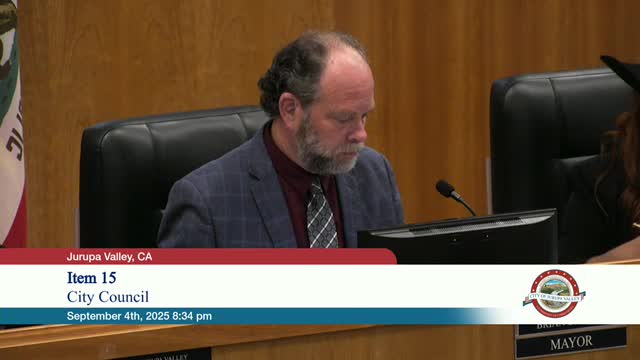
City staff presented proposed amendments to Jurupa Valley’s temporary events ordinance and the municipal noise code on Sept. 4, aiming to streamline permitting, expand low‑impact event exemptions and provide clearer, faster enforcement authority during noisy or unsafe gatherings.
The proposal would create three event tiers (small, medium and large) with an ‘‘exempt’’ category for low‑impact private events that require no city permit, an administrative review track for minor commercial grand openings and a formal permit path for larger events. For medium and large events staff proposed a mandatory noise control plan describing site layout, sound‑system orientation and on‑site enforcement responsibilities.
Council concerns and next steps
Council members and commissioners supported the overall idea of making small, genuinely private family celebrations easier to organize, but they asked staff to be cautious about adding enforcement complexity that would overburden the sheriff and the city. Councilmember Armando Silva and others said they did not want regulations that ‘‘turn every backyard birthday into a licensing problem’’ but did want mechanisms to stop repeat offenders. Several members asked staff to consult the sheriff’s office before finalizing threshold hours and enforcement language.
Key points raised by council and staff included: a 10 p.m. quiet hour already exists in the city noise code and should be preserved; staff should define ‘‘amplified sound’’ and provide objective, enforceable decibel standards rather than subjective rules; and the city should consider permit fee design and bond/insurance triggers for larger events. Several council members suggested limited weekend flexibility for non‑commercial private celebrations so city enforcement resources can focus on genuinely disruptive incidents.
Outcome: staff to refine drafts
Council asked staff to work with the sheriff’s department and return with separate, focused drafts for (a) noise‑ordinance changes that clarify quiet hours, decibel limits and real‑time enforcement authority, and (b) temporary‑events rules that streamline exemptions for low‑impact private and nonprofit events while preserving tools to suspend unsafe events and require bonds/insurance when appropriate. Staff was asked to return with legal review, sample permit language, proposed fee structure and an implementation timeline.
Why it matters
Residents complain regularly about night‑time noise and large commercial events. The council’s approach seeks to balance residents’ ability to host small family events with the need to protect neighbors from repeated or extreme noise and to ensure enforcement resources are used where they are most needed.
What comes next
Staff will meet with the sheriff to calibrate enforcement thresholds and return to council with revised ordinance language and fee options for further discussion and public hearing as needed.