Get Full Government Meeting Transcripts, Videos, & Alerts Forever!
Get email alerts on the Equestrian Overlay topic
No spam. Unsubscribe anytime.
Jurupa Valley staff outlines changes to Equestrian Lifestyle Protection Overlay after months of public input
Summary
City staff presented options to amend animal-keeping rules, expand the overlay map and fund trail and safety improvements after more than 85 residents participated in recent outreach; council and planning commissioners signaled support to start code and general plan amendment work and to continue public engagement.
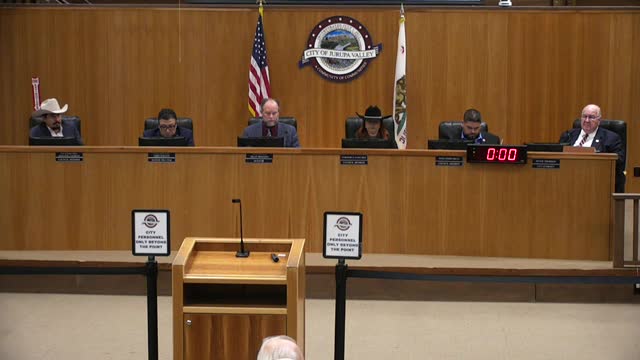
Principal Planner Jim Petches presented a staff-led package on Sept. 4 that proposes amending Jurupa Valley’s Equestrian Lifestyle Protection Overlay (ELPO) rules, expanding overlay boundaries and developing trail, safety and education programs to preserve the city’s equestrian character.
The study session drew wide public participation in recent outreach: Petches said the city held interviews and public meetings on July 29 and Aug. 19 with more than 80 people attending, and that residents consistently asked for stronger protections for bridal keeping, clearer animal-keeping standards and safer trail crossings.
The presentation summarized the existing overlay as part of the general plan and identified areas where the map, zoning and development standards don’t match current equestrian uses. Petches said the overlay now touches about a third of the city and spans nearly 30 different zoning designations, from residential to industrial. He outlined a menu of options for council and the planning commission: a zone code amendment to change animal-keeping standards (including a possible ‘‘minor animal permit’’ to allow exceptions), a general plan amendment to modify ELPO boundaries, and development of equestrian infrastructure standards and trail-connection projects coordinated with the city CIP and regional trail plans.
Why it matters: Jurupa Valley’s rural and equestrian character is an important local identity and a planning priority for many residents. The staff proposal aims to reduce conflicts that arise when new development, traffic and parcel changes intersect long‑standing equestrian uses, and to give the city clearer regulatory tools and capital project priorities.
What Petches presented
Petches told the joint meeting that the community wants more flexibility in how animal counts are computed (for example, how a colt or a young animal is counted against lot limits), and requested that the city explicitly allow a wider list of small‑scale livestock such as rabbits and quail. Several residents suggested Jurupa Valley take cues from nearby Norco on animal‑keeping allowances and on volunteer trail‑maintenance programs.
On map changes, residents asked that the ELPO be extended to include corridors along the Santa Ana River, portions of Gran ite Hill and Indian Hills neighborhoods, and that gaps and discontinuities in the overlay be filled to better protect riding corridors.
Trail and safety priorities included: safer crossings and signalization at major arterials used by equestrians (Petches and commenters noted Van Buren, Limonite and Belgrave), dedicated trail corridors along the Santa Ana River, improved trailheads with trailer turnarounds and staged parking, and better signage, lighting and shade along existing routes. Stakeholders also urged development of equestrian construction standards (for hitching posts, watering troughs and staging corrals), and stronger, consistent conditions for new development. Petches showed a recent Limonite plaza corral as a model of what well designed facilities look like and suggested codifying those standards.
Public input and commissioners’ comments
Public commenters who spoke at the September meeting said they had moved to Jurupa Valley for its equestrian lifestyle and urged the council to expand protections, improve trails and fund long‑term maintenance. Nicholas Delau said his family used existing corrals and trails and urged the city to seek grants and pursue infrastructure improvements. Robert Ramirez asked the city to address safety, transient encampments that can spook horses, and clearer trail maintenance responsibility.
Planning commissioners and council members broadly praised staff outreach and urged careful, practical next steps: requests included (1) clarifying maintenance responsibility where trails cross private property (Commissioner comments referenced Norco’s arrangement where homeowners maintain adjacent trails in some subdivisions), (2) developing objective, enforceable standards rather than vague requirements, and (3) ensuring coordination with JRPD’s trails master plan and the county corridors plan.
Council direction and next steps
On the floor, several council members said they supported initiating code work to amend animal‑keeping regulations, developing consistent equestrian infrastructure standards for new development, and performing a general plan amendment to consider ELPO boundary changes. Staff noted several next steps: prepare draft ordinance language to change animal‑keeping provisions, develop design standards for equestrian infrastructure (hitching posts, corrals, troughs, fencing), identify CIP priorities and funding options (grants, special assessments, sponsorships), and schedule additional community meetings. Petches also announced the next community meeting on the topic for Sept. 23 at 6 p.m. in council chambers.
No formal council vote was required at the study session; staff said they would return with specific code language, cost estimates for candidate CIP projects, and a public‑review schedule. Council and commissioners emphasized the need to keep the rules objective, coordinate with regional trail projects, and protect the safety of riders and other users.
What remains unresolved
Petches and councilmembers flagged legal and policy limits to local action — for example, state rules on accessory dwelling units restrict how lot splits affect zoning, and the city will need to reconcile ELPO updates with state planning law. Funding sources for ongoing trail maintenance and requirements for private developers to build and maintain equestrian facilities were raised but not resolved; councilmembers said those issues require further financial analysis and public discussion.
Where to get involved
Staff said the next community meeting on ELPO will be Sept. 23 at 6 p.m. in the council chambers; residents were encouraged to contact Principal Planner Jim Petches with questions or to offer further suggestions.