Get Full Government Meeting Transcripts, Videos, & Alerts Forever!
Get email alerts on the Urban Forestry Restoration topic
No spam. Unsubscribe anytime.
Sierra Club conservation chair urges city action after no‑mow area was mowed in North Star Greenbelt
Summary
A Sierra Club representative told the Environmental Commission on Sept. 17 that mowing crews repeatedly violated a designated no‑mow riparian restoration area in Gracie Woods’ North Star Greenbelt, reversing 15 years of volunteer planting and negotiated mowing lines.
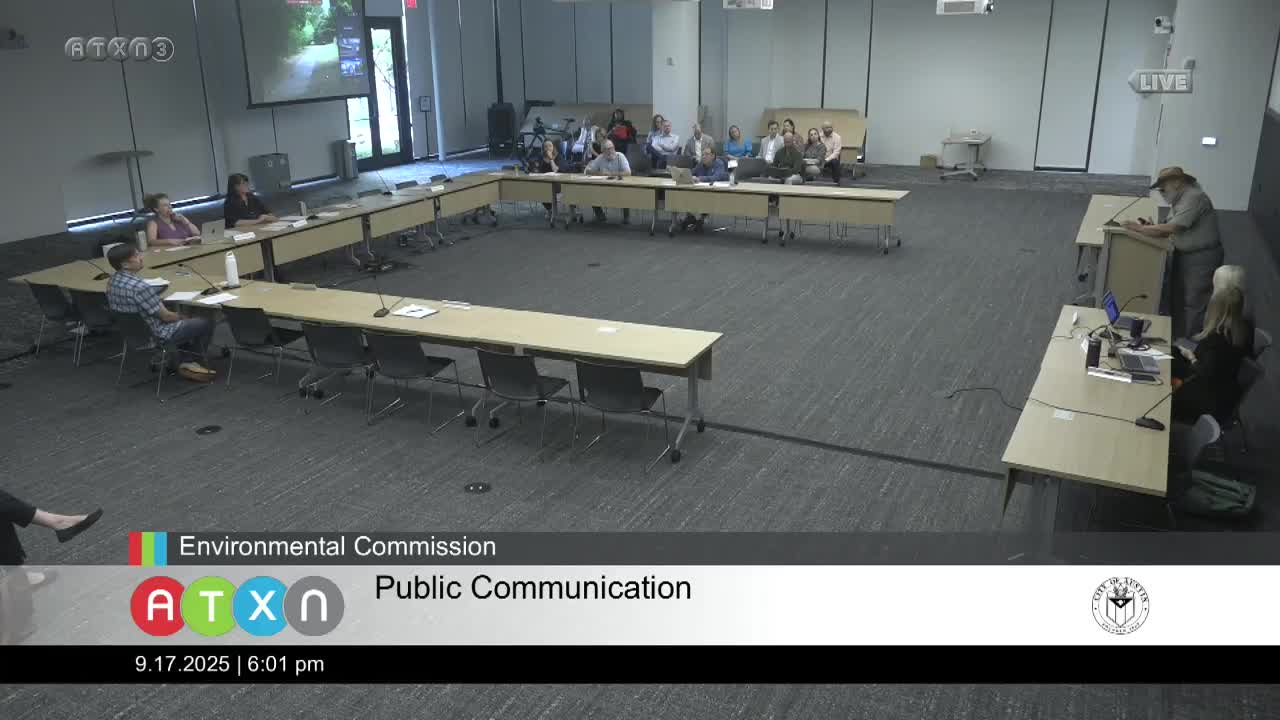
Craig Naser, conservation chair with the Lone Star Chapter of the Sierra Club, told the Environmental Commission during public comment Sept. 17 that mowing crews damaged a long‑established riparian restoration area in the North Star Greenbelt near Gracie Woods and the creek that flows into Walnut Creek Metropolitan Park.
Naser said neighbors began the restoration program about 15 years ago in partnership with the Watershed Protection Department and the Gracie Woods Neighbors Association, negotiating mowing lines, erecting signs and planting hundreds of native saplings in volunteer events. He said the project established a no‑mow zone to protect riparian vegetation and spring/seep features that feed the creek.
On Sept. 3 Naser said photographs show recent mowing that “sliced down to the dirt” in places where established grow zones existed and that trees and understory that had grown for years were set back to ground zero. He identified signs in the area that read “no mow” and said the damage appeared to be caused by park mowing crews, which PARD had denied.
Naser asked why voters should approve a park maintenance tax increase in November (he cited “a $900 per year tax increase” as part of broader discussion), when he said maintenance operations appear to harm a restoration project the neighborhood supported. He urged the commission to take up the issue in its work and seek remedies to prevent repeat damage.
The item was delivered as public comment; commissioners did not take formal action during the meeting, but the report raised questions about interdepartmental coordination between Watershed Protection, Parks and Recreation and maintenance crews.