Get Full Government Meeting Transcripts, Videos, & Alerts Forever!
National City planning commission certifies EIR but denies fuel transfer facility at BNSF site
Summary
The National City Planning Commission on Sept. 15 certified a final environmental impact report for a proposed renewable-fuels transloading facility on BNSF property, then voted 5–1 to deny the conditional use permit and coastal development permit that would have allowed construction and operation.
The National City Planning Commission on Sept. 15 certified a final environmental impact report (EIR) for a proposed fuel transfer facility on BNSF Railway property but then voted to deny the conditional use permit and coastal development permit needed to build and operate the site.
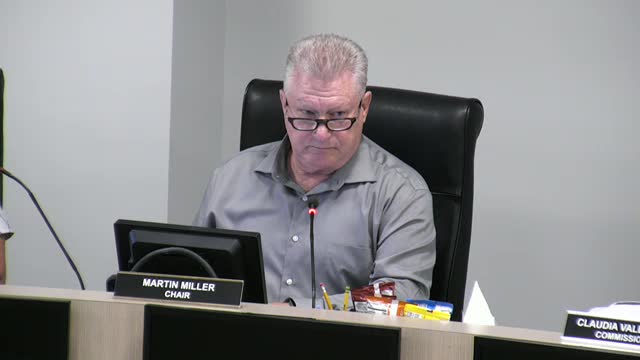
The planning commission certified the EIR by motion and later voted 5–1 to deny the permits for the project proposed by San Diego Clean Fuels (operated by USD Clean Fuels). Vice Chair Cassell made the motions to certify and to deny; Commissioner Armenta seconded the denial. The denial vote was recorded as 5 yes, 1 no, and 1 absent; Chair Miller cast the lone no vote and Commissioner Valenzuela was absent.
The project would have placed a transloading facility for renewable fuels on roughly 7.5 acres of BNSF-owned right-of-way west of Interstate 5, with new track work, truck loading areas and a small office building. Staff said the facility would operate 24 hours a day and estimated up to 72 truck trips per day to or from the site. The applicant offered to pay the city $200,000 annually for the life of the project and to provide a mobile foam firefighting platform for the National City Fire Department.
Why it mattered
Staff presented the EIR and planning analysis, which found that with the project’s proposed mitigation measures potential environmental impacts could be reduced to less-than-significant levels under CEQA. The EIR examined air quality, greenhouse gases, biological and tribal cultural resources, noise, stormwater and other topics, and included mitigation for nesting birds, cultural monitoring during earthwork and operational conditions such as truck routing and spill containment. The California Coastal Commission had asked the city to examine a potential on-site wetland and coastal hazards; staff reported a wetland…
Already have an account? Log in
Subscribe to keep reading
Unlock the rest of this article — and every article on Citizen Portal.
- Unlimited articles
- AI-powered breakdowns of topics, speakers, decisions, and budgets
- Instant alerts when your location has a new meeting
- Follow topics and more locations
- 1,000 AI Insights / month, plus AI Chat