Get Full Government Meeting Transcripts, Videos, & Alerts Forever!
Get email alerts on the Short Term Rentals topic
No spam. Unsubscribe anytime.
Austin adopts revised short‑term rental rules with new caps, provisional licensing direction
Summary
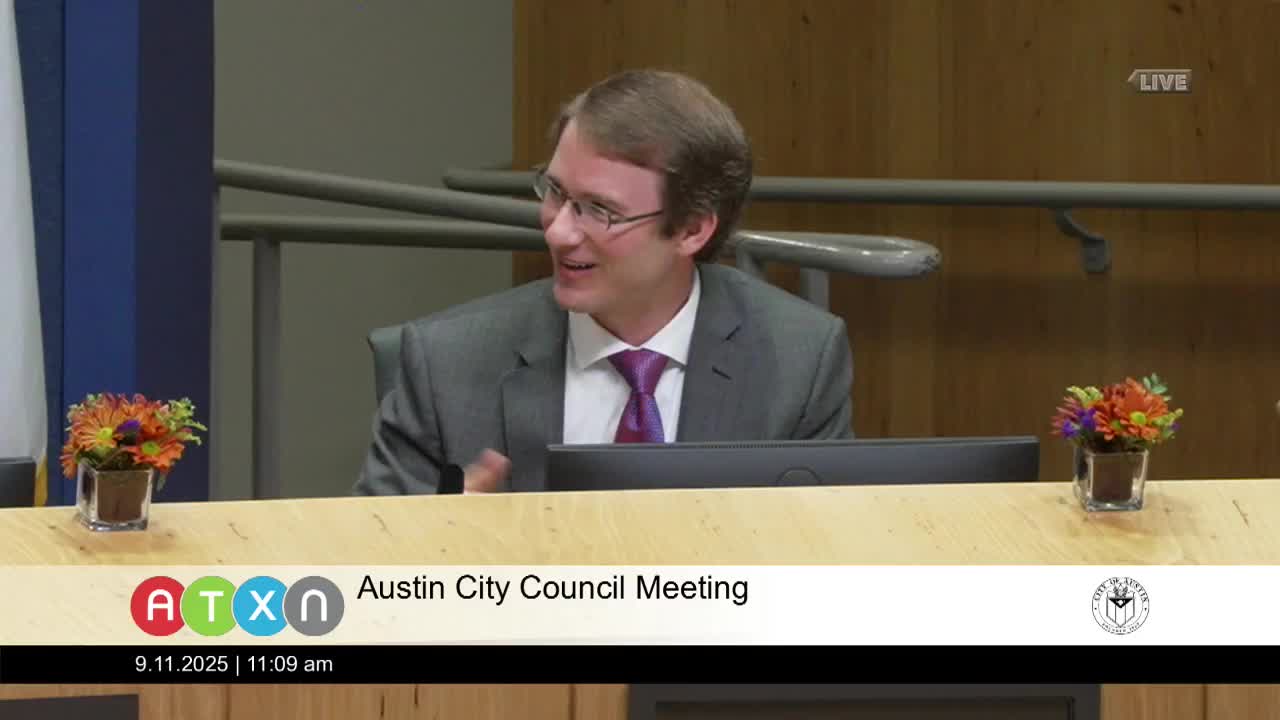
Austin City Council voted to adopt a revised short‑term rental ordinance on Sept. 11 after a day of public comment and several council amendments.
Austin City Council voted to adopt a revised short‑term rental ordinance on Sept. 11 after a day of public comment and several council amendments.
The ordinance tightens some multifamily limits, allows renters to hold STR licenses with explicit landlord authorization, delays parts of the new licensing regime to July 1, 2026, and directs staff to return with options for a lower application fee or provisional licensing mechanisms.
Council members and public speakers framed the debate as a housing and neighborhood‑stability issue. "This is really about housing," said Michael Curry, who spoke during public comment; Curry and other callers warned that unchecked STR growth removes long‑term housing units. Opponents at the microphone described safety and nuisance incidents tied to STRs in parts of the city.
Councilmember Ann Kitchen (note: not a speaker on the record for this transcript) was not on the dais for this meeting; the motion to adopt the main ordinance was made by Councilmember Natasha Harper Madison (via the motion maker recorded in the minutes as Councilmember Ellis) and seconded by Councilmember José Velásquez. Councilmember Vanessa Fuentes, the mayor pro tem, voted in favor along with a majority of the council; Councilmember Jimmy Duchin abstained on final adoption.
Key ordinance changes and council directions enacted Sept. 11
- Multifamily cap: Council lowered the share of units on a multifamily property that may operate as STRs (the ordinance as adopted applies a lower percentage for properties without integrated commercial uses). Councilmember Chido Vela said the change was meant to encourage mixed‑use properties rather than converting multifamily buildings wholesale to visitor lodging.
- Tenant licenses with owner authorization: A motion that would allow renters to apply for an STR license passed after an amendment requiring a form of owner authorization. The ordinance requires a tenant‑license to be backed by written permission from the property owner, to be prescribed by the director.
- Effective date delayed: The council moved the effective date of significant licensing provisions from May 1, 2026, to July 1, 2026, to give staff more time to implement new systems.
- Fee and provisional license direction: Council directed staff to explore lower application fees and the feasibility of a provisional license that would enable new applicants to obtain a license number quickly so they can list on platforms while full compliance is processed.
Why it matters
Council members and public commenters tied STR policy directly to housing supply, neighborhood quality and public safety. Speakers described clusterings of STRs in some neighborhoods, noise and trash complaints, and several incidents (including reported fires and a shooting near a property identified as an STR) that neighbors said underscored the need for tighter rules. Supporters of regulation said better licensing, clearer enforcement and platform cooperation would increase hotel‑occupancy tax compliance and provide funds for arts and music programs funded by that tax.
What council said
Councilmember Chido Vela, a member of the council, described the ordinance as a step toward a workable, enforceable regime and thanked staff for long work: "We're finally getting to a point where we have a workable, enforceable STR ordinance that will be able to stand up to legal challenge and also generate the hotel occupancy tax…" (paraphrase of remarks on the dais).
Public comment and enforcement
Public commenters included tenants, longtime residents and neighborhood activists who urged either much stricter limits or a delay to permit more public review. Several speakers asked the city to pursue unpaid hotel‑occupancy tax with the Texas comptroller and for better platform cooperation to delist noncompliant units.
What happens next
Staff will return with details implementing council directions: a revised fee schedule if feasible, requirements for the owner authorization form for tenant licenses, and technical changes needed to enact promised provisional licensing processes. The council also authorized staff to make conforming code edits to reflect the adopted amendments.
Speakers quoted in this article are drawn from public comment or council remarks recorded in the Sept. 11 council transcript and are attributed to those who spoke on the record.