Get Full Government Meeting Transcripts, Videos, & Alerts Forever!
Get email alerts on the Digital Archives topic
No spam. Unsubscribe anytime.
SDSU offers to digitize National City collections, seeks city partner for regional grant
Summary
Representatives from San Diego State University told the National City Library Board they can host and publish local historic collections online and want the city to partner on a regional grant requiring at least three institutions.
San Diego State University representatives outlined a potential partnership with the National City Public Library on digitizing the library’s historical collections and modernizing its History Room, and said they would like the city to be a partner on a regional grant application expected this fall.
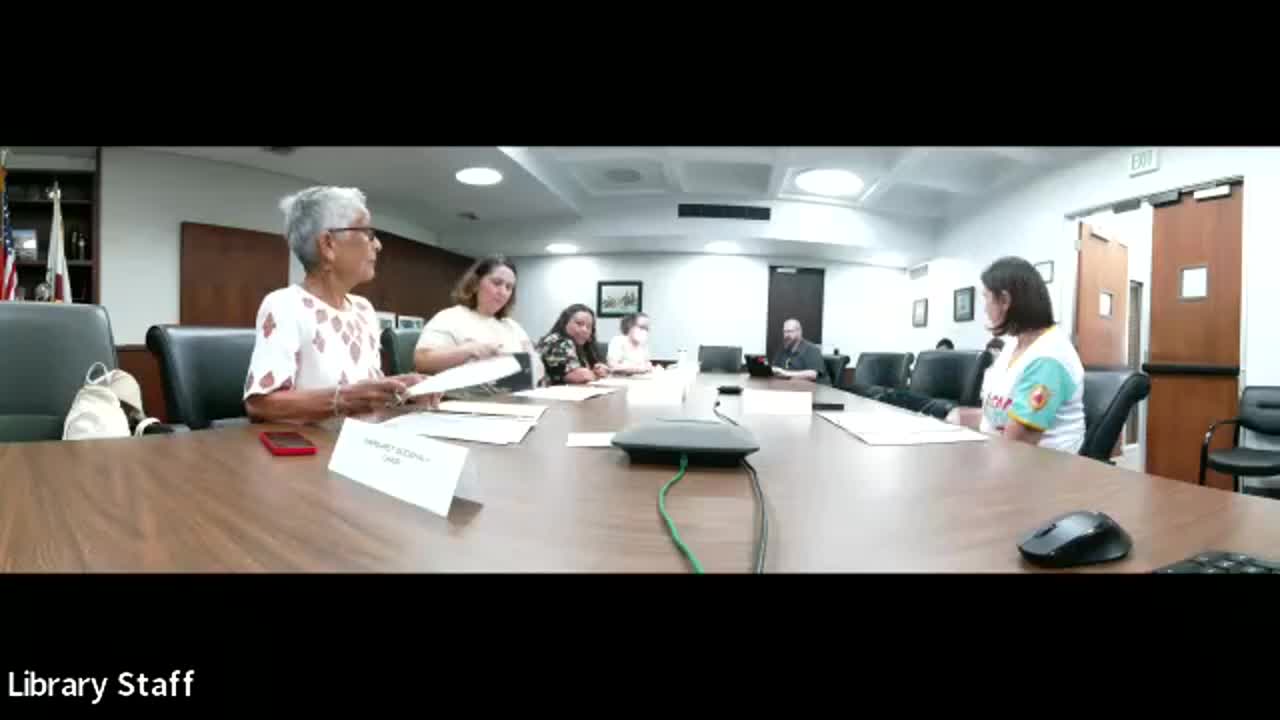
The proposal centers on making at-risk local materials accessible online through SDSU’s digital collections platform and on coordinating a multi-institution grant application under the Modern Endangered Archives program. Jessica, an SDSU representative, and Matt Merrill, digitization specialist at SDSU Library’s digital collections unit, presented the plan during the board’s meeting, describing prior community projects and technical support SDSU would provide.
SDSU representatives said the university would host digitized files on its platform (digitalcollections.sdsu.edu), create searchable metadata (including bilingual metadata if requested), and could assist with training volunteers or hiring local workers for scanning and quality control. “We help make material accessible online and available,” Matt Merrill said, describing SDSU’s institutional repository work with community partners. Jessica noted SDSU can also manage distribution and long-term access and said SDSU pays for hosting the digital server.
Why it matters: The presenters said the work would preserve items at risk from deterioration and broaden public and researcher access. SDSU told the board it has completed similar projects — including a large Tijuana photographic archive and work supported previously by the Modern Endangered Archives program and, earlier, a now-terminated National Endowment for the Humanities grant. Those past projects included local hiring and bilingual metadata, which SDSU offered to replicate for National City collections.
SDSU described the grant logistics: the UCLA Modern Endangered Archives program requires a minimum of three partner institutions for the regional grant they cited, and the application deadline is expected in mid-November. The university said a partner letter of commitment and documentation that collections exist (photos or inventories) would strengthen an application. Jessica said, if the board is interested, SDSU will follow up with presentation files and links.
The presenters emphasized that digitizing material does not change ownership: the city would retain ownership and could request removal or restriction of items. SDSU said some items can be embargoed online and made available on request when copyright or privacy concerns exist. “Anything that we digitize, we always have to look out for who owns [it],” Jessica said, noting community-archiving and personal albums raise distinct copyright and stewardship questions and would require different agreements.
Board members asked logistical questions about equipment, staffing and platform integration. SDSU said it can train volunteers to use existing scanners in the History Room, can provide digitization services using students, and can export metadata so the library can integrate records into its local catalogue. Matt Merrill described automated metadata creation and quality control as a significant portion of SDSU’s work to make collections discoverable.
Next steps recorded in discussion: SDSU agreed to send the board its presentation and links to prior projects; library staff said they would review the materials and consider whether to be a partner on the upcoming grant application. The board did not take a formal vote on partnership at the meeting.
Sources and limitations: Details about grant amounts, exact deadlines and the final scope of any partnership were not finalized at the meeting and were described as subject to future grant guidelines and mutual agreement.