Get Full Government Meeting Transcripts, Videos, & Alerts Forever!
Get email alerts on the Lobbying Transparency topic
No spam. Unsubscribe anytime.
City auditor briefs committee on lobbyist‑reporting audit; recommends code revisions and uniform reporting
Summary
The auditor's office told the committee that Austin's lobbyist reporting requirements make transparency difficult and recommended that management ensure departments provide meeting reporting tools and propose code revisions, noting peer cities require broader lobbyist reporting.
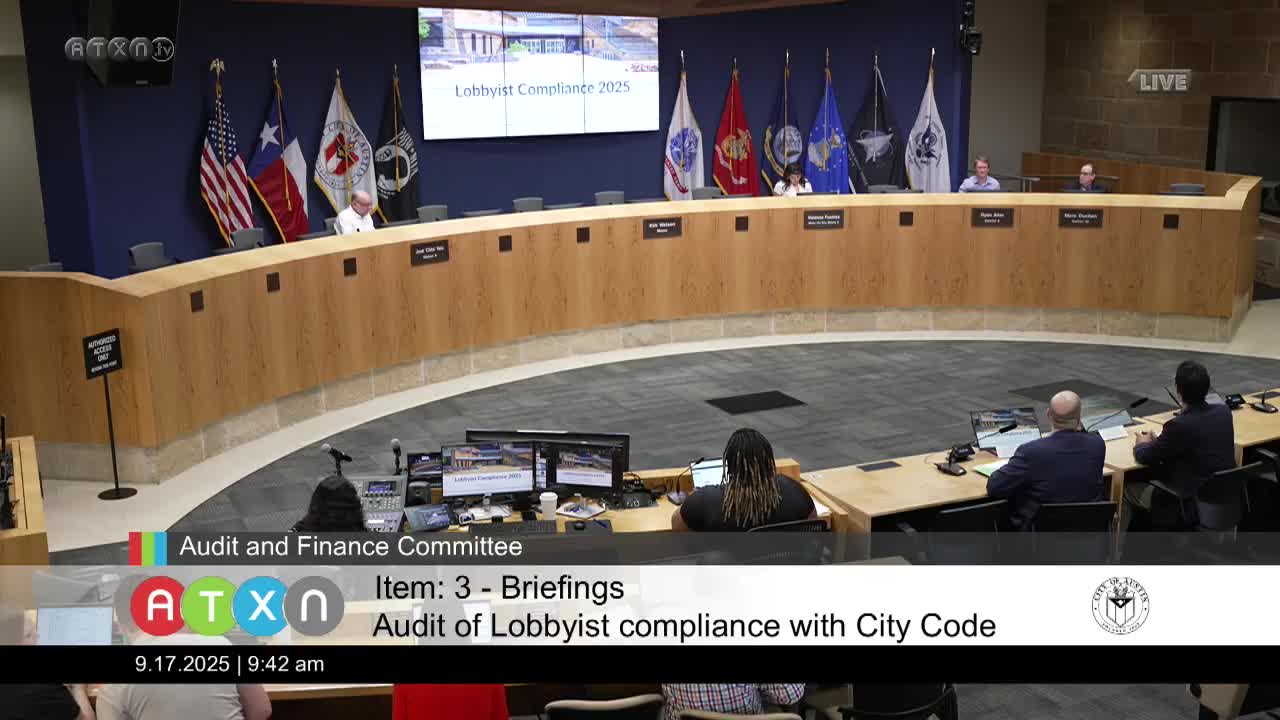
Mateo Macias, auditor in charge of the lobbyist compliance audit, told the Audit and Finance Committee on Sept. 17 that the auditor’s office found two primary problems with the city's lobbyist reporting regime: inconsistent departmental methods for collecting lobbyist meeting information, and a city code definition and reporting structure that limit transparency.
Macias said about 60% of city departments reported they provide a method for lobbyists to record scheduled meetings, while about 40% do not. "All city council members' offices complied with this requirement, as well as the city manager's office," Macias said. He noted many departments rely on paper sign‑in sheets that are not complete, legible, or suitable for virtual meetings.
The audit compared Austin with peer cities Dallas, El Paso and San Antonio and concluded those cities require broader reporting, including reporting all contacts by lobbyists in quarterly activity reports, rather than limiting reporting to scheduled meetings. Patrick Johnson, assistant city auditor, told the committee that shifting reporting responsibility to lobbyists could simplify compliance but would require operational and funding changes in the clerk's office to implement.
Wojia Rizvi of the Law Department said the city could accelerate code revision work and bring ordinance language to council by March 2026 if an expedited timeline is requested. Macias and Johnson recommended two actions: management should ensure departments comply with existing code requiring a method to record lobbyist meetings, and the city manager should present potential revisions to the lobbyist sections of city code to the council for consideration.
Why it matters: The audit targets transparency for interactions that seek to influence municipal decision making. The report suggests Austin's broader definition of "city official" and the current reporting approach reduce public accessibility to lobbying records compared with peer cities.
Next steps: The audit recommends the city manager ensure department compliance with reporting requirements and return to council with suggested code changes; Law Department indicated a March 2026 ordinance timeline is feasible if management pursues it.