Get Full Government Meeting Transcripts, Videos, & Alerts Forever!
Get email alerts on the Signage Ordinance topic
No spam. Unsubscribe anytime.
Planning and Zoning Commission reviews draft illuminated-sign ordinance, tentatively limits polling-place signs
Summary
The Planning and Zoning Commission reviewed a draft ordinance regulating illuminated and electronic signs, discussed brightness and hours limits, and tentatively agreed to limit polling-place signs to three 2-by-2 signs pending city attorney review.
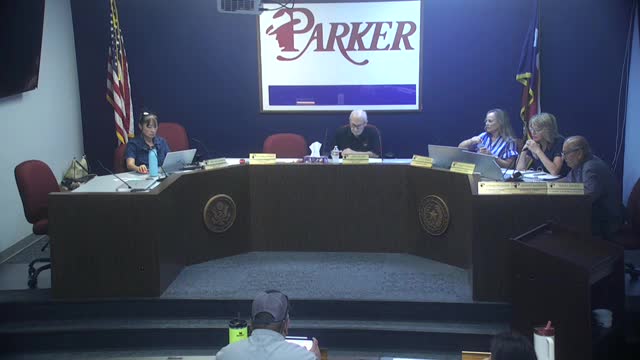
The Planning and Zoning Commission on Wednesday reviewed a draft ordinance that would regulate illuminated signs and electronic message centers and discussed temporary limits on political signs at polling locations.
The draft, read into the record by a staff member, states in part: "The purpose of this ordinance is to regulate lighted signs in order to, 1, protect public safety by reducing hazards; 2, preserve the residential character and small-town atmosphere of the city; 3, allow reasonable signage for businesses, churches, and community facilities; [and] 4, provide clear, enforceable standards for design, lighting, and maintenance." The draft lists multiple technical rules for illuminated signs and electronic message centers, including shielding, downward direction of light, and limits on motion and animation.
Commissioners and staff focused on specific technical provisions and on how the ordinance would affect churches and polling places. Commissioners raised questions about the measurement and control of brightness and how to make any numeric limits enforceable. "I don't know what I am approving or not approving, and that's why I'm stuck," one commission member said, noting ambiguity in specifications provided from other municipalities.
Key provisions discussed in the draft ordinance, as read into the record, include: - General rules: signs must be steady, shielded, directed downward or toward the parcel; flashing, blinking, animated or moving lights are prohibited, with a narrow exception for time/temperature displays that change no more frequently than every 15 seconds. - Hours: certain electronically illuminated signs would be dimmed or turned off between 10 p.m. and 6 a.m. - Brightness: the draft references a maximum allowed light level measured at the property line (the draft text reads a numeric brightness standard); staff said a workable metric and enforcement method would need to be developed. - Churches/schools/community facilities: the draft allows one monument-style sign per frontage for such uses, with a suggested maximum of about 24 square feet per face and a 6-foot height, externally illuminated and shielded; however commissioners questioned whether that would preclude some light-emitting sign technologies and discussed handling such requests by variance. - Electronic message centers (EMCs): allowed only for service/announcements, limited to static images (no animation or scrolling), a minimum display dwell time (the draft shows an 8‑second minimum in some sections), instant transitions between images, and required automatic brightness adjustment. - Enforcement: new or modified illuminated signs would require payment (permit fee), abandoned signs would be removed, nonconforming signs could remain but replacement or modification would require compliance, and violations could be subject to citation and daily fines until corrected.
On polling-place and political signage, commissioners discussed a separate section that would regulate electioneering on city-owned property used as polling places. The draft retains the broader general maximum dimensions for signs (36 square feet, 8 feet tall) for commercial or large freestanding signs, but commissioners proposed a much smaller, easily enforceable limit at polling places. After discussing sight-line safety, proximity limits from roadways and traffic-control devices, and legal constraints under election law, commissioners voiced consensus to recommend allowing three signs per candidate at city-owned polling locations, each no larger than 2 feet by 2 feet (4 square feet), pending review by the city attorney.
Commissioners also said definitions scattered throughout the draft should be consolidated in a single definitions section, and they flagged potential conflicts or ambiguities that staff should resolve before the next meeting. Staff and commissioners repeatedly noted that some questions — especially about numeric brightness standards and enforcement methodology — require consultation with the city attorney and technical clarification so the commission would not be asked to approve unclear numeric thresholds.
Several commissioners recommended handling church requests for internally light-emitting signs by variance rather than by broadly changing the ordinance. "I think the variance is probably the right avenue for that," one member said.
Procedural notes: earlier in the meeting one commissioner moved to accept the minutes and another seconded the motion; the transcript records the motion and second but does not record a vote or result. The commission concluded by asking staff to circulate a revised draft with the proposed changes and to consult the city attorney before the next meeting.