Get Full Government Meeting Transcripts, Videos, & Alerts Forever!
Get email alerts on the Courts Justice topic
No spam. Unsubscribe anytime.
North Las Vegas Municipal Court reports rising filings, specialty‑court graduations and upcoming case management upgrade
Summary
Municipal Court Administrator Erin Tayes told the City Council the court handled a marked rise in filings, maintained strong clearance rates and is expanding specialty programs including a youth court; the court will implement a new case management system (JWorks) in October 2025.
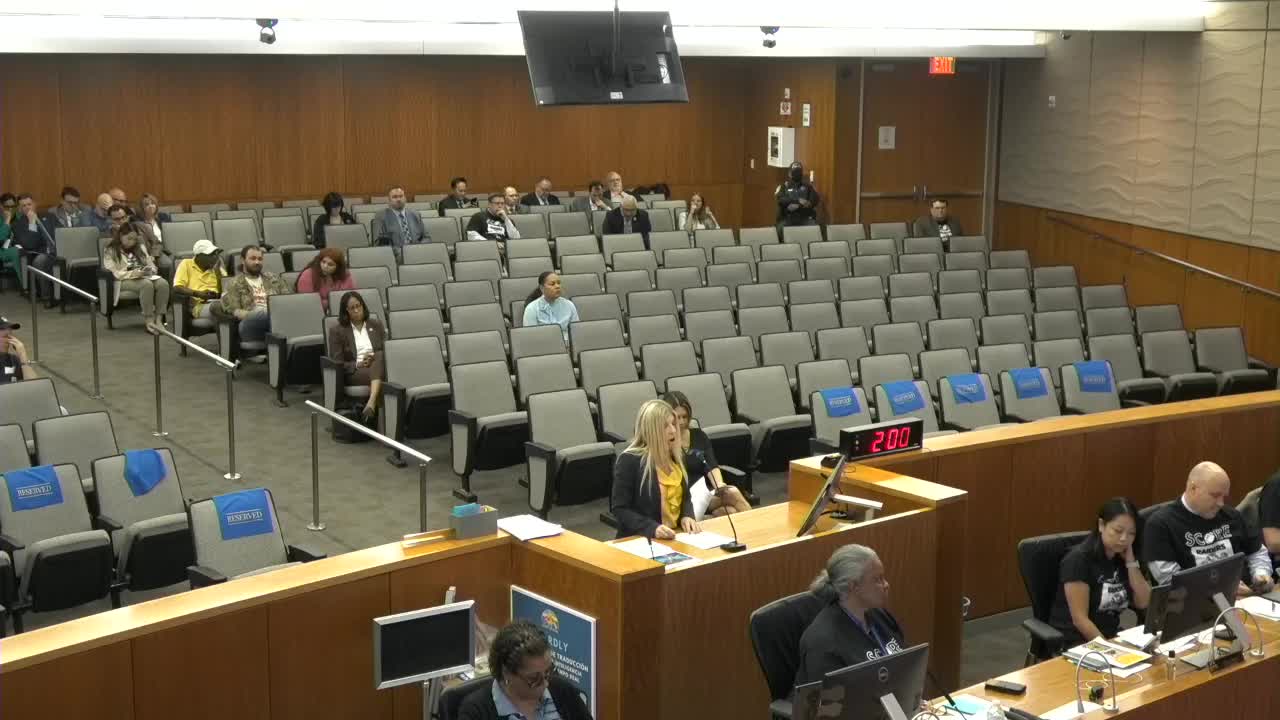
Erin Tayes, administrator for the North Las Vegas Municipal Court, briefed the City Council on Sept. 3 about fiscal year 2024–25 caseloads, specialty programs and planned technology upgrades.
Tayes said criminal filings increased about 20% year over year and nearly 50% compared with two years earlier, but the court maintained high clearance rates — 89% criminal, 94% traffic and 78% civil — and kept fewer than 6% of cases more than a year old. The court handled nearly 30,000 hearings last fiscal year and scheduled over 1,000 trials with only two judges on the bench.
Tayes highlighted the court’s Community Approach to Rehabilitation and Engagement (CARE) program — encompassing mental health court, drug court and veterans treatment court — and said more than 175 participants have graduated since 2021. She also described a pilot youth court for 18–24 year olds launched this year to provide cohort‑based peer support, job readiness workshops and weekly court check‑ins; the youth court was supported by Nevada Sentencing Commission funding for the pilot and involves drug testing and monitoring during program participation.
The court will deploy a new case management system, JWorks, in October 2025 to streamline processes and public access to case information, Tayes said. She thanked city partners — police, community corrections and the city attorney’s office — and asked councilmembers and residents to observe specialty court sessions if they wish.
Councilmembers praised court staff and judges for the outcomes of specialty programs and for the court’s management of a heavier caseload. The presentation was informational only; no council action was required.