Get Full Government Meeting Transcripts, Videos, & Alerts Forever!
Get email alerts on the City Budget And Services topic
No spam. Unsubscribe anytime.
Lynnwood finance staff map budget shortfall; Parks & Recreation faces staffing and program cuts
Summary
City finance staff told Lynnwood council on Wednesday that revised forecasts show a substantial mid‑biennium shortfall and outlined revenue and expenditure levers; Parks & Recreation director Joel Faber described staff consolidations, program reductions and vehicle surpluses the department has enacted to reduce costs.
City finance and department leaders on Wednesday outlined the depth of Lynnwood’s mid‑biennium budget shortfall and detailed the department‑level reductions administrators have already made, with Parks & Recreation among the most affected departments.
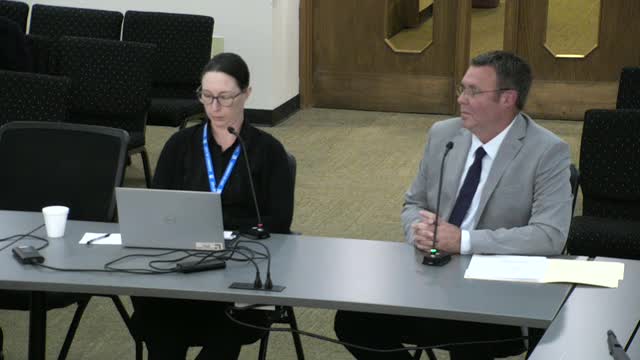
Finance Director Michelle Meyer presented updated forecasts showing adopted 2023–26 revenues of $155 million and expenditures of $158 million at adoption; current estimates project about $134.5 million in revenues and $146.3 million in expenditures for the biennium, leaving the city well below the minimum fund‑balance policy unless changes are made. "Our current estimate is 134,500,000 in revenues and 146,300,000 in expenditures," Meyer said.
Council members heard several revenue and expense levers staff are reviewing: property tax levy capacity (the city’s levy rate was stated at about 67¢ per $1,000 of assessed value, with an estimated lawful levy capacity near $11 million), sales‑tax volatility (the city’s largest revenue source), utility taxes and fee changes. Meyer said some recent accounting cleanups and internal fund transfers added roughly $2 million to general‑fund resources for the biennium and that staff will return with updated third‑quarter results in October.
Parks & Recreation Director Joel Faber reviewed staffing and program changes implemented to reduce costs. Faber said the department consolidated overlapping customer‑service roles (senior‑center and recreation‑center front‑desk and registration positions) and reduced part‑time staffing, several trip and special‑event programs, outdoor recreation offerings and some fleet vehicle counts. He said the senior center’s operations will continue and the city will host a town‑hall meeting for members; the city’s senior‑center hours are not changing, but several part‑time positions and some bus trips were reduced or reallocated.
"We had to consolidate those two positions," Faber said of senior‑center and recreation‑center managerial roles, "because the customer service manager at the rec center has a more in‑depth knowledge of our registration software system, as well as a closer working relationship with our finance department." He said the department was attempting to preserve core social‑service programming and park maintenance while reducing staff costs.
Council members asked how much revenue the rec‑center reductions could cost the city; Faber and Meyer said the loss is difficult to forecast immediately and that staff want several months of usage data after the changes settle before revising revenue estimates. Meyer cautioned that one recent month’s sales‑tax remittance included an unusually large lump sum from a single vendor, so month‑to‑month trends should be treated cautiously.
Council members also asked about vehicle replacement and fleet reserve policy. Faber said some low‑use vans and two minibuses were being scheduled for surplus/auction; he cautioned that leaving replacement contributions unfunded creates larger catch‑up costs later, so the city sought to balance replacing expensive specialized vehicles with current fiscal constraints.
The council discussed meeting schedules and asked staff to bring department directors to public work sessions for deeper briefings on cuts and forecasts. Council members also sought additional documentation to explain some of the national comparative figures presented earlier in the meeting and asked staff to produce Lynnwood‑specific numbers that can be shared with the public.
Votes at a glance: the only formal recorded vote during the session was a council motion to extend the meeting to the end of the agenda. A council member moved and another seconded; the chair called "All in favor" and the motion passed by voice vote.
Ending: Staff will return with Q3 revenue results at an Oct. 20 work session and council asked managers to schedule department briefings so members can question directors about operational tradeoffs. Meyer's office and department directors will continue to seek both near‑term revenue options and longer‑term structural changes to the revenue mix.