Get Full Government Meeting Transcripts, Videos, & Alerts Forever!
Get email alerts on the Tourism And Economic Development topic
No spam. Unsubscribe anytime.
Council agrees to limit hotel-tax support for chamber to $100,000 a year, requires contracts and quarterly reporting
Summary
After an hour-long presentation and detailed questions from council, the council instructed staff to budget a baseline hotel-occupancy-tax (HOT) disbursement and to allow reimbursement up to $100,000 annually to the Lago Vista Chamber, subject to eligibility, documentation and a contract with quarterly reports.
Lago Vista City Council members agreed in a budget workshop to provide the Lago Vista Chamber with continued hotel-occupancy-tax (HOT) support, with conditions requiring contracts, eligibility checks and quarterly accounting.
The council set two guardrails for HOT funding: an automatic baseline that matches the chamber’s historical payment (48,000, paid on a quarterly basis) and a capped, reimbursable ceiling of up to $100,000 for the fiscal year if the chamber demonstrates that proposed expenditures qualify under HOT law and provides the required documentation. Mayor and council asked that any increased payments be reimbursed based on receipts and that the chamber submit quarterly reports showing HOT-eligible spending.
Why it matters: Council members said they want to protect taxpayers and ensure compliance with state law that limits HOT spending to tourism-related activities. The chamber requested substantially more — $185,000 — saying it needs a short-term infusion to stabilize operations and invest in marketing, events and the visitor center. Council members praised the chamber’s recent steps to increase transparency but said prior accounting problems and the legal limits on HOT funds require stricter controls.
Council direction and conditions - Baseline: Council confirmed continuing the historical quarterly payment the chamber has received (48,000 per year) to keep the chamber operating while new rules are put in place. That payment will continue as an automatic quarterly transfer. (Council members discussed alternatives; the mayor’s summary reflected council comfort with retaining the baseline payment.) - Ceiling and reimbursement: The council authorized staff to show up to 100,000 in HOT funds in the draft budget as a maximum available to the chamber for the year, but payments above the baseline will be reimbursed only after the chamber submits evidence (invoices/receipts) that the expenditures were HOT-eligible. The council asked for a mechanism to stop further payments if eligibility or reporting fails. - Contract and reporting: The council directed staff and the city attorney to prepare a services contract (including clawback/reimbursement language and quarterly reporting requirements) tying any HOT funds to specified tourism-related deliverables (visitor center operations, marketing that demonstrably attracts out‑of‑town visitors, event marketing that generates “heads and beds”).
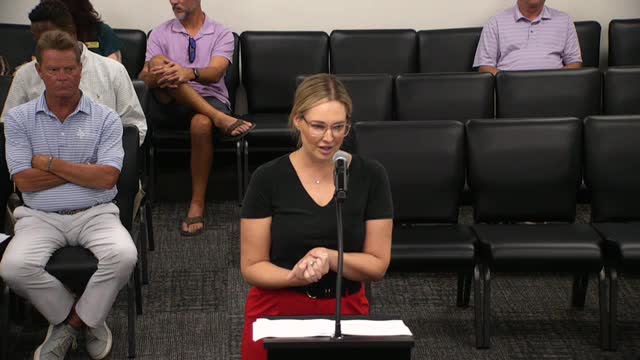
What the chamber asked for and what it said: Lago Vista Chamber executive director Allison Sargent told the council the chamber has run operating deficits in recent years and asked for $185,000 to stabilize the organization, fund the visitor center and expand marketing and events. Sargent said the chamber could produce measurable tourism outcomes and monthly/quarterly data, and she proposed a one‑year contract to demonstrate results.
Council concerns and follow-ups: Council members repeatedly said HOT funds must be used only for activities that “directly enhance and promote tourism,” and several asked the city attorney to confirm eligible categories under state law. Some council members said they were willing to consider additional HOT support if the chamber brings detailed project budgets, outside matching commitments (from other cities or private partners) and monthly/quarterly metrics (STR heads-and-beds, sales-tax bump, event attendance by ZIP code). Several council members also favored a reimbursement model rather than large up-front lump-sum grants.
Next steps: Staff was directed to prepare (1) contract language and reimbursement procedures for HOT disbursements, (2) a quarterly-reporting template that ties payments to specific deliverables, and (3) budget language showing baseline HOT support and an upper, reimbursable cap of up to $100,000. The mayor asked staff to check with the city attorney about clawback language and legal compliance before any larger disbursement is made.
Ending: Chamber leaders left the meeting with a clear path to request larger HOT disbursements later in the fiscal year but with firm new accountability steps. Council members said they remain supportive of the chamber’s tourism mission, provided use of HOT funds follows the statute and is transparent.