Get Full Government Meeting Transcripts, Videos, & Alerts Forever!
Get email alerts on the Community Paramedicine topic
No spam. Unsubscribe anytime.
Dallas Fire-Rescue outreach paramedics describe home-visit program aimed at reducing ER visits and 911 calls
Summary
A Dallas Fire-Rescue outreach paramedic told the Senior Affairs Commission the team conducts scheduled home visits to high-risk residents to check vitals, assess home hazards and connect people to services; team size, referral process and capacity limits were discussed.
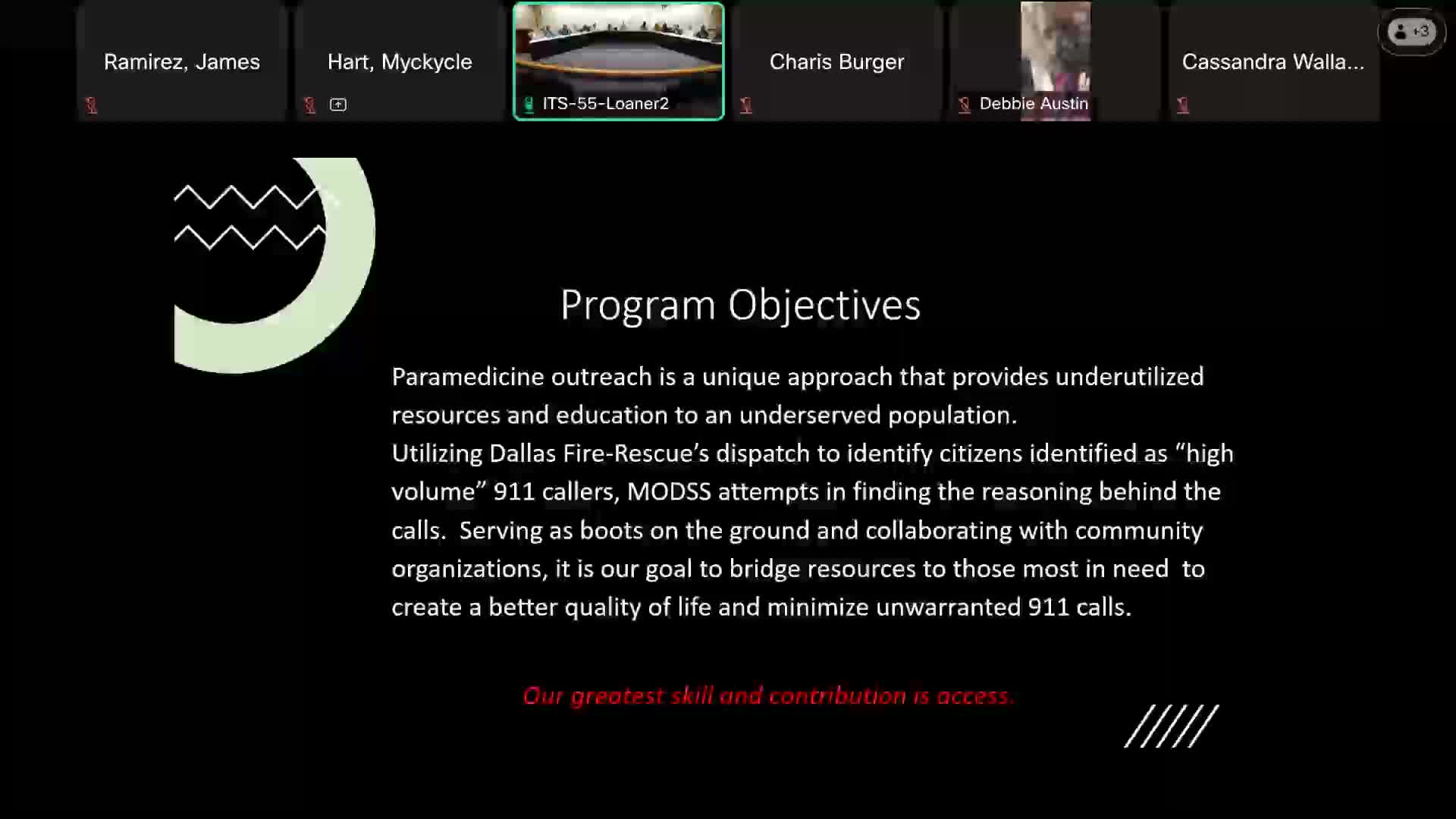
A Dallas Fire-Rescue outreach paramedic told the Senior Affairs Commission that a home-visit program provides scheduled, in-home care for high-risk patients with the stated aims of preventing unnecessary hospitalizations, emergency-room visits and 911 calls.
The presenter said the program partners with hospitals and community-based health and social-service agencies to provide medical assessments, home-safety checks and social-service referrals. “The goal of the Mott's outreach paramedics is to help you become more self reliant,” the presenter said.
Program staff said visits include vital-sign checks, needs-and-goals assessments, medication and appointment support, and, when requested, advocacy with a patient’s doctor. The outreach paramedics also perform a physical assessment of the home to identify fall hazards — for example, poor lighting, clutter, unsecured rugs and missing grab bars — and will arrange smoke-alarm replacement through the department’s inspection and life-safety division when requested.
Presenters said the outreach team works by referral rather than general dispatch: most referrals come from community partners, in-house screening of frequent 911 callers, or recommendations from fire stations. The group reports an average case load of about 20–25 patients and said the majority of its patients are age 65 or older.
Program capacity and staffing limits were discussed. Presenters said the outreach team recently shrank from eight to four members because four staff were absorbed into a separate medic program; the remaining team covers the city in four quadrants and is busiest in South Dallas. The presenter described the medic program as focused on diverting non‑emergency calls from engine and truck companies, but said the primary outreach group relies on referrals and lacks the same dispatch and follow-up capacity as the medic program.
Commissioners asked about recordkeeping and district-level statistics; the presenter said the team does not yet maintain or distribute a regular, district-by-district public report but that referral and case information are recorded and that contact and follow-up typically occur within a day or two of assignment. The outreach paramedics said they do not have assigned city vehicles for the referral-based team; members use their own cars and carry medical equipment and bags.
Clarifying details raised during the discussion included that the team: reduced from eight to four members after a reorganization; averages about 20–25 patients on its case notes; prioritizes referrals and frequent 911 callers; and is busiest in South Dallas. Commissioners requested quarterly or district-level statistics about referrals and patient age breakdowns; presenters said they could provide those on request.
Ending: The presenters closed by emphasizing follow-up and continuity of care, saying they typically monitor referred patients for approximately 30 days to confirm progress and that success depends on patient engagement.