Get Full Government Meeting Transcripts, Videos, & Alerts Forever!
Get email alerts on the Internal Audit Plan topic
No spam. Unsubscribe anytime.
Council directs auditor to ‘catch up’ on overdue follow-ups, orders financial planning audit
Summary
Council told the city auditor on Sept. 9 to prioritize overdue audit follow-ups and to add a financial planning audit to the FY 2026 audit plan, while identifying climate resiliency and vehicle management as high-priority areas to consider.
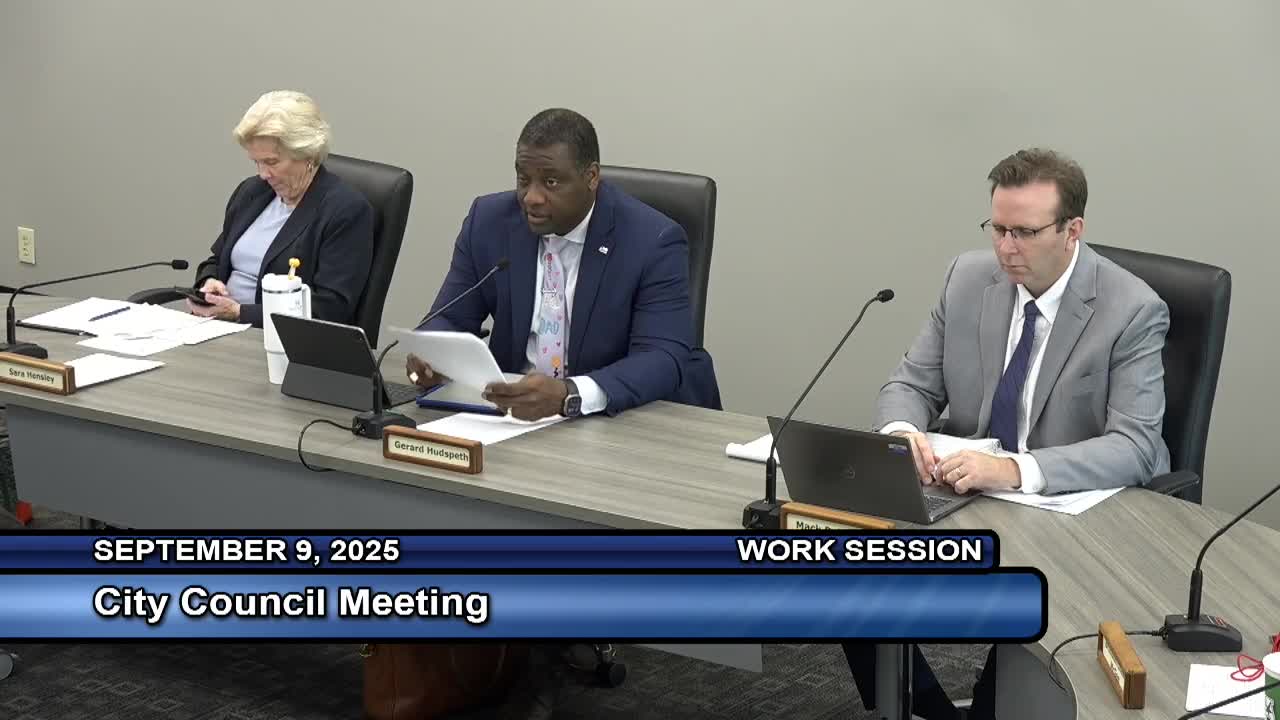
The Denton City Council on Sept. 9 reviewed the city auditor’s proposed FY 2026 annual internal audit plan and gave staff explicit direction to prioritize follow-up reviews that were delayed from prior years and to perform a financial planning audit in the coming fiscal year.
City Auditor Madison Rorschach framed the options for council: the office could focus only on overdue follow-ups, combine overdue and current-year follow-ups, or pursue the follow-ups plus a limited number of new audit projects. She told council the office has about 2,400 available hours to allocate across assurance work, consulting and investigations, and administrative duties.
Council discussion focused on trade-offs between completing follow-ups and starting new audits. Multiple members said timely follow-up is essential. Councilmember from District 1 asked for more resident input on audit priorities; Madison said the office received a small response to a resident survey and could solicit more targeted feedback. Mayor Pro Tem and others urged completion of overdue follow-ups first.
Council direction and priorities: Council broadly directed the auditor to complete a catch-up of overdue follow-up reviews and to add a financial planning audit to the FY 2026 work plan. Several members also supported adding a climate resiliency audit; vehicle management was discussed as a near-term priority because of planned budget changes to vehicle funding and debt.
Why it matters: Auditor follow-ups check whether departments implemented previously recommended changes; catching up improves accountability. The financial planning audit addresses core long-term fiscal resilience. A vehicle management review was urged by several members as a possible source of near-term efficiencies as the city considers shifting vehicle purchases from debt to cash.
Staff follow-ups requested by council included more resident outreach on priorities, a clearer definition of “equity” as used in audit objectives, and a follow-up audit on cybersecurity issues noted in a prior network-management audit. The auditor agreed to return a revised FY 2026 plan reflecting council’s direction.
No formal vote was required; council gave staff direction by consensus and staff will return with a revised plan.