Get Full Government Meeting Transcripts, Videos, & Alerts Forever!
Get email alerts on the City Budget topic
No spam. Unsubscribe anytime.
San Antonio staff present $4 billion FY2026 proposal, create Capital Delivery Department and boost homelessness funding
Summary
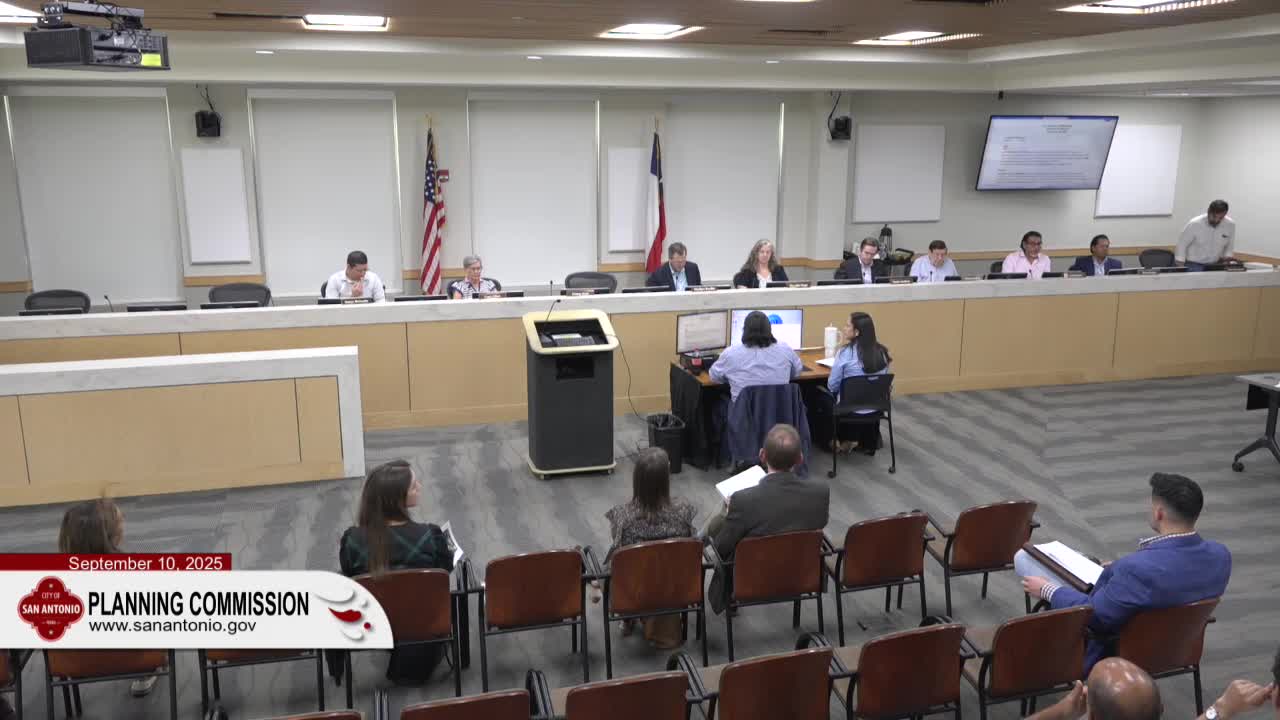
City budget director Justina Tate and newly named capital delivery director Mike Shannon presented the City of San Antonio’s proposed fiscal 2026 budget to the Planning Commission on Sept. 10, 2025, highlighting a $4 billion total, a new Capital Delivery Department, and new investments in homeless services, drainage, sidewalks and public safety.
City budget director Justina Tate told the Planning Commission on Sept. 10 that the City of San Antonio’s proposed fiscal year 2026 budget totals $4 billion and represents about a 2.2% increase over last year’s budget. "Our total, fiscal year 2026 proposed budget is $4,000,000,000 and this represents about a 2.2% increase over last year's budget," Tate said during the commission meeting.
The proposal divides the budget into three major components: $1.2 billion in restricted funds (revenues dedicated to specific services such as the airport and solid waste), a $1.1 billion capital budget for large projects, and a $1.69 billion general fund that supports core city services including public safety, infrastructure, parks and animal care services. The proposed budget would maintain the city’s property tax rate at 54.159 cents per $100 of valuation and includes about $152 million in property tax relief programs, Tate said.
Why it matters: the proposal funds major capital work already under way, continues pandemic-era and ARPA-era shelter funding, and shifts the city’s internal structure to create a new department focused on delivering bond and large capital projects. Those decisions will affect construction schedules, drainage and street maintenance, homelessness responses and public-safety staffing across San Antonio and will move next to City Council for adoption this month.
Key budget components and planned investments - Homeless services: The proposed budget establishes a new Homeless Services and Strategy Office with about $30.5 million in direct investment for outreach, encampment response and a low-barrier shelter. Tate said the budget continues one year of low-barrier shelter funding at about $4.8 million while staff develops a long-term shelter plan for council consideration next summer. The proposal anticipates about 1,300 abatements in fiscal 2026 and identifies recurring encampment sites prioritized for weekly or biweekly outreach.
- Capital and department reorganization: Mike Shannon, director of the newly created Capital Delivery Department, said the reorganization will move about 188 existing positions from Public Works into the new department to focus on bond- and capital-project delivery. "We just have to spend our city's tax, dollars, and those bond dollars, wisely," Shannon told commissioners. The capital delivery department’s proposed operating and delivery budget is about $250 million, including roughly $28 million for staff and $222 million directed to project capital expenditures.
- Streets, sidewalks and drainage: The street-maintenance allocation in the budget is approximately $122 million, funding more than 1,400 projects and maintenance on over 400 miles of streets. The budget includes $17 million for sidewalks — cited as construction funding for about 21 miles of new sidewalks and 11 miles of repairs. City staff told commissioners the city is pursuing state and federal funding for drainage work and estimated an overall drainage needs backlog of about $4 billion; the budget includes $11.4 million targeted to three drainage projects affected by June flooding (Grissom Road, Old O'Connor Road and Bridal Creek).
- Affordable housing and housing goals: The budget includes about $30.4 million for affordable housing operating and grants and continues work to implement the city’s Strategic Housing Implementation Plan. Staff said the city’s goal is to produce 28,000 homes by 2031; by the end of FY2026 staff expects roughly 13,000 homes to be constructed or in the pipeline, about 47% of that target.
- Public safety: The general fund allocation for policing was presented as roughly $631 million. The budget includes 53 new police officers (28 for a new District 3 substation at South Flores/South Florida Substation and 25 for citywide patrol) and advance toward a multi-year goal to increase proactive patrol time. Tate said the city plans six academy classes with about 270 expected graduates to fill new positions and attrition. Fire funding in the general fund is about $428 million and includes 12 new firefighters, a $1.4 million needs assessment and $291,000 for drone equipment.
- Animal Care Services: The Animal Care Services budget is about $33 million and, staff said, aims to reach 100% response to critical calls by late 2026 and expects more than 41,000 spay/neuter surgeries across city and partner clinics.
Capital program status and bond timing Shannon outlined the city’s ongoing work on the 2022 bond program (a $1.2 billion voter-approved package) and said roughly half of the 187 bond projects were complete or under construction as of July, with that share expected to rise to about 65% shortly. He described plans to improve project estimating, stakeholder communication and on-time delivery. Staff also said city leadership is discussing shifting the bond cycle earlier (considering a 2026 vote or moving to a four-year cycle) but said a May 2026 call for a bond would be challenging and a November 2026 timeframe may be more feasible.
Questions, clarifications and next steps Commissioners pressed staff on drainage priorities, use of federal grant funding and how medical/EMS services are funded. Shannon said drainage remains a top priority and staff are actively pursuing state and federal funding; Tate and other staff noted recent reductions in some operating grants (for immunizations and air quality), and said a cross‑departmental committee is tracking grants and any potential funding gaps. On EMS, staff clarified that the city’s emergency medical response is provided by the fire department and that squad units are intended to handle many medical calls while leaving larger apparatus available for the most serious responses. Justina Tate told the commission the next step is City Council adoption hearings; staff said council will consider final adoption in the coming weeks and the new fiscal year begins Oct. 1.
Votes at a glance - Consent agenda: Motion to approve all items on the consent agenda carried. Motion by Commissioner Siegel; second by Commissioner Milam. Roll-call votes recorded in the meeting transcript show: Commissioner Siegel — yes; Commissioner Milam — yes; Commissioner Sanchez — yes; Commissioner Garcia — yes; Commissioner DeSuki/Desugue — yes; Commissioner Lopez — yes; Commissioner Ouellette — yes; Commissioner Prophet — yes. Commissioner Bustamante was recused and absent for consent items 2, 3, 9 and 12 and rejoined the meeting after the consent vote.
Ending Staff presentations concluded with thanks from department leadership and commissioners moved on to additional staff updates; city staff reiterated that the proposed FY2026 budget will proceed to City Council for adoption hearings before the Oct. 1 start of the fiscal year.