Get Full Government Meeting Transcripts, Videos, & Alerts Forever!
Get email alerts on the Employee Compensation topic
No spam. Unsubscribe anytime.
San Antonio proposes $50 million for pay increases as health premiums rise; HR offers alternatives
Summary
City of San Antonio staff proposed a $50 million pool for FY 2026 pay increases, presented options to address pay compression and a projected rise in health plan premiums that staff said would not outpace proposed raises.
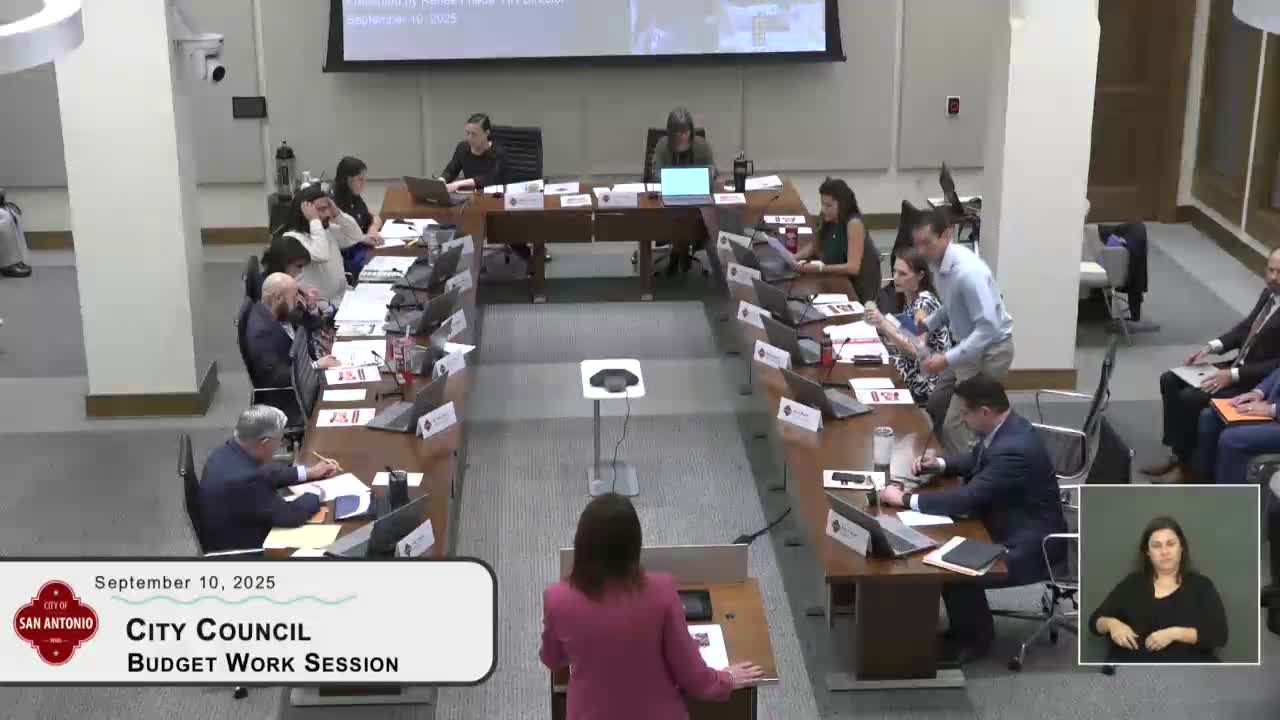
City of San Antonio officials presented the employee compensation and benefits portion of the FY 2026 proposed budget Wednesday, including a $50 million allocation for base-wage increases and projected premium rises for city health plans.
Renee Bridal, the city's director of human resources, told the City Council the HR department oversees pay plans and benefits for the city's 13,723 authorized positions and that the FY 2026 proposal includes a 2% across‑the‑board increase for civilian employees. The proposal also includes an 8% increase for firefighters effective Oct. 1, 2025, and a 4% increase for police officers effective April 1, 2026. Bridal said the city spent about $13 million in FY 2024 and FY 2025 on compression adjustments to move long‑tenured employees closer to range maxima.
Bridal said about 94% of the department's $252 million budget, or roughly $237 million, pays claims for the city's self‑funded medical plans; the remaining 6% covers departmental operations. She described three pay alternatives: the proposed 2% across‑the‑board; a 3% across‑the‑board option that staff estimated would cost about $19 million across all funds; and a hybrid that preserves distance created by prior compression adjustments while providing larger percentage increases for lower‑paid employees (entry‑wage employees would receive 4%, with anyone earning $75,000 or less receiving at least 3%).
Bridal addressed employee concerns about premium increases after an earlier city announcement on rising health claims, saying the FY 2026 budget plans assume a 5% premium increase for civilian employees and a 10% increase for uniformed employees consistent with collective bargaining agreements. Using staff estimates, Bridal said the smallest annual pay increase under a 2% raise would be about $748 and that, under the proposed premium changes, "no employee is upside down as their pay increase exceeds the proposed increase to premiums." She added that 58% of employees would see a monthly premium rise under $5 and 93% would see a rise under $15. Open enrollment begins Oct. 6.
Council members questioned compression — the narrowing of pay differences between junior and senior employees — and asked for more distributional detail by department and pay tier. Bridal said the city had made previous, multi‑year compression adjustments that cost about $13 million and that the alternatives before council were intended not to erase those earlier adjustments.
Council members and staff also discussed outreach to veteran employees to help them leverage VA or TRICARE coverage and reduce the city's share of medical costs. Bridal said about 12% of full‑time employees have identified themselves as current or former military and HR could coordinate benefits sessions in partnership with county or federal veteran services.
The presentation included examples of benefit use and workforce development: tuition reimbursement and student loan repayment programs, apprenticeship pathways in solid waste and animal care services, parental leave and short‑term disability, and TMRS pension participation. Bridal said the city views those programs as part of total compensation that increases overall retention and career advancement.
Council members asked staff for supplemental materials before Thursday's budget vote, including detailed workforce distribution by salary bands, the fiscal impact of the 3% option, and further analysis of the interaction between premium increases and net pay.