Get Full Government Meeting Transcripts, Videos, & Alerts Forever!
Get email alerts on the Municipal Budget topic
No spam. Unsubscribe anytime.
San Antonio council reviews proposed 2026 budget amendments including pay increases, parks fees and police staffing
Summary
City staff presented six proposed amendments to the City of San Antoniobudget that would add employee pay, restore some public-safety and capital funding, and raise selected fees; council members debated police staffing levels, delegated-agency grants and data reporting for Alamo Promise.
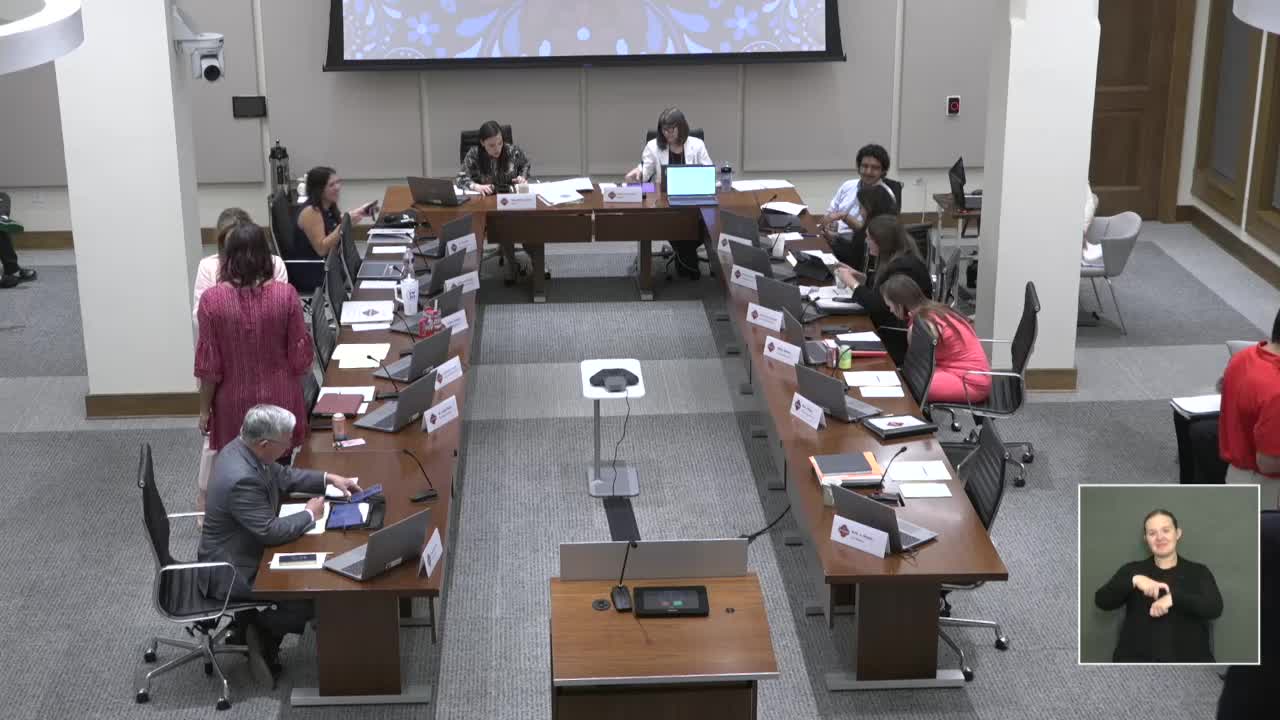
City staff presented six proposed amendments to the City of San Antoniobudget during a Sept. 17 work session, with council members discussing options for funding raises, police hires and delegated-agency contracts ahead of final budget action.
The packet presented to councilors includes: a $750 base-salary adjustment for municipal employees (with discussion of a separate 2% scenario), restoration of $500,000 for traffic-signal and radar equipment, a proposal to add 15 new patrol officers (described in the presentation as bringing patrol staffing toward 40 officers in the near term), restoration of a $1,000,000 allocation for minor-repair programs, a one-time $3,000,000 allocation connected to the vacant-buildings program plus a funded code-enforcement position (presented as $95,000), and a proposed parks fee increase of $0.50 projected by staff to create additional general-fund capacity. Staff described the package as six total amendments that together would generate and reallocate roughly $11,000,000 to the general fund over the two-year budget window shown in the presentation and would include a $1,000,000 capital fund allocation for improvements.
Why it matters: council members said the proposals touch core municipal prioritiesemployee pay and recruitment, public safety and basic infrastructureand that choices made now could carry into the two-year budget and affect services next year. Several council members urged a larger police staffing increase and raised concerns about sustainability if recurring expenses outpace recurring revenues.
Key details and council discussion - Employee pay: staff proposed a $750 one-time base adjustment targeted to city employees, and council members debated an alternative 2% across-the-board increase. Some members said they favored prioritizing lower-paid employees; others stressed the long-term cost implications if recurring revenue is not identified.
- Police staffing and overtime: presentation materials include funding for 15 additional patrol officers, described by staff as part of a multi-year staffing plan. Several council members argued for a larger increase (comments referred to a previously discussed 65-officer goal), and staff noted the city spends substantial amounts on police overtime; councilors discussed using overtime savings to help cover new positions but also cautioned that overtime reductions carry operational and service impacts. Staff said the proposed amendment package includes a $2.9 million overtime reduction assumption in the draft.
- Vacant-buildings program and code enforcement: staff proposed restoring a position tied to the vacant-buildings initiative, including a $95,000 position cost and a one-time $3,000,000 funding line for program activities drawn from reserves. Council members pressed for clarity about what the position would do (inspections, citations and case coordination were described) and how fees tied to vacant-residence citations would be structured.
- Traffic signals and radar equipment: staff proposed restoring $500,000 to install traffic-signal upgrades and new radar equipment; several council members prioritized the work as a public-safety investment.
- Parks and other fee changes: staff proposed a 50-cent parks fee increase that staff estimated would generate roughly $4,000,000 in capacity across the two-year window; council members suggested tempering the increase (one option presented was a 25-cent increase) to reduce impact on small businesses and residents. Staff described multiple scenarios for food-and-beverage and liquor licensing fees because a recent state law change restricts municipalities from charging both licenses; staff said impacts will vary by business and provided two case-study examples to illustrate possible outcomes.
- Delegated agencies and short-term contracts: councilors discussed $24.25 million in contracts with delegated community agencies, of which staff estimated roughly $4.8 million is discretionary funding. Some council members proposed a small percentage reduction in delegated-agency funds (examples discussed included a 2.5% reduction yielding about $600,000) as one source of funding for public-safety hires.
- Metro Health and mental-health funding: staff identified $433,000 available for Metro Health to expand mental-health capacity, tuberculosis control and language-access services; councilors were told Metro Health would later provide a plan for how those dollars would be spent and warned that some increases would become recurring costs if fee or revenue changes are not permanent.
Alamo Promise, Ready to Work and data reporting Staff discussed proposed Alamo Promise scholarship funding that would be financed in part by Ready to Work dollars. City staff and a college representative flagged data limitations: work-placement data are controlled by the Texas workforce commission and are not available to the city on the time frame or in the format staff said the council sought. Staff proposed adding reporting items from Alamo Colleges (graduation lists, program enrollment and demographic summaries) for council and public transparency but noted placement data may not be available under current state constraints. Council members requested that reporting align with existing reporting cadences and that any data-sharing be made administratively feasible for Alamo Colleges.
Next steps and outcomes of the session No final votes were taken at the Sept. 17 work session. Staff summarized action items for the councilincluding draft contract adjustments for several delegated agencies (examples discussed: American Gateways and Big Momma Safe House), a proposed $95,000 code-enforcement position for the vacant-buildings program, and a set of options for the parks and food-and-beverage fee structure. Staff said the council could pull individual amendments (for example, the additional police positions) out as separate items for a vote at a later date. Council members requested additional information on tax-exemption impacts, overtime spending detail, and phased implementation risks before final budget adoption.
Ending note: staff said they would return with updated fiscal scenarios and more detailed contract and reporting language for council consideration before final action on the 2026 budget.