Get Full Government Meeting Transcripts, Videos, & Alerts Forever!
Get email alerts on the Public Safety topic
No spam. Unsubscribe anytime.
San Antonio council splits over how many patrol officers to add; overtime and delegate‑agency cuts raised as funding options
Summary
Council members debated adding 15 vs. up to 65 patrol officers to meet a 60/40 proactive/reactive goal, with some members pushing for the full 65 and others urging a strategic review. Discussion examined $26.9 million year‑to‑date overtime, a $2 million proposed overtime reduction, and whether delegate‑agency cuts could free recurring funds.
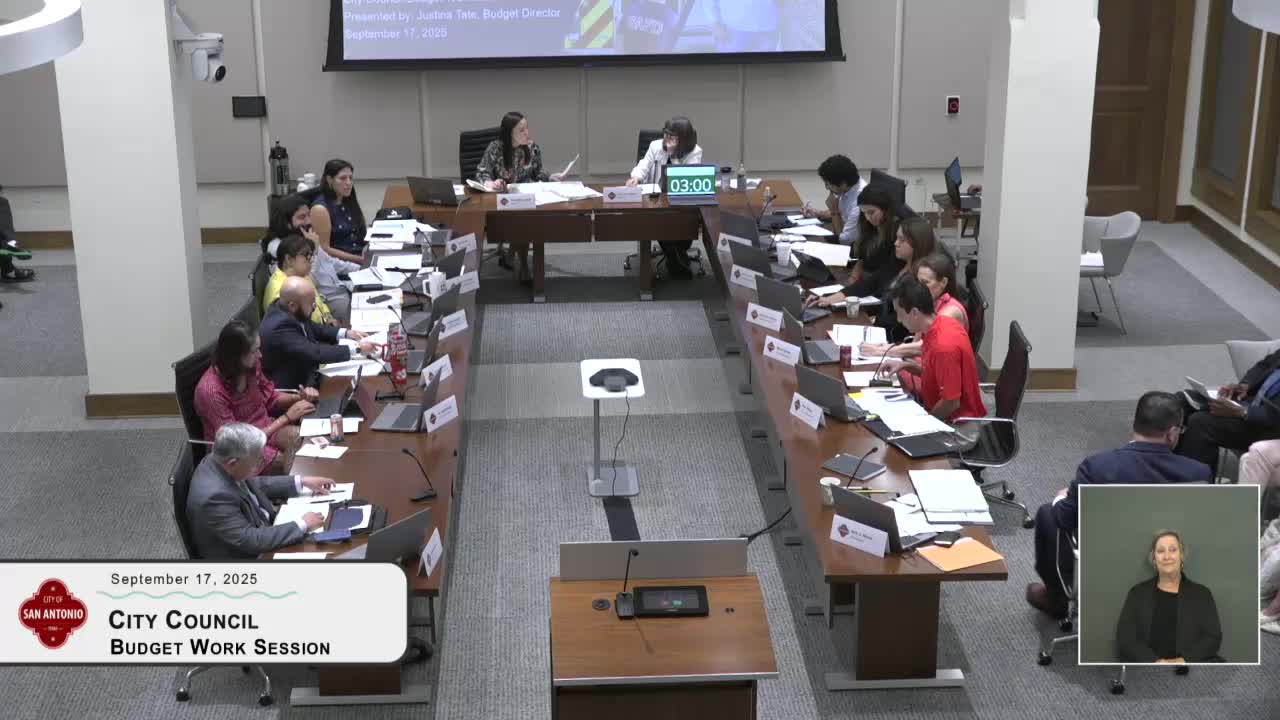
Council members used the Sept. 17 budget work session to press for different approaches to public safety staffing, focusing on how many additional patrol officers the FY26 amendments should fund and how new hires should be financed.
Several council members and the mayor emphasized the policing study and the council’s prior goal of moving patrol time toward a 60% proactive / 40% reactive split. Councilwoman Spears said, “I really, really want all 65 of these officers,” urging the council to fund the full hiring plan described in earlier staffing studies. Councilmember White and others said more officers are a proven deterrent to crime and argued that converting existing overtime spending to full‑time positions would both reduce burnout and be fiscally sensible.
Police and city officials described the staffing picture in more detail. A department official said the city has cadets in training and that “short” is a policy term rather than a recruitment failure; the chief noted the proposed budget already assumes a $2 million reduction in police overtime and said the department spends substantial amounts on categories such as district‑fill and holdover calls. Staff also reported year‑to‑date overtime spending in the tens of millions (figures cited in the discussion included $26.9 million through August and historical totals noted for events such as Fiesta), and noted that planned overtime savings would require tradeoffs in services or coverage if eliminated.
Some council members proposed identifying savings in the delegate‑agency budget to pay for more officers; staff estimated that a 2.5% reduction in delegate agencies could free roughly $600,000. Others urged a broader policy review — including a Council public‑safety committee study of what patrol/specialty mix the city needs — before making multi‑year staffing commitments.
No final staffing vote was taken at the work session; staff were asked to return with more detailed options, including analyses of overtime categories and the operational tradeoffs that would result from further reductions.