Get Full Government Meeting Transcripts, Videos, & Alerts Forever!
Get email alerts on the Budget Amendments topic
No spam. Unsubscribe anytime.
San Antonio staff outline $11.5 million in proposed FY26 budget amendments including pay increases, traffic-safety projects and one-time streetlight funding
Summary
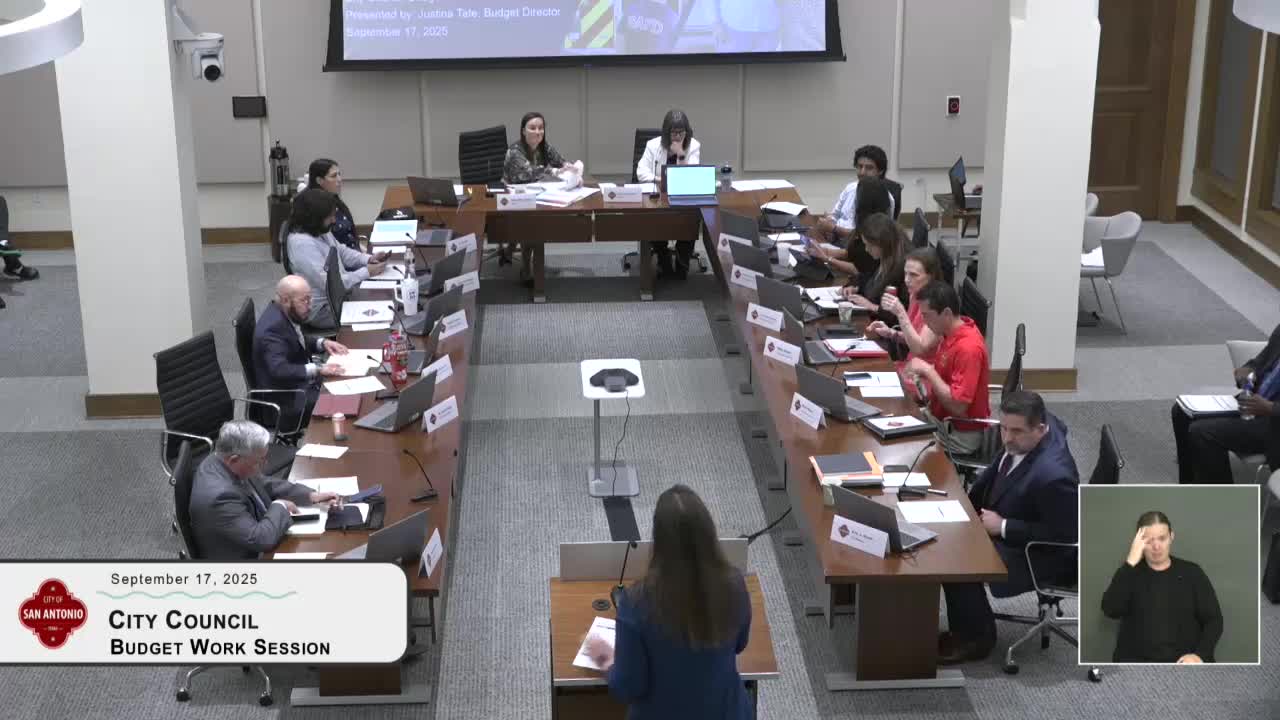
City of San Antonio staff presented six proposed amendments to the FY26 general fund at a Sept. 17 budget work session that together would add roughly $11.5 million over two years to pay for employee compensation changes and a handful of programs and capital items.
City of San Antonio staff presented six proposed amendments to the FY26 general fund at a Sept. 17 budget work session that together would add roughly $11.5 million over two years to pay for employee compensation changes and a handful of programs and capital items.
Budget Director Susana Tate told the council “there are a total of 6 budget amendments included in the general fund for a total over 2 years of about $11,500,000.” The package includes a $750 base salary increase, a 2% across‑the‑board cost‑of‑living adjustment option, partial restoration of funding for radar‑feedback signs and flashing stop signs, $500,000 for traffic‑safety devices, restoration of $1,000,000 for minor home repairs, funding to add one vacant‑buildings position in Development Services, $3,000,000 in one‑time streetlight funding and additional patrol officers.
Tate and other staff explained the proposed public‑safety hire as “15 new police officers for patrol for a total of 40 officers,” a $3.1 million cost spread across two years, and said restricted funds would receive parallel base‑pay adjustments. The capital budget amendments include $1 million per council district for capital improvement projects, a $10 million total.
Staff outlined revenue and reduction options to pay for the amendments, including delaying the inner‑city incentive transfer to FY27, moving some AlamoPROMISE scholarship funding into the Ready to Work program for FY26, and increasing a parks environmental fee by 50 cents (from $1.50 to $2.00 per month). The budget office estimated the parks fee change would generate about $4 million in one year and roughly $8 million across two years. The memo also identified $433,000 tied to a proposed change in food‑and‑beverage licensing that Metro Health staff said would be a net neutral or lower cost for most businesses under the new state licensing rules but could increase revenues depending on gross food‑sales tiers.
Council members pressed staff on the budget tradeoffs, asking whether proposed fee increases are the right source of recurring revenue and requesting more detail on how baseline and one‑time items would be sustained in FY27 and beyond. Staff said the capital and restricted‑fund changes would be available for council review and that they would circulate follow‑up memos clarifying which agency programs were assumed unchanged in the proposed amendments.
The budget work session did not include any final votes; council members directed staff to return with clarifications and, in some cases, separate memos on particular items ahead of the formal budget adoption process.