Get Full Government Meeting Transcripts, Videos, & Alerts Forever!
Get email alerts on the Municipal Budget topic
No spam. Unsubscribe anytime.
San Antonio adopts FY2026 budget with employee pay increase and targeted restorations after lengthy debate
Summary
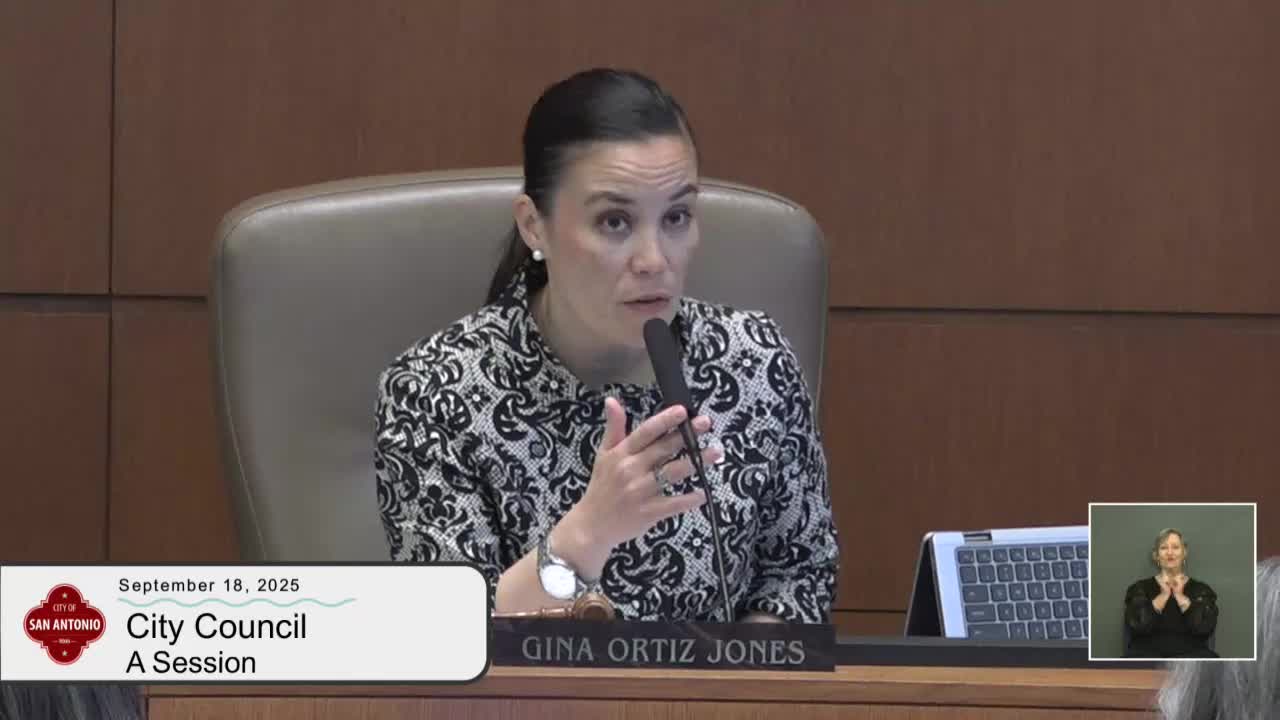
The San Antonio City Council on Sept. 18 adopted the fiscal 2026 budget and related ordinances, approving amendments that include a one-time $750 payment for many city employees, restored capital and operating items and funding for additional police officers after public comment and council debate on tax and fee impacts.
The San Antonio City Council adopted the fiscal 2026 budget on Sept. 18, approving ordinances that set the city dvalorem tax rates, modify fees and transfer prior-year funds, and accepting a package of amendments the administration proposed after council deliberations.
Council action followed hours of public comment on taxes and city services and extended debate among councilmembers over staffing, public safety and fee increases. City Administrator Eric Walsh briefed the council on a set of 15 amendments the administration attached to the proposed budget that Walsh said total about $12 million over two years and draw on a mix of fee increases, restricted funds and targeted reductions.
Walsh told the council the amendment package is financed in part by a 50-cent monthly increase to a park/environment fee and higher food-establishment and vacant-building registration fees that he said are expected to generate roughly $9.9 million for fiscal 2026 and 2027. The package also includes a proposal for a one-time $750 payment for city employees earning less than $100,000 and an adjustment the administration described as a 4% salary change.
Councilmembers debated several items inside the amendment package. The adopted changes restore funding for capital and operating items the administration had proposed cutting, including $3 million one-time for additional street lighting and nearly $122 million for street maintenance projects listed in capital allocations. Walsh said the package also funds 15 additional police officers in addition to positions already in the proposed budget, bringing a stated figure of 40 officers in the budget s presented.
Public commenters during the budget discussion urged both tax relief and preservation or restoration of cultural and service programs. Several speakers representing the San Antonio Philharmonic and community arts programs sought restored funding (a requested amount mentioned during public comment was $400,000), while other residents and advocacy groups pressed the council to limit property tax impacts on homeowners and seniors.
Police staffing and how to pay for additional hires prompted the most protracted council debate. Multiple members said public safety is a top priority; others warned that adding sworn positions now could require future trade-offs in a constrained budget. Councilmembers proposed and debated several motions to add more officers—or example a proposal to add 25 officers financed by reallocating $1.39 million from delegated-agency reserves and other line items—ut that amendment failed on the council floor.
Council deliberations also touched on information-technology replacement and cybersecurity. Administration staff warned that deferring scheduled PC and laptop replacements could increase security risk and complicate patching; staff said the city maintains a five-year replacement cycle and urged mitigation steps if replacements are delayed to free funding for other priorities.
After discussion and separate voice votes on the various budget-related ordinances, the council approved: the fiscal-year capital budget ordinance and related budget adoption (agenda item 4), the two ordinances setting the ad valorem tax rates for debt service and for maintenance and operations (agenda items 5 and 6), an ordinance modifying fees and the municipal code to reflect fee changes (agenda item 7), and an ordinance transferring certain fiscal 2025 funds and modifying prior-year allocations (agenda item 8). Those measures passed by voice vote or unanimous voice acclamation as recorded by the clerk; the meeting record does not include detailed roll-call tallies for those individual votes.
The adopted amendments also included restored funding for delegated social-service agencies and language clarifying that the city generally will not reimburse outside agencies for litigation costs unless explicitly provided in contract language, a practice Walsh said the administration will clarify across agency contracts.
The council approved the budget package after the administration and council members negotiated the final set of amendments. The council directed staff to continue implementation planning and to provide follow-up details to council offices about how delegated-agency contract ranges and service levels would be managed under the restored funding.
Votes at a glance
- Agenda item 4 (Adopt FY2026 capital and related budgets, and approve related contracts and retirement adjustments): approved (voice vote; tally not specified). - Agenda item 5 (Ordinance establishing ad valorem tax rate for capital/debt service): approved (voice vote; tally not specified). - Agenda item 6 (Ordinance establishing ad valorem tax rate for maintenance and operations): approved (voice vote; tally not specified). - Agenda item 7 (Ordinance modifying fees and municipal code): approved (voice vote; tally not specified). - Agenda item 8 (Ordinance transferring certain FY2025 funds and modifying prior-year allocations): approved (voice vote; tally not specified).
The council verbally approved the overall budget and the related ordinances after the package of amendments was presented and discussed; detailed roll-call tallies for those items were not recorded in the public remarks captured in the meeting transcript.
Looking ahead, councilmembers and staff said they will return to implementation details in upcoming sessions and in follow-up briefings to council offices; the administration indicated some restored funds are contingent on additional documentation or negotiated contract ranges for delegated agencies.