Get Full Government Meeting Transcripts, Videos, & Alerts Forever!
Get email alerts on the Elder Abuse topic
No spam. Unsubscribe anytime.
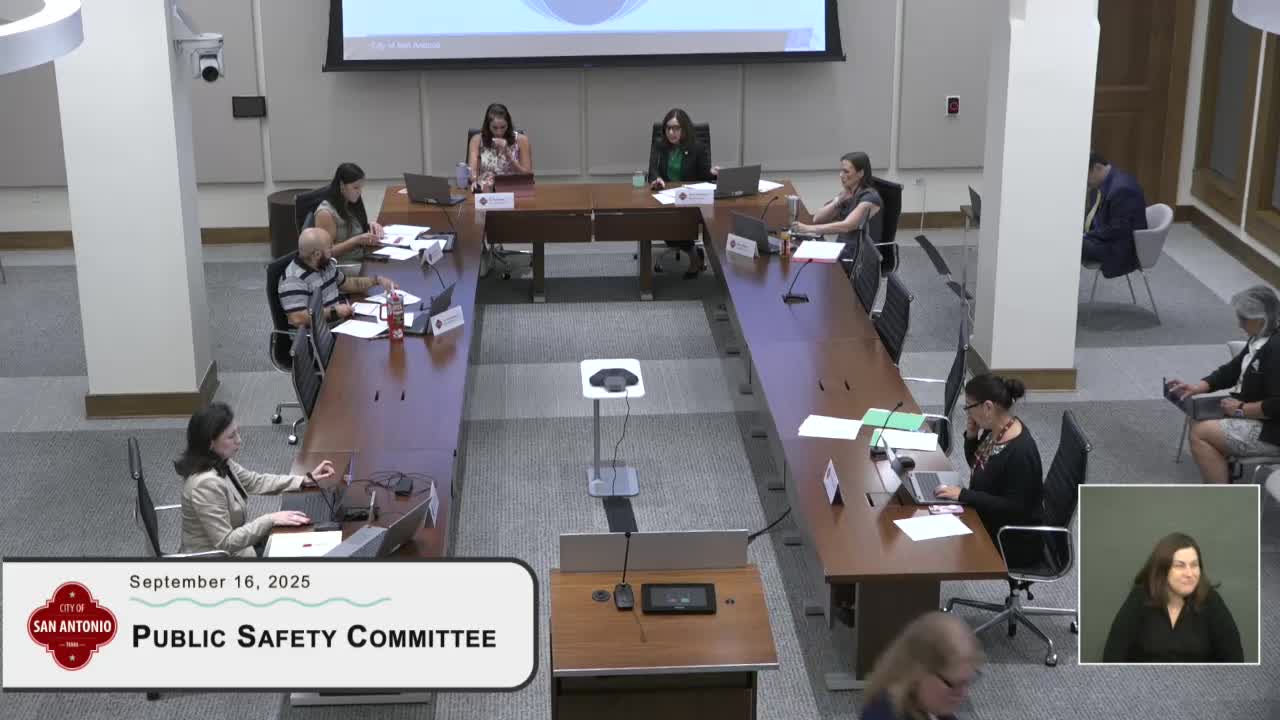
City departments brief Public Safety Committee on elder-abuse trends, training and barriers to prosecution
Summary
Human Services and SAPD presented data showing rising financial exploitation and described training, referral and investigative practices; staff said they have developed citywide training and partnered with APS and financial institutions.
San Antonio Department of Human Services Director Melody Woosley and SAPD Assistant Chief Jesse Salome briefed the Public Safety Committee on elder-abuse prevention and intervention, citing rising financial-exploitation indicators, coordination with Adult Protective Services (APS) and ongoing training efforts for city staff and police.
"Texas Adult Protective Services receives more than a 120,000 reports of elder abuse annually," Melody Woosley said, and APS estimates only one in 24 cases are reported. Woosley told the committee that APS also estimates "one out of every 10 older adults in Bexar County are abused, neglected, and or exploited every year."
Why it matters: Committee members stressed concerns about isolated seniors, fraud and door-to-door predatory sales; staff described preventive outreach, joint investigations and training designed to reach older adults and caregivers.
Key points presented:
- Trends and scale: Assistant Chief Salome said financial-and-property crimes remain the most common offenses targeting older adults. He reported theft cases at 387 year-to-date and credit-card-abuse cases at 112 year-to-date (as presented) and said fraud-related offenses and identity-based exploitation have increased from 2023 to 2025 year-to-date.
- Underreporting: Presenters emphasized substantial underreporting — APS's one-in-24 estimate — and listed reasons victims may not report, including fear of retaliation, shame, declining cognition and dependency on the abuser.
- Training and prevention: Human Services and APS developed a 45-minute "Don't Look Away" training pilot for public-facing city departments; Woosley said more than 6,900 city employees have completed the training so far and the city will roll it out citywide later in the year. SAPD described academy training, regular in-service refreshers and a trauma-informed certification achieved in 2023.
- Interagency coordination: DHS and SAPD said they work with APS, financial institutions and the Elder Abuse and Exploitation Task Force. An APS investigator is embedded part time with SAPD's Financial Crimes Unit and a dedicated prosecutor handles complex financial cases, Woosley said.
- Investigative barriers: Salome noted common barriers to prosecutions: victims who decline to proceed after restitution, delayed reporting that weakens evidence, and complex financial records (which can cross jurisdictions and require subpoenas).
Staff and council follow-ups: Council members asked about outreach to isolated and disabled seniors, auto-enrollment in do-not-call registries during financial counseling, mobilizing district-based resource fairs, and whether SAPD can link family-member perpetrators with addiction-treatment or referral services. SAPD said its Financial Crimes Unit includes about 20 detectives plus two supervisors and that communications flow through the department's public information office for coordinated public alerts.
The committee agreed to use the elder-abuse subcommittee to refine prevention outreach and training and to expand resource fairs and financial-counseling access for seniors.