Get Full Government Meeting Transcripts, Videos, & Alerts Forever!
Get email alerts on the Coastal Resilience topic
No spam. Unsubscribe anytime.
BZA approves Run Point living‑shoreline modification, allows channel work up to 275 feet with conditions
Summary
The board approved a modification under state natural‑resources code to permit extended living‑shoreline and channel work at Run Point Road, citing erosion and resiliency goals; approval includes a stakeout and as‑built survey condition and project funding from state resiliency grants.
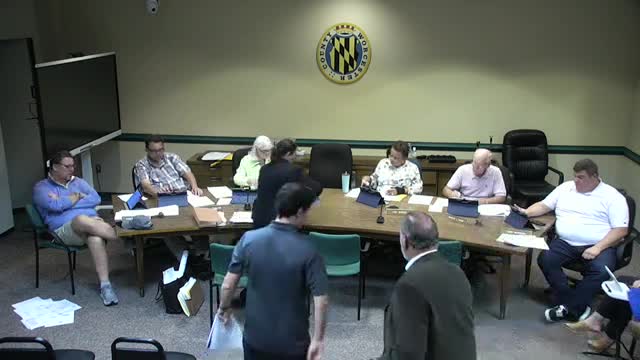
The Worcester County Board of Zoning Appeals voted to approve a modification request on Sept. 11 to extend multiple living‑shoreline structures and associated channel work at 7000 Run Point Road, allowing channel extensions up to a maximum of 275 feet subject to a pre‑construction stakeout and an as‑constructed survey.
Designers and coastal program staff told the board the state Department of Natural Resources and the Maryland Department of the Environment have reviewed the project; MDE has issued a wetlands license and the U.S. Army Corps of Engineers was prepared to issue federal approvals. The design team said the project is engineered to stabilize an actively eroding shoreline, create tidal‑marsh habitat and minimize impacts to existing underwater grasses and other resources.
Lead designer Keith Vintstead of Underwood and Associates described the project as “site‑specific” and said it follows guidance developed in peer‑reviewed literature and two decades of regional experience. “This is a specific site‑specific solution that protects the shoreline, improves habitat, and respects existing resources,” Vintstead told the board.
Kevin Smith of the Maryland Coastal Bays Program and other scientists described significant existing erosion at the site — including failing gabion baskets installed decades earlier — and said the living‑shoreline approach will provide ecological uplift while improving resilience to sea‑level rise, wave energy and storm events. The project team said there are comparable living‑shoreline installations nearby that have performed well since 2018 and 2002.
Board members asked about impacts to navigation, underwater grasses (SAV), the project’s life expectancy and cost. Witnesses said the cove is shallow, largely non‑navigable, and that the design was chosen to minimize SAV impacts compared with alternative structures. Project cost was cited at about $1.8 million; funding comes from state resiliency grants and the state trust fund supported by a portion of the rental‑car tax.
Before voting, a board member added a condition requiring a construction stakeout and an as‑built survey to verify that channel work does not exceed the approved extension lengths (no more than 275 feet). The board approved the modification with that condition; the transcript shows the motion and second carried.
The county and project team will proceed with construction only after final federal and state permits and the required stakeout/as‑built verification are completed.