Get Full Government Meeting Transcripts, Videos, & Alerts Forever!
Get email alerts on the Energy topic
No spam. Unsubscribe anytime.
Caroline County officials press for clear fire‑safety and permitting standards for battery energy storage
Summary
Commissioners and local legislators discussed safety standards, NFPA 55 adoption, first‑responder training and possible permitting conditions after concern about utility‑scale battery energy storage systems was raised during the Sept. 16 delegation meeting.
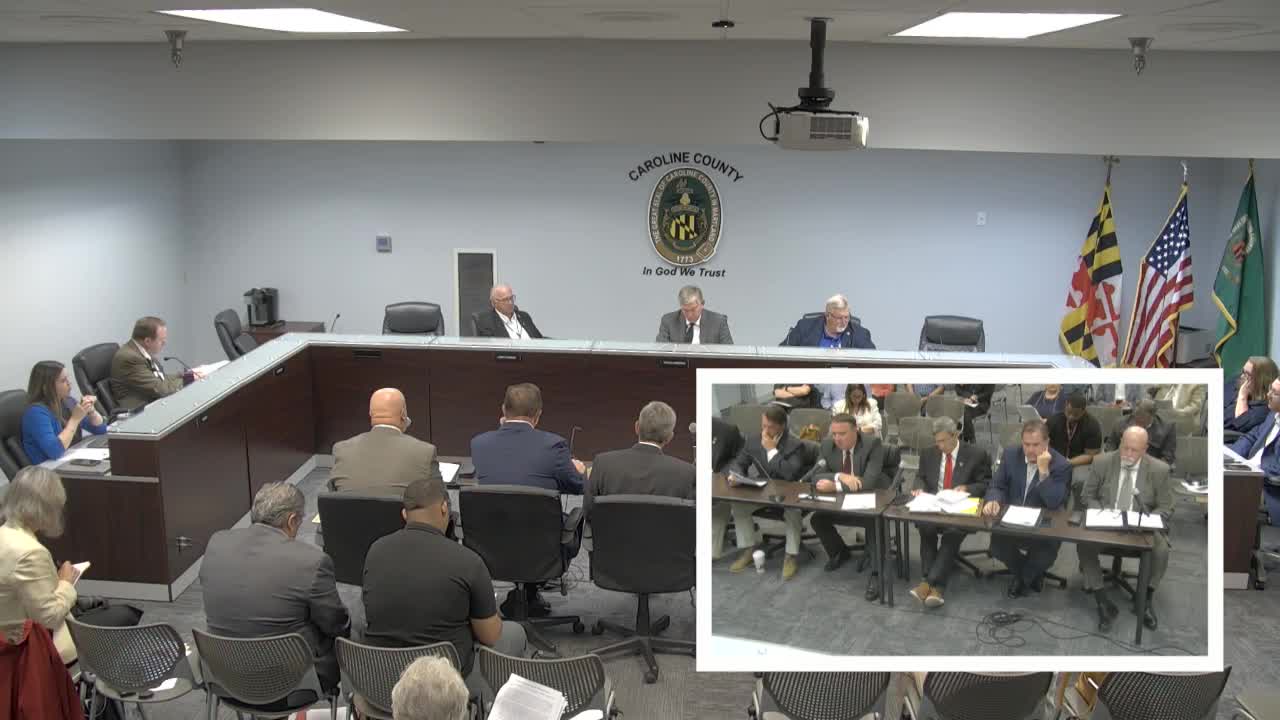
Caroline County commissioners and members of the county’s legislative delegation spent an extended portion of their Sept. 16 meeting discussing safety and permitting concerns tied to solar photovoltaic projects that include battery energy storage systems (BESS).
A county official said the county is "completely baffled" by the current state of safety standards and asked for clear, enforceable permitting requirements and a tactical review by local fire departments. The speaker emphasized that volunteer fire companies face resource constraints and said the county will not allow facilities to move forward without measures to assure first‑responder safety.
Delegates and county leaders cited the National Fire Protection Association code NFPA 55 and a Public Service Commission rulemaking (RM85) that county participants said adopted some version of NFPA 55. County officials said they were uncertain what language was adopted and whether waivers or amendments exist in the PSC action; they asked staff to confirm the PSC’s final rule language.
"We don't know what it says," one commissioner said of the NFPA text as applied in permitting, and added county governments must determine both what will be inspected and who will fund necessary equipment and training for fire companies.
Delegates present encouraged using permitting conditions to require safety measures and discussed the possibility of impact fees aimed at land preservation or to cover first‑responder needs. Several legislators and county officials warned that a fee paid by developers can ultimately be passed through to utility ratepayers and may not address the immediate equipment and training shortages facing volunteer companies.
County officials said they will make permitting requirements strict and are considering requiring proof of specific suppression or mitigation technologies before issuing county permits. Commissioners said the county plans to press for state support and legislative attention to clarify inspection, enforcement and funding responsibilities.
Why it matters: county leaders said the technology is evolving, fire suppression methods for lithium‑ion battery fires are still developing, and local fire companies need training and equipment now. Commissioners repeatedly emphasized they will not authorize BESS projects without clear safety assurances for firefighters and nearby residents.
Next steps discussed included confirming the PSC rule text and any waiver language; having the State Fire Marshal or county inspection agency clarify what will be required and inspected; and exploring funding mechanisms, including possible permit conditions, impact fees, or state grants to buy specialized suppression and protective equipment for volunteer fire departments.