Get Full Government Meeting Transcripts, Videos, & Alerts Forever!
Get email alerts on the Environment Water Quality topic
No spam. Unsubscribe anytime.
Rutherford County committee votes to send Brownfield grant application for Walter Hill study to budget
Summary
The Public Works and Planning Committee voted to forward an application to the county budget office seeking up to $500,000 in TDEC Brownfield Redevelopment funds to investigate contamination near Walter Hill Dam on the Stones River.
The Rutherford County Public Works and Planning Committee on Sept. 2 voted to send a proposed application to the county budget office for a Tennessee Department of Environment and Conservation (TDEC) Brownfield Redevelopment Area grant that would fund investigation and potential cleanup work near Walter Hill Dam on the Stones River.
The motion to forward the application to budget passed on a roll call vote, with Commissioners Cush, Payne, James, Dodd, Boyd and Chairman Johnson voting yes and Commissioner Piercy voting no. Commissioner Peay made the motion to send the application to budget during the committee meeting; a second was recorded in the discussion before the roll call.
Committee members said they sought more information about what the grant would pay for and whether it could cover both investigation and remediation. Commissioner Harris described the grant as “a nonmatch” and said it could provide up to $500,000. He told the committee the grant “would probably hire engineers to go out and test the sites because they’re basically doing investigation, and that’s only if it’s accepted, they’ll still come back here again.”
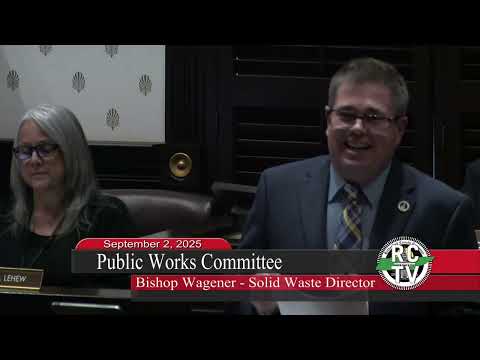
Bishop Wagner, outgoing director of the Solid Waste Department, urged caution and said the brownfield program is intended for contaminated soil on parcels targeted for redevelopment rather than for river cleanups. “A brownfield, as I understand it ... is about dry earth. It is not a river cleanup or river contamination project at all,” Wagner said, adding that a brownfield award may not address contaminants in the water itself.
Commissioner Peay cited warnings posted by TDEC at Walter Hill Dam and argued the county should pursue funding to identify contaminants. He read from a posted sign, saying the body of water “contains contaminants at levels thought to increase the risk of cancer or other serious illnesses in humans.” Peay also noted alternative state grant programs, including water-quality and stream-restoration grants, might be available.
Committee members and staff confirmed the grant application would be prepared by the county’s grant writer, Alyssa, and that if the county applied and later received an award it would still require additional approvals: acceptance would return to this committee, to budget, and to the full commission for action. Committee discussion also covered authority and budget process: Wagner said budget and acceptance actions would be taken only by the Solid Waste Department and through established commission budget procedures.
Why it matters: The Stones River supplies local drinking water and public notices posted at Walter Hill Dam had prompted commissioners to seek state funding to investigate contamination. Forwarding the application to budget clears the way for a formal county application to TDEC by the announced grant deadline.
What’s next: Committee members requested additional review by the county’s environmental attorney and county attorney and said the grant packet would be presented to the Budget Committee on Thursday for further consideration. Commissioner Phillips volunteered to have county attorneys review the grant and to report back at the Budget Committee meeting.