Get AI Briefings, Transcripts & Alerts on Local & National Government Meetings — Forever.
DNR reports increasing chronic wasting disease in southeast Minnesota; expands surveillance and research projects
Loading...
Summary
DNR reported new CWD detections and rising prevalence in southeastern Minnesota, announced expanded surveillance zones for 2025 and described research pilots on turkey health, PFAS contaminants and moose calf survival.
The Minnesota Department of Natural Resources (DNR) briefed the board on wildlife disease work, focusing on chronic wasting disease (CWD) surveillance, new management areas, and several research projects.
CWD surveillance and management
DNR staff said CWD surveillance during 2024–2025 found three new CWD detections resulting in three new management areas; the agency reported increasing prevalence in southeastern Minnesota and a region south of the Twin Cities with prevalence estimates above 1% and, in some southeastern management areas, above 5% (endemic category).
DNR described three response categories used for planning and management: - Initial response: areas with under 1% estimated prevalence; focus on surveillance and early management actions. - Persistent infection: prevalence above 1% but below 5%; intensified management and surveillance required. - Endemic: prevalence above 5%; management adjusts for long‑term strategies.
For the 2025 surveillance season DNR described voluntary testing options (mail‑in kits, check stations) and mandatory testing requirements in management areas during the five‑month surveillance window. The agency noted logistical demands: staffing about 300 people to operate 53 check stations and 37 sampling stations for the year’s surveillance effort.
Research and other wildlife health items
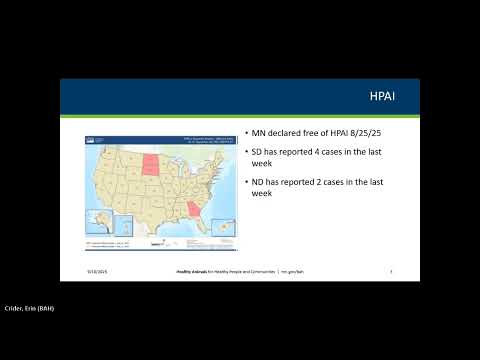
DNR outlined several research pilots and projects: - A turkey health pilot collected 320 voluntary hunter‑submitted samples in a pilot turkey permit area to establish baseline pathogen data. Preliminary findings showed no high‑path avian influenza or other high‑impact viruses, but PCR detection of Mycoplasma spp. in several pooled samples; final testing for certain viruses remained pending. - Contaminant (PFAS) surveillance detected PFAS in white‑tailed deer and waterfowl samples; levels resembled those reported in neighboring states for some species and locations, prompting continued study of population impacts and human consumption considerations. - Moose and elk projects will capture and follow juveniles and adults to study recruitment, causes of mortality and health metrics; a larger moose study in northeast Minnesota will fill juvenile data gaps.
Why it matters
DNR staff said the state is moving from reactive to longer‑term strategies in areas where CWD is persistent or endemic, while maintaining targeted surveillance in newly detected zones. Research pilots aim to add baseline health data for turkeys and other wildlife and to help DNR prioritize surveillance resources.