Get Full Government Meeting Transcripts, Videos, & Alerts Forever!
Get email alerts on the Fire Tax Annexation topic
No spam. Unsubscribe anytime.
Fire tax committee approves method to hold Bradley County harmless for annexation-related revenue losses
Summary
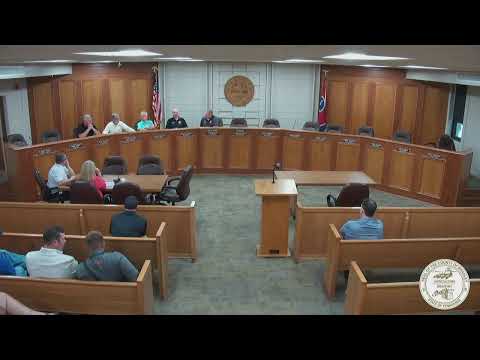
A six-member fire tax committee formed under an April city–county growth-boundary agreement approved a proposal to reimburse Bradley County for fire-tax revenue lost when properties between the old and new urban growth boundaries are annexed into the City of Cleveland.
A six-member fire tax committee formed under an April city–county growth-boundary agreement approved a proposal to reimburse Bradley County for fire-tax revenue lost when properties between the old and new urban growth boundaries are annexed into the City of Cleveland.
The committee voted, by voice, to approve the procedural methodology and to forward the proposal to the City of Cleveland council and the Bradley County Commission for incorporation into the previously approved annexation agreement. The committee also agreed to meet again in the coming weeks to continue separate discussions about automatic first-response dispatching.
The proposal specifies how reimbursements will be calculated and paid when an eligible parcel is annexed. Under the approved method, the city will: obtain the assessor's valuation and the current fire-tax amount for the annexed parcel; make an immediate, prorated payment for the remainder of the calendar year of annexation; and then pay 100% of the lost fire-tax amount for the next two full years, calculated using the assessor's original tax value at the time of annexation. That sequence results in the county being held harmless for three years in total for each eligible annexation (prorated first year plus two full following years). The proposal says the policy agreement would remain in effect for the duration of the city'county annexation agreement, which the draft describes as 20 years.
Committee members used Exit 33 as the working example: if the parcel at Exit 33 is annexed, the city would pay the county for the fire-tax revenue lost on that parcel following the schedule above. The transcript indicates the precise dollar amounts for the Exit 33 parcels are undeveloped and "not specified" in the meeting record.
A committee member described the proposal as "a fair compromise," adding that it "is not gonna be a fix to our problem; it's a little bit of help to our problem." Meeting discussion emphasized that county fire operations are funded by a countywide fire tax and that annexations reduce the fire-tax base even where overall property-tax revenue for city and county may grow as development occurs with new sewer access.
The committee membership, as described in the meeting, consists of the county fire chief (Jeff Stewart), the county mayor (not named in the transcript), a county commission member (Mike Hughes), the city mayor (not named in the transcript), the city vice mayor (Ken Webb), and the city fire chief (Chris Bates). Five of the six members were present for the vote; the committee chair said it was difficult at times to assemble all six members.
The committee directed staff to submit the approved methodology to both governing bodies for formal adoption per the original growth-boundary agreement and to return to the committee with a draft on automatic/first-response dispatch protocols for further study.
Votes at a glance: committee members present voted in favor by voice; the chair declared the motion passed and the proposal will be forwarded to the city council and county commission for adoption.